
The checklist's loading plan puts the expansion shelves at the lowest rack positions, but the customer's technician wants the head unit at the bottom 'because the lights look better down there.' What wins?
Select an answer to reveal the explanation.
Short Explanation
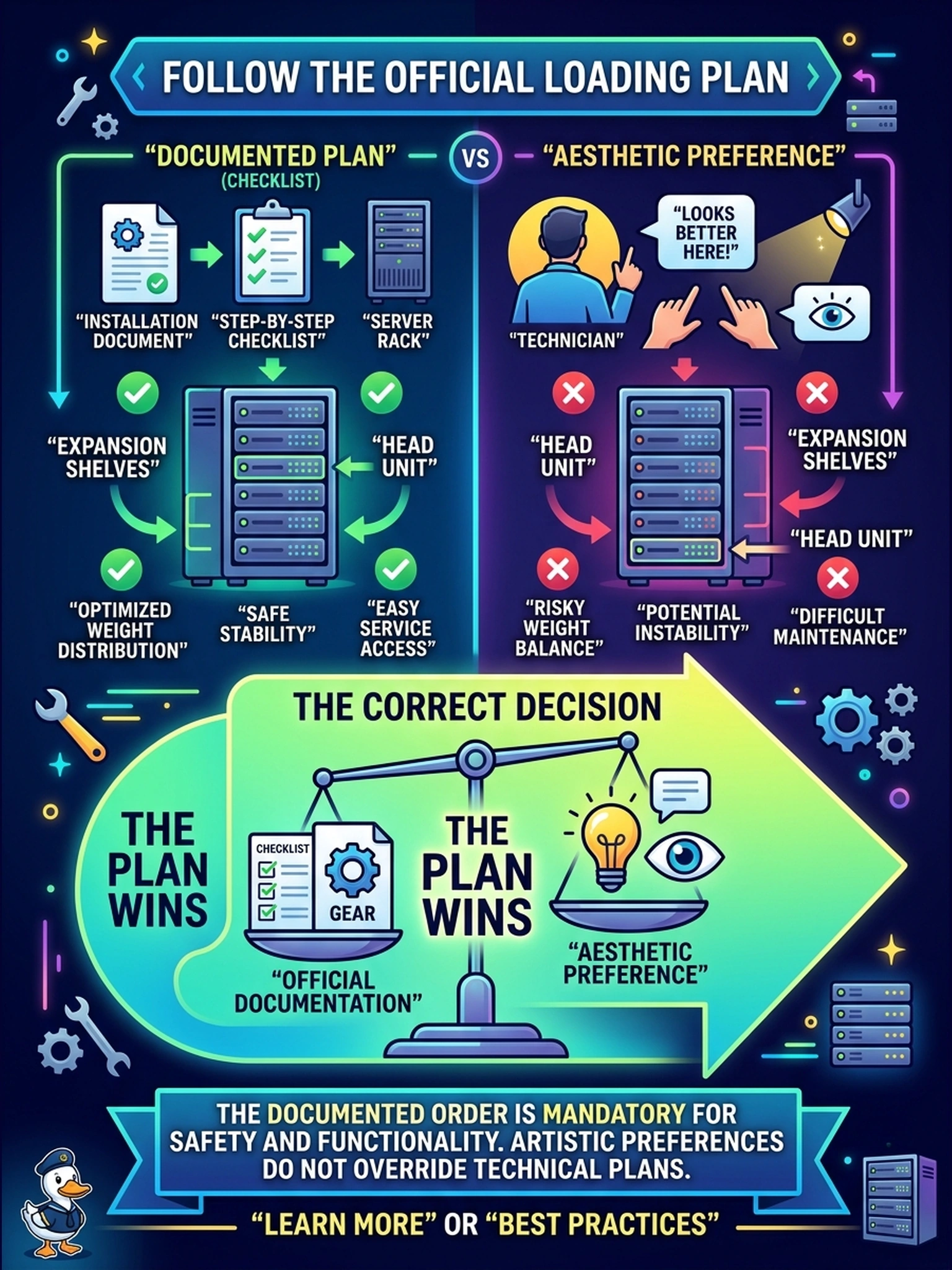
Here's the deal: a rack is a loaded structure, not a bookshelf, and the loading plan is engineering rather than decoration. The checklist says shelves go low because that is where the mass belongs, so you politely wave off the 'looks better' idea and follow the plan.
Full Explanation
Rack loading order is stability engineering: loaded shelves are the heaviest subsystems, and keeping them low holds the center of gravity near the floor, which is what prevents a tall rack from tipping; the documented plan also assumes cabling reach and service access for the stacking it prescribes. The checklist reflects that plan, so the correct behavior is to follow it and explain the why. Customer preference overriding by ownership fails by concept: documented installation requirements travel with the appliance, and owning the rack does not waive them. Powering up quickly and rearranging later fails because the rearrangement—re-lifting loaded chassis, re-cabling stressed runs—is itself the hazard the plan prevents, and speed-to-power does not justify that risk. Interleaving units to split the difference fails because it breaks the plan's weight distribution and its service-access assumptions while satisfying neither party; a partially followed engineering plan is still unfollowed. Exam caveat: a non-standard rack may justify a deviation approved through the proper channel—escalation, not on-site improvisation. Operational check: read the loading plan against the rack's U positions before mounting, confirm the heaviest loaded subsystems sit lowest, and note the plan reference on the checklist.