
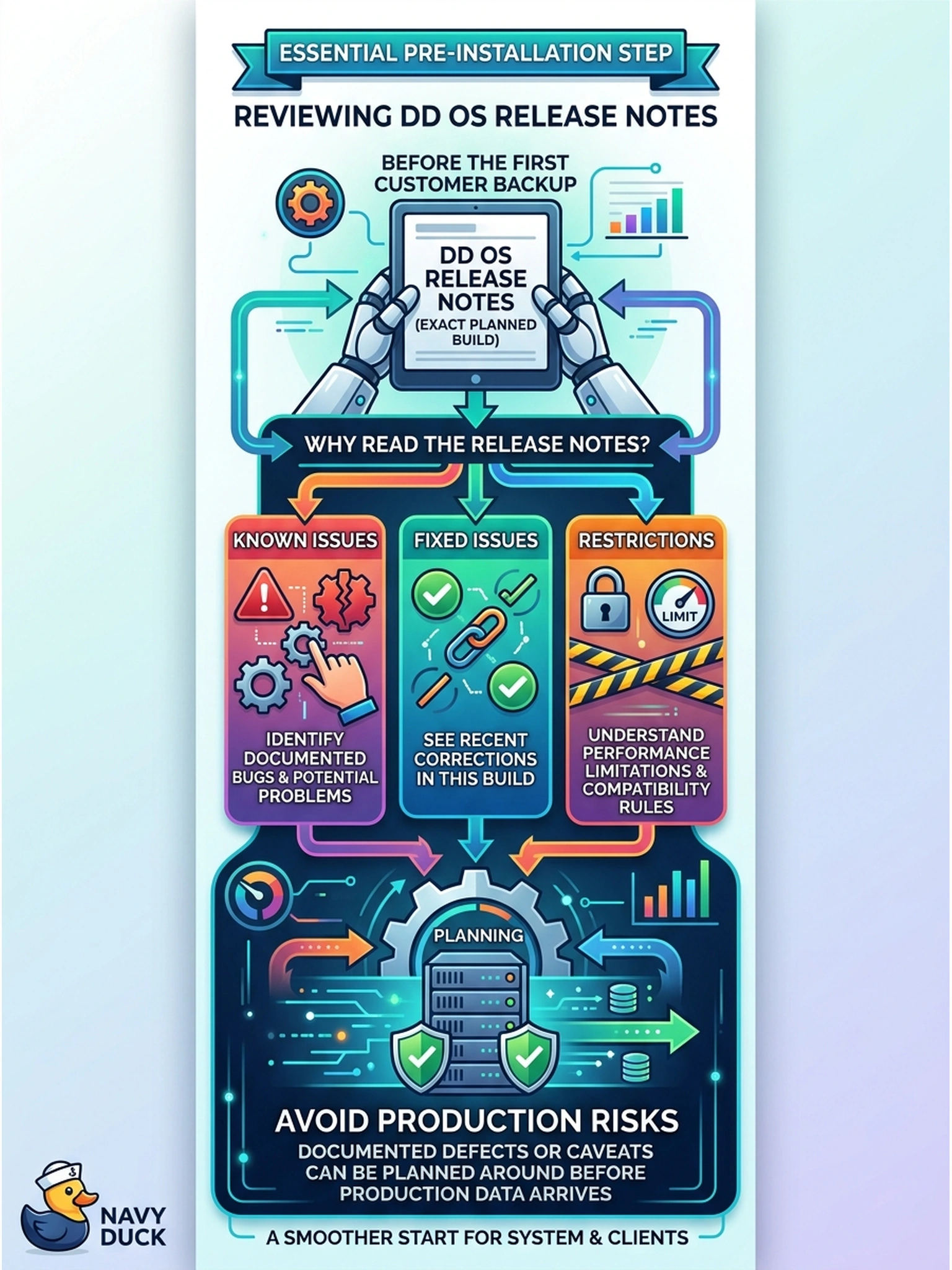
Before the first customer backup is allowed to write to a freshly built Data Domain system, the engineer reads the DD OS release notes for the exact planned build. Which pre-installation practice does this support?
Select an answer to reveal the explanation.
Short Explanation
Release notes are like the recall sheet you read before buying a used car. A known issue affecting tiering or replication is far cheaper to plan around during install week than in week one of production backups. Read the notes for your exact build before customer data shows up.
Full Explanation
DD OS release notes for a specific build document new features, fixed issues, known issues, and restrictions—information that can change what the deployment does before go-live, such as deferring a feature until a patch or adjusting the upgrade path. Reading the notes for the exact build belongs in pre-acceptance review, while design choices remain cheap to change. Treating the notes as a CLI reference fails by concept: command syntax lives in the DD OS command-line reference documentation, while release notes describe what changed, broke, or was fixed in the build. Treating them as the support matrix fails because application compatibility is published in a separate interoperability tool; consulting the wrong document feels diligent but answers none of the questions. Using the notes as a license-activation path fails because features are enabled by valid license keys applied to the system—no document carries activation powers. The build-specific point matters: highlights for the DD OS family as a whole miss the known issues that were introduced and fixed between maintenance releases. Exam caveat: section naming varies across releases; the tested habit is reading the notes for the exact target build, not generic highlights. Operational check: open the release notes for the exact build, list the known issues and restrictions relevant to the planned feature set, and file that list in the deployment binder so post-deployment checks can verify any mitigations were applied.