
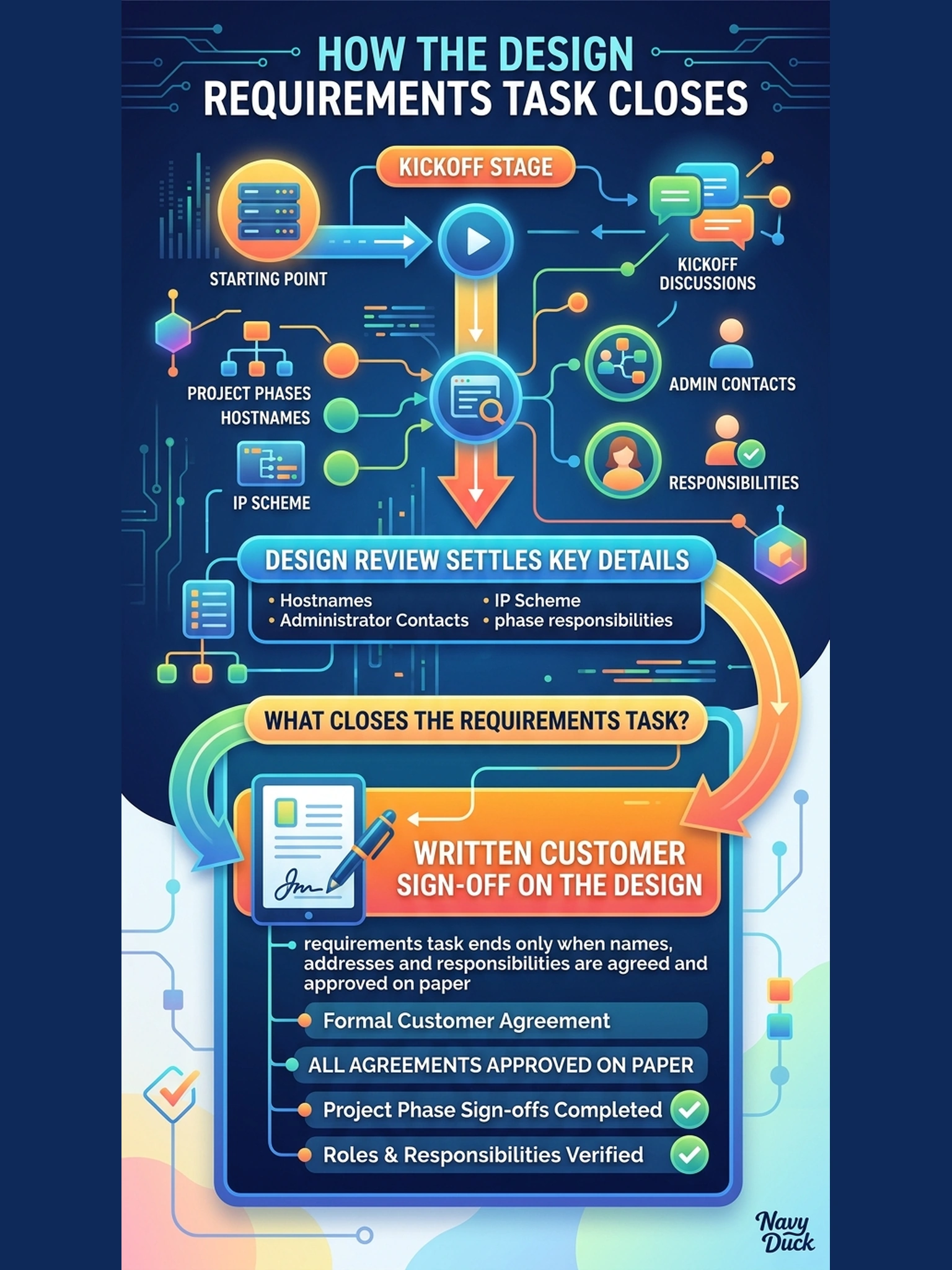
At kickoff, the design review settles hostnames, the IP scheme, administrator contacts, and who signs each project phase. From the requirements task's point of view, what closes that task?
Select an answer to reveal the explanation.
Short Explanation
A design nobody signed is just a suggestion with a PDF icon. The requirements task closes when the customer puts pen to it—names, addresses, contacts, and who approves each phase are theirs on paper, not yours. Get that signature before you land, because after that every change is a negotiation.
Full Explanation
The requirements task closes on agreement rather than activity: hostnames, address plans, protocol selections, contacts and phase responsibilities must be reviewed, settled and then approved in writing by the customer before deployment work builds on them. Sign-off is the mechanism converting an opinion list into a baseline, and every downstream step—interface configuration, DNS entries, firewall tickets—consumes that baseline, so closure is defined by approved design, not by the calendar. Filing an unsigned document fails as closure because storage is not concurrence, and later disputes prove only that a file existed. Self-approval by the engineer fails by concept, because the customer owns the environment and only they can commit names, addresses and operational responsibilities. Treating a shipped order as acceptance fails because an order confirms logistics, not design—items can ship while decisions remain contested. Exam caveat: where the customer runs a formal change process, the sign-off artifact should reference the corresponding change record for traceability. Operational check: hold a kickoff review that walks every design section, collect the countersigned copy, and cite that approval reference in each later phase's documentation.