
The customer's change board approves exactly one maintenance window, Sunday from 02:00 to 06:00, for introducing the new backup target to production. What should the engineer do with that information during pre-deployment planning?
Select an answer to reveal the explanation.
Short Explanation
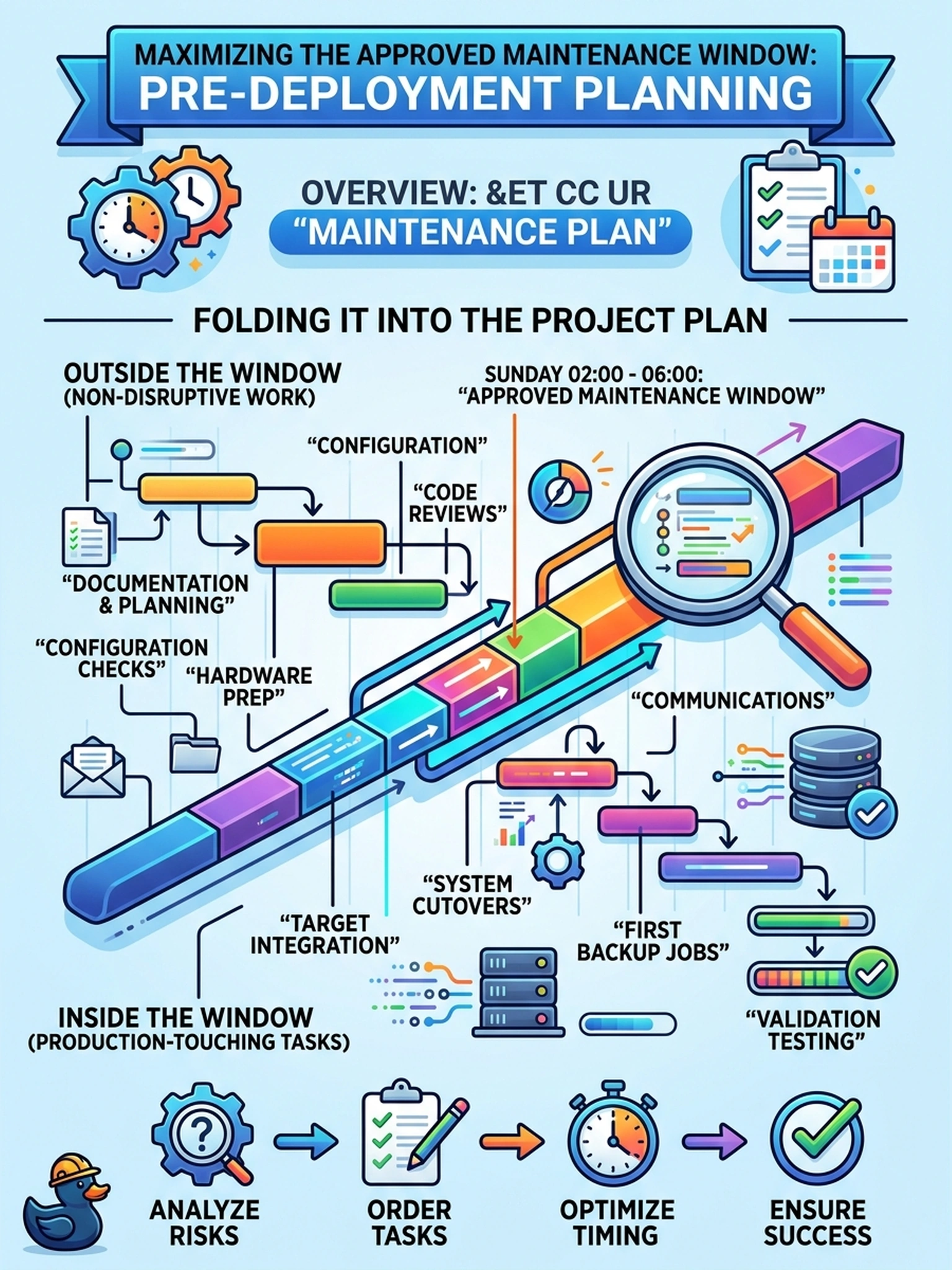
Change boards are the air-traffic control of the data center—you don't land without clearance. Capture the window now and lay your plan so anything disruptive fits inside Sunday's slot while everything harmless happens during the week. Miss that, and your installation becomes the board's next agenda item.
Full Explanation
Maintenance windows are scheduling requirements captured alongside capacity, protocols and ports: any task that alters production configuration—backup network integration, firewall or DNS changes, media server reconfiguration, cutover, first protected backups—belongs inside the change board's approved window, while preparation, racking and non-disruptive bring-up proceed outside it. Recording the constraint during pre-deployment planning keeps the schedule honest about what happens in the four Sunday hours and what never needs the window at all. Calling a new backup target invisible fails by concept, because it changes backup network load, firewall rules and application configuration—all squarely inside change management. Claiming vendor exemption fails because change policy is the customer's operational authority, and deployments operate under it rather than above it. Packing the first full backup into the window misuses it, because the initial full backup is precisely the load the window exists to contain, and running it there risks the production backup schedule the window protects. Exam caveat: when a window must be re-opened or extended, only the customer's change process can do it. Operational check: annotate the project plan with each task's window, duration and rollback point, and have the change manager approve the schedule in writing.