
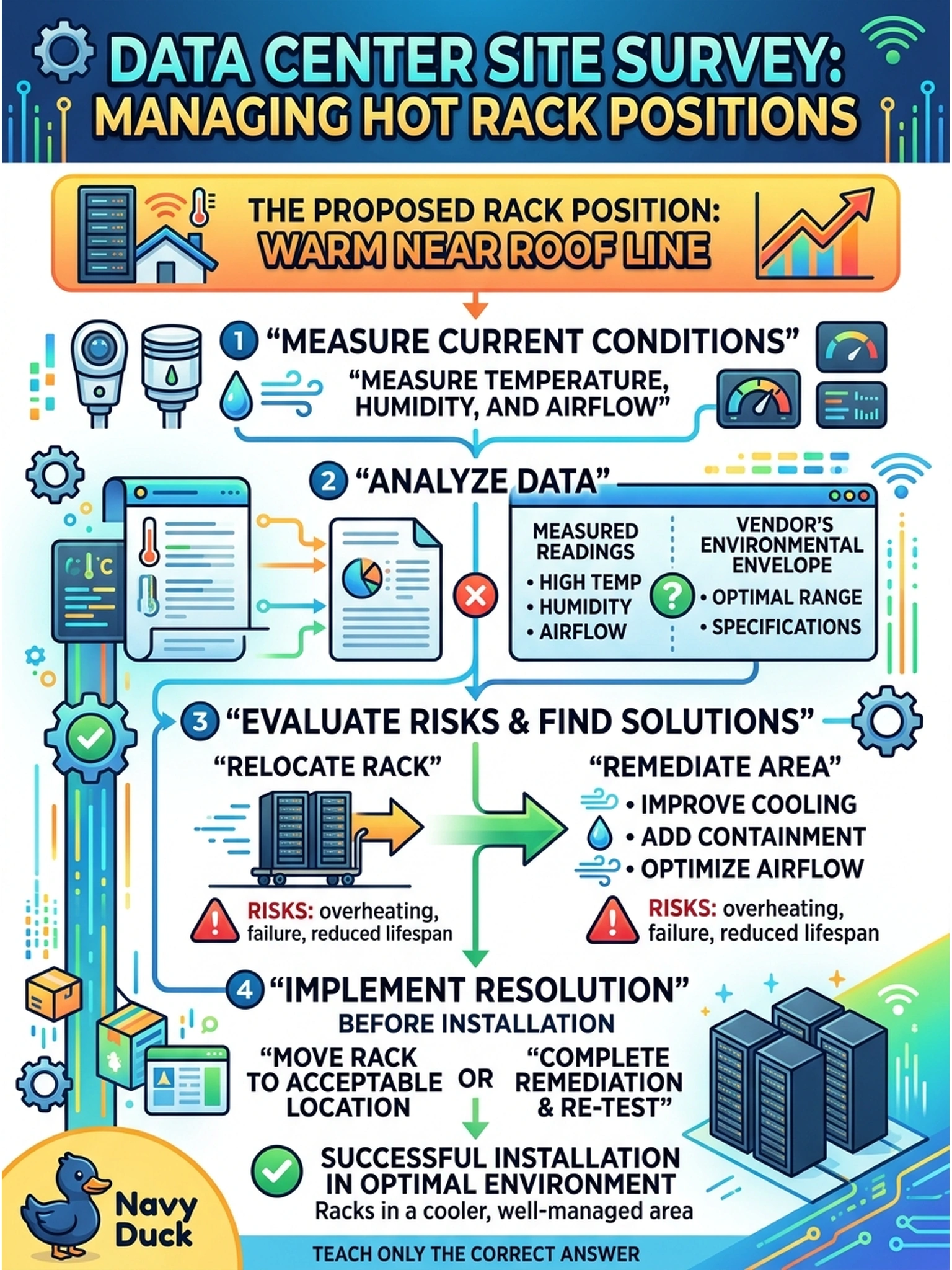
The proposed rack position sits near a roof line where the data center runs warm, and summer readings have crept above the mid-20s Celsius. What should the engineer do about this during the site survey?
Select an answer to reveal the explanation.
Short Explanation
Electronics are like houseplants—each one ships with a comfort range written on the label, and the roof-line corner is exactly where that range quietly dies. You compare the documented temperature, humidity, and airflow envelope against what that rack position actually experiences. Fixing hot air with cable ties is expensive; changing a rack position on paper is free.
Full Explanation
Every hardware platform publishes an environmental envelope—operating temperature ranges, humidity limits, and airflow direction and requirements—and the site survey exists to compare the planned position's actual conditions against that envelope. A warm corner near a roof line is a classic heat-recirculation zone, so the survey should record readings at the exact rack location across a representative period and drive a position change or cooling remediation before installation. Assuming staff-comfortable air suits equipment fails by concept, because equipment envelopes are narrower than human comfort and are validated per position, not per room. Ordering a smaller platform to reduce heat inverts the process, because capacity requirements drive tier selection and cooling must meet published specs whatever the tier. Counting on cold air pooling at the floor fails because raised-floor rooms have engineered airflow patterns where leakage and recirculation make bottom-of-rack positions unpredictable without measurement. Exam caveat: published limits define what brief excursions are survivable; the survey should capture peaks, not just averages. Operational check: log temperature and humidity at the exact planned rack units for several days including a peak afternoon, and attach the readings to the site survey document.