
What is the purpose of configuring webhooks for the MLflow Model Registry?
Select an answer to reveal the explanation.
Short Explanation and Infographic
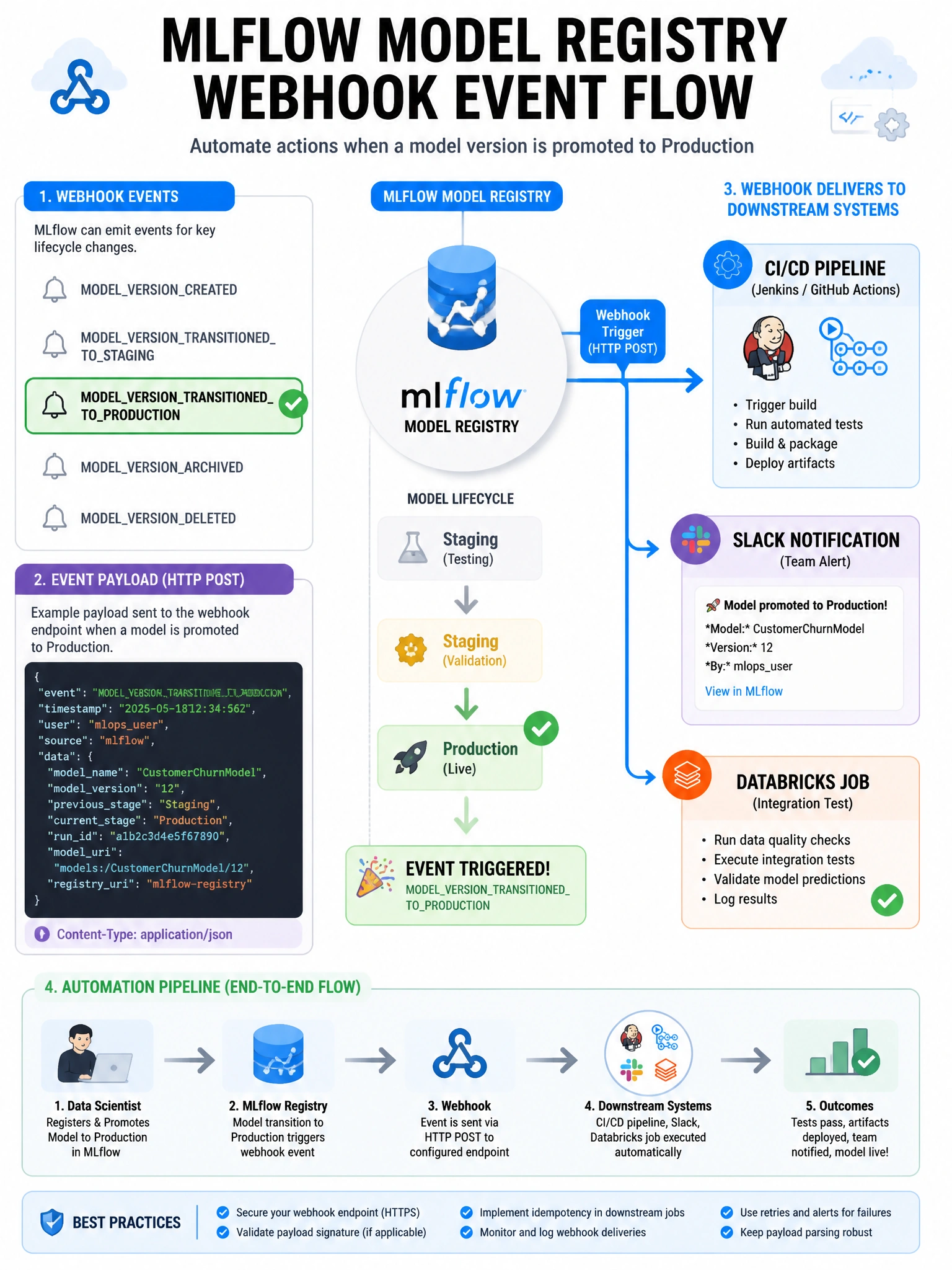
Model Registry webhooks are event listeners — when a model version moves to Production, a webhook fires an HTTP call that can trigger your CI/CD pipeline to run integration tests or deploy the new version automatically.
Full explanation below image
Full Explanation
MLflow Model Registry webhooks (Databricks-specific extension) support event-driven automation: Events that trigger webhooks: MODEL_VERSION_CREATED, MODEL_VERSION_TRANSITIONED_TO_STAGING, MODEL_VERSION_TRANSITIONED_TO_PRODUCTION, TRANSITION_REQUEST_CREATED, COMMENT_CREATED, MODEL_VERSION_TAG_SET. Webhook types: HTTP webhooks — POST to an external URL when event fires. Job webhooks — trigger a Databricks Job (e.g., run integration tests). Common patterns: When model → Staging: trigger automated testing job. When model → Production: trigger deployment pipeline, send Slack notification. When model registered: trigger model validation checks. Configuration: via MlflowClient().create_registry_webhook(events=[...], http_url_spec=...) or Databricks REST API. Webhooks don't send predictions, sync databases, or enable serving — they're event notifications for lifecycle automation.