
Meridian Line's finance team notices the charter-desk assistant's monthly Foundation Model API bill has spiked, and wants a per-user, per-application breakdown of token consumption to find the cause without adding custom logging code to the application. What should they enable on the serving endpoint?
Select an answer to reveal the explanation.
Short Explanation
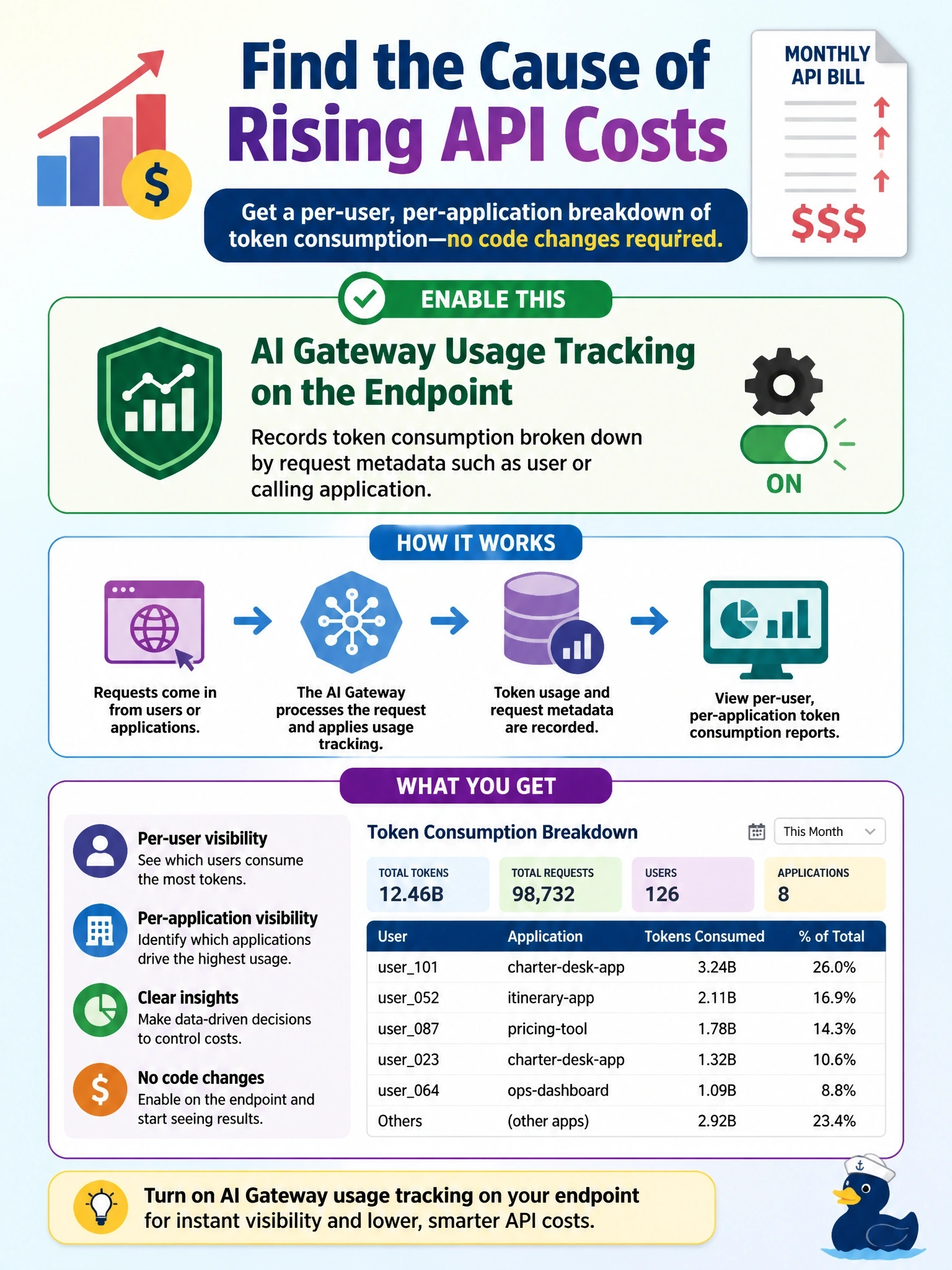
When finance asks 'who is burning the tokens,' the answer is AI Gateway usage tracking, since it is built to break down consumption by exactly the kind of metadata, like user or calling app, that turns a mystery bill into an actionable list of culprits, no custom logging required.
Full Explanation
AI Gateway, layered on a Model Serving endpoint, provides usage tracking that records token consumption and attributes it to request metadata such as the calling user or application, which is exactly the per-user, per-application breakdown the finance team needs, and it requires no custom instrumentation in the application code since it is a gateway-level capability. Moving to a higher provisioned-throughput tier changes the pricing model and can lower the effective per-token rate at high, steady volume, but it does not explain or attribute where the current spend is going, and paying more for capacity without diagnosing the cause risks masking the underlying problem. Scale-to-zero pauses an idle endpoint to save cost during periods of no traffic, which helps with baseline idle spend but does nothing to break down consumption by user once the endpoint is actively serving requests, and it is unrelated to diagnosing a usage spike. A stricter output guardrail that truncates long responses could reduce output token cost as a side effect, but it does not provide attribution or diagnosis, it just clips length indiscriminately and risks degrading answer quality for every user, including the ones not responsible for the spike. AI Gateway usage tracking is specifically the governance and cost-observability layer built for this kind of question.