
An audit of the port-circular corpus finds that 30% of indexed notices have already been superseded by a newer circular, but the index has no way to distinguish current from superseded notices at query time. What is the most direct data-preparation fix?
Select an answer to reveal the explanation.
Short Explanation
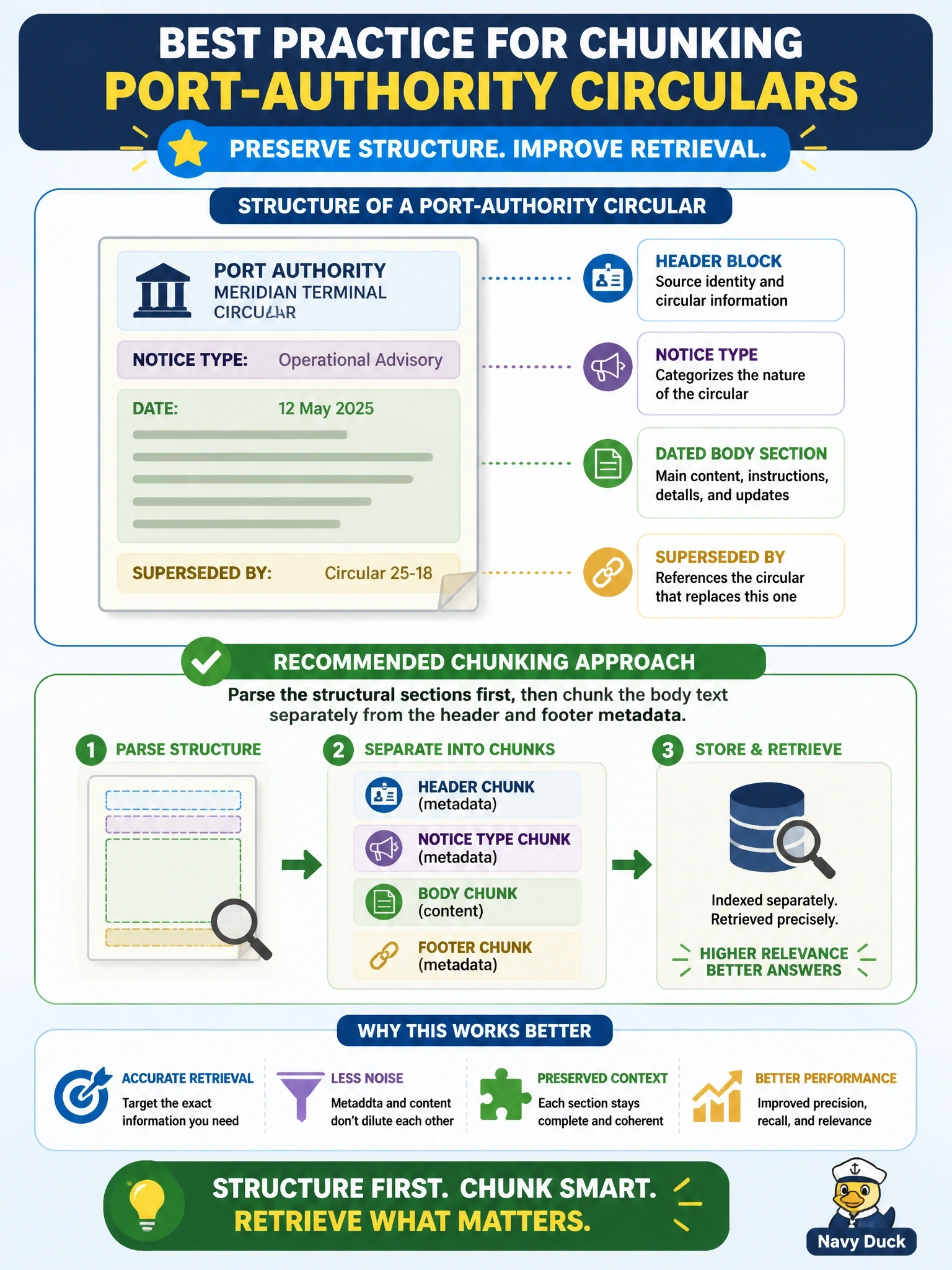
The fix isn't in the prompt and it isn't in chunk size - it's in the metadata. Capture the effective date and the superseded-by pointer when you extract each circular, and the retriever can filter to 'currently valid' before the model ever sees the text.
Full Explanation
Capturing effective-date and superseded-by metadata during extraction is correct because the underlying problem is a missing data-preparation signal, not a retrieval or prompting problem - once each circular's effective date and its superseding relationship are stored as queryable metadata columns in the Delta table, a query can filter to only currently valid notices at retrieval time, directly solving the described symptom. Deleting the entire corpus and rebuilding without it is a wildly disproportionate response that discards legitimately useful, currently valid content along with the stale portion - the fix is to add missing metadata, not to remove the data source the port-operations copilot depends on. Instructing the model through the system prompt to guess currency from writing style is wrong and unreliable - writing style has no dependable relationship to whether a notice is current or superseded, and asking a language model to infer factual currency from stylistic cues is exactly the kind of ungrounded guess that produces hallucinated or wrong answers instead of a verifiable, metadata-driven filter. Increasing chunk size does nothing to address which notices are current - a larger chunk with more context is still just as likely to be a superseded notice, since chunk size and document currency are unrelated variables. The exam-relevant pattern, consistent with the reissued-circular item earlier in this domain, is that freshness problems are solved with metadata captured during preparation, not with prompting or chunking-size adjustments.