
Inside an intraoral dental X-ray machine, what is the specific electrical function of the timer circuit during a radiographic exposure?
Select an answer to reveal the explanation.
Short Explanation
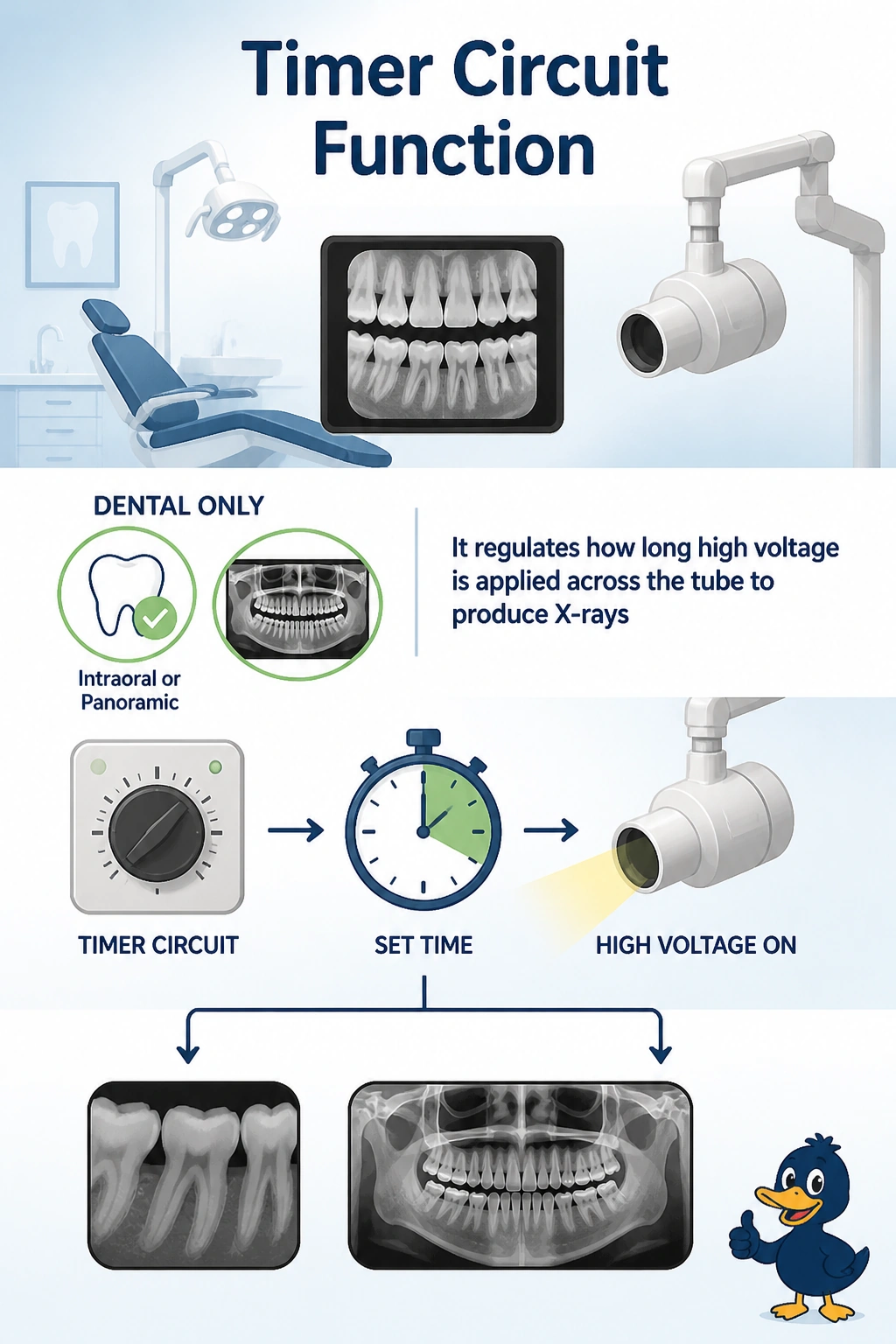
Think of the exposure timer like a kitchen stopwatch for the high-voltage circuit—it decides exactly how long the X-ray beam stays on. When you press the button, don't mix up the timer with the step-down transformer that warms the filament or the aluminum disk that filters the beam.
Full Explanation
Inside a dental X-ray unit, the timer circuit's role is that "It regulates how long high voltage is applied across the tube to produce X-rays", controlling the exact exposure duration in fractions of a second so the receptor receives the intended photon quantity. By contrast, "It steps down incoming line voltage to heat the tungsten filament inside the cathode" describes the step-down transformer in the low-voltage filament circuit, which preheats the filament before high voltage is applied. The statement "It filters low-energy photons from the primary beam before they exit the tubehead" describes inherent and added aluminum filtration rather than timing control. Meanwhile, "It converts alternating current into a constant potential across the anode target" describes high-voltage rectification circuitry used in direct-current generators rather than the exposure timer. As a safety caveat, the exposure switch is wired as a dead-man control, so releasing the button early interrupts the timer immediately and stops X-ray emission. As an operational check, confirm that the selected exposure time matches the patient size and receptor type on the control panel before depressing and holding the switch until the audible tone stops.
Prefer to study offline? Printable PDF study book + test engine ($7.50, unofficial). These questions stay free here.