
During an intraoral X-ray equipment quality check, a dental assistant measures the circular primary beam diameter at the open end of the position-indicating device. Under federal FDA performance standards for dental X-ray systems, what is the maximum permitted diameter of the useful beam at the patient's skin?
Select an answer to reveal the explanation.
Short Explanation
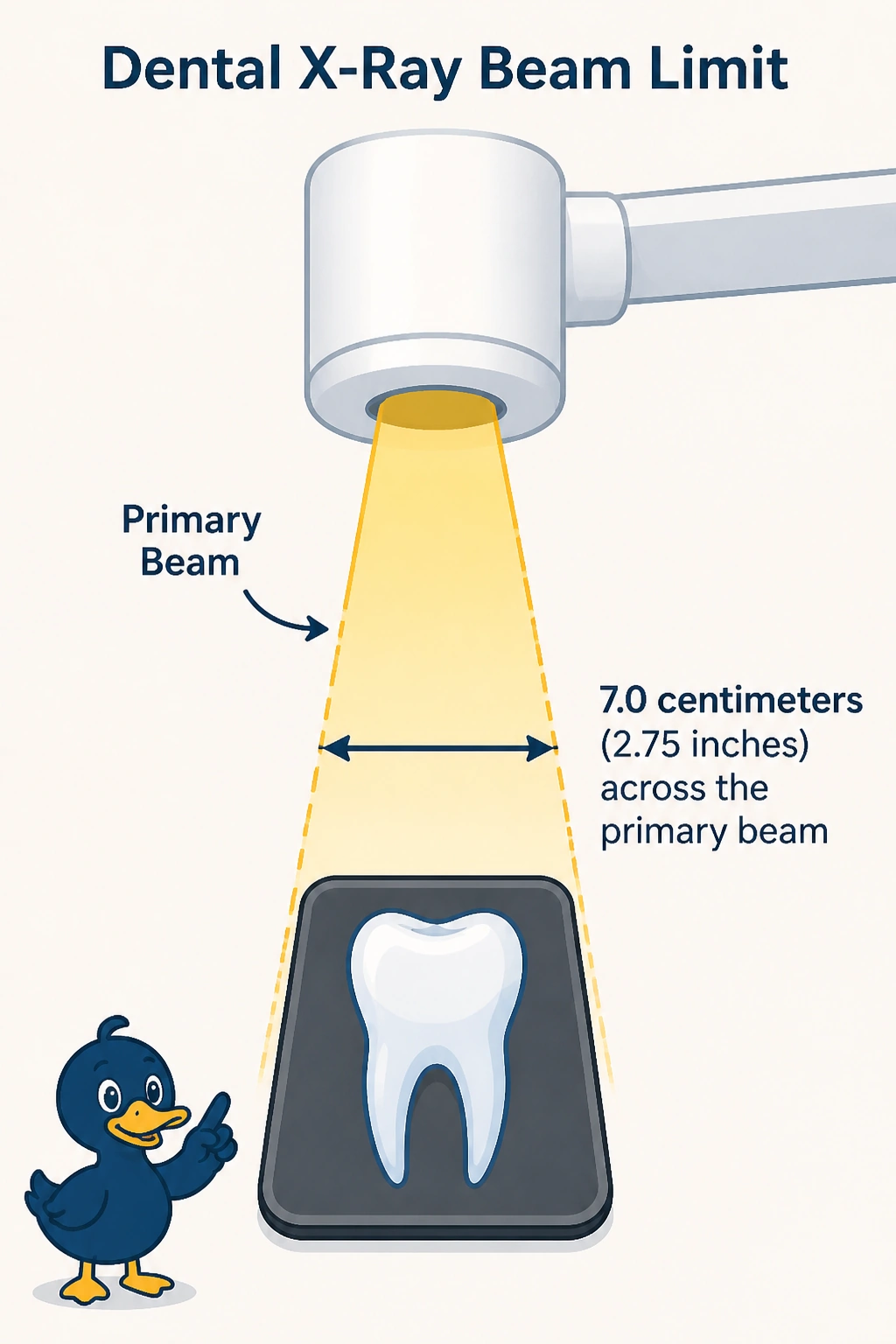
Think of the lead collimator as a spotlight aperture keeping the X-ray beam tightly focused on just the receptor, and you will remember why size limits matter. Federal standards cap a circular intraoral beam at 7.0 centimeters (2.75 inches) at the skin. The trap is guessing a wider beam size that would needlessly irradiate the patient's cheeks and neck.
Full Explanation
Under FDA diagnostic X-ray equipment standards, a lead diaphragm collimator inside the tubehead must restrict the circular intraoral X-ray field to no more than 7.0 centimeters (2.75 inches) across the primary beam at the patient's skin surface. Limiting the beam to this diameter covers a standard intraoral receptor with a small alignment margin while preventing unnecessary irradiation of surrounding facial tissues and reducing secondary scatter. Selecting 5.0 centimeters (2.0 inches) across the primary beam would be slightly narrower than the long dimension of an adult Size 2 receptor, increasing the risk of frequent cone-cut retakes. Allowing 10.0 centimeters (4.0 inches) across the primary beam or 12.5 centimeters (5.0 inches) across the primary beam would expose a much larger volume of tissue than needed for intraoral imaging and violate federal collimation limits. As a caveat, rectangular collimation further reduces exposed tissue volume to match the receptor's shape and is preferred under ALARA principles even when circular collimation meets the regulatory maximum. For an operational check, verify that the collimator aperture matches the PID type and inspect the open-ended PID alignment during routine quality assurance.
Prefer to study offline? Printable PDF study book + test engine ($7.50, unofficial). These questions stay free here.