
A patient transfers to a new dental clinic across town and asks the previous office for the original digital radiographic files, stating they paid for them. According to standard dental recordkeeping and regulatory principles, how should the office respond?
Select an answer to reveal the explanation.
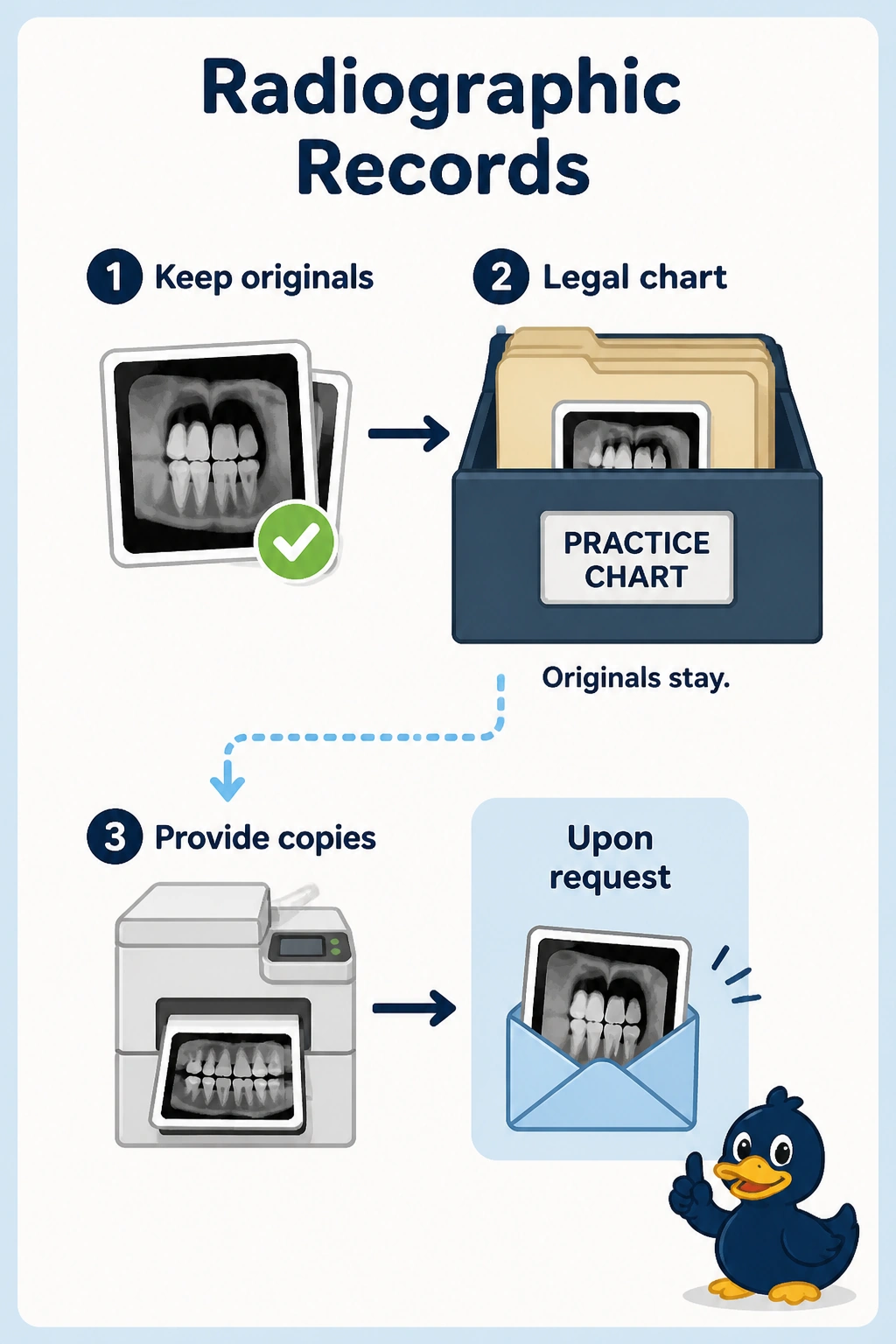
Short Explanation
Think of dental radiographs like a hospital's medical chart—you own the clinical record, yet the patient always has a right to a copy for continuity of care. The trap is either deleting your legal record or refusing to share copies, which forces unnecessary repeat radiation.
Full Explanation
Under standard dental recordkeeping and patient-access principles, radiographs are an integral part of the patient's clinical chart and must be preserved by the treating practice for legal and diagnostic continuity. Therefore, the office should Retain the original radiographic records in the practice's legal chart and provide copies upon request. Choosing Transfer the sole master files to the patient and delete all copies from the practice's imaging server would destroy the dentist's legal documentation of prior diagnoses and treatment. Choosing Refuse to release any radiographic copies because images are strictly proprietary clinic property violates patient access rights and undermines radiation protection by withholding prior diagnostic data. Choosing Require the patient to undergo a new full-mouth radiographic series at the new office instead of sharing records directly contradicts ADA and FDA patient selection guidelines, which emphasize obtaining prior images to avoid unnecessary radiation exposure. As a caveat, retain records for the full statutory retention period required in your jurisdiction, which is often longer for pediatric patients. As an operational check, export diagnostic-quality copies with a signed release authorization and log the transfer date in the patient's chart.
Prefer to study offline? Printable PDF study book + test engine ($7.50, unofficial). These questions stay free here.