
A dental assistant who regularly exposes intraoral digital radiographs informs the dentist in writing that she is pregnant and wants to continue clinical duties safely. According to federal radiation protection standards, what monitoring adjustment applies once pregnancy is declared?
Select an answer to reveal the explanation.
Short Explanation
Declaring pregnancy in writing does not ban you from taking X-rays—it simply adds an extra layer of tracking for the developing fetus. The trap is thinking you must leave the operatory altogether or double up on heavy aprons instead of using standard barriers and a waist badge.
Full Explanation
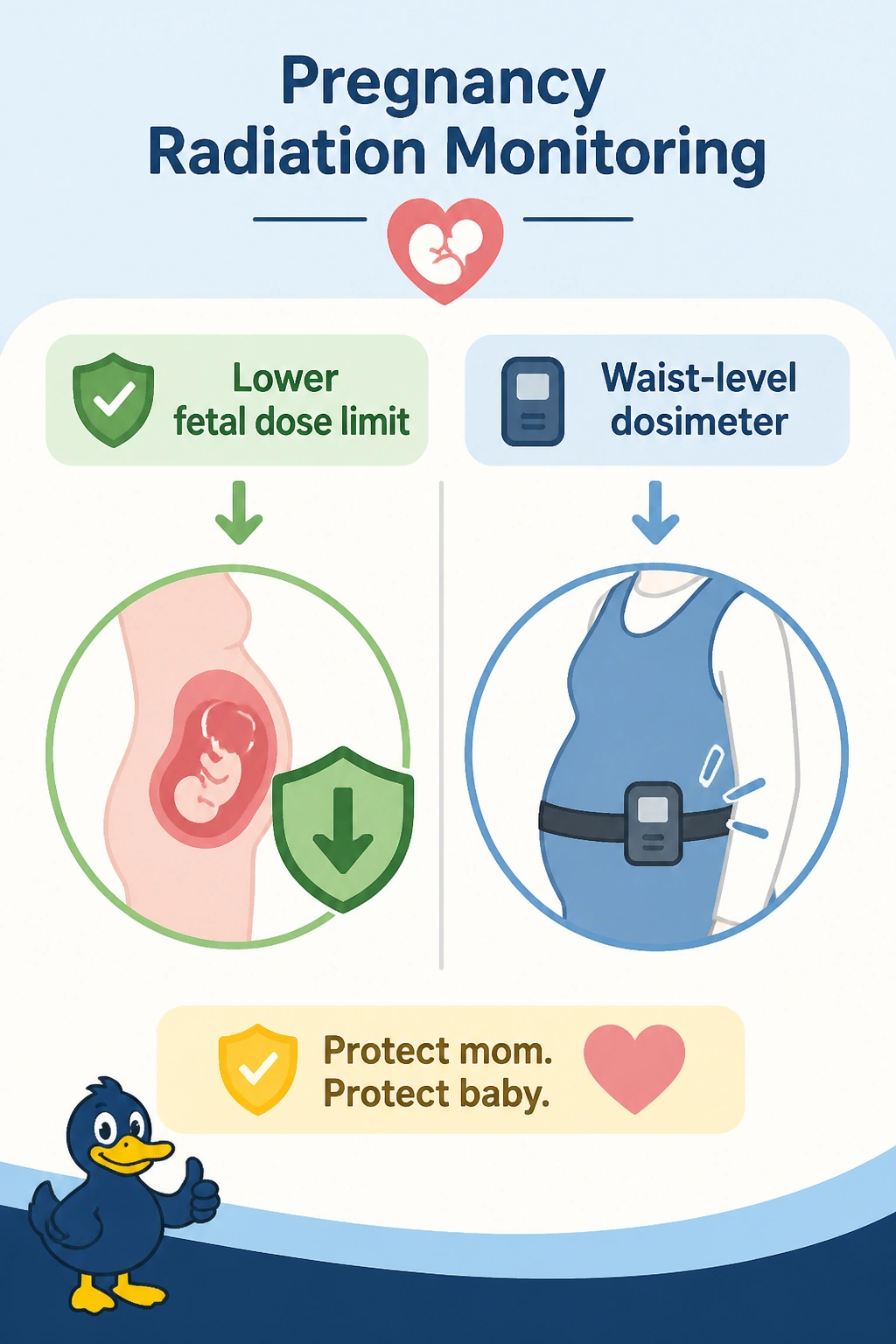
She receives a lower fetal dose limit and a waist-level dosimeter reflects standard federal radiation protection rules (such as NRC 10 CFR 20), where a voluntary written declaration of pregnancy activates a stricter occupational dose limit for the embryo or fetus and a dedicated abdominal badge worn under any protective garment. She must be reassigned away from all dental radiography rooms until after delivery is incorrect because dental staff using proper structural shielding and distance normally receive negligible occupational exposure. She must wear two lead-equivalent aprons simultaneously during every exposure is unnecessary when standing behind a protective barrier and adds ergonomic strain without improving barrier protection. She switches to a finger-ring dosimeter in place of a collar badge measures extremity dose to the hands rather than fetal dose at the abdomen. As a caveat, the lower fetal dose limit applies only after the worker submits a voluntary written declaration to the employer. As an operational check, continue standing behind the lead-lined barrier or at least six feet away at a 90-to-135-degree angle while keeping the waist dosimeter separate from the collar badge.
Prefer to study offline? Printable PDF study book + test engine ($7.50, unofficial). These questions stay free here.