
Inside a digital dental X-ray machine, a high-voltage step-up transformer is connected to the tube circuit between the autotransformer and the X-ray tube. What is the primary role of this step-up transformer during an exposure?
Select an answer to reveal the explanation.
Short Explanation
Your dental X-ray tube needs a massive electrical push to hurl electrons fast enough to make X-rays. The trap is mixing up the high-voltage step-up transformer with the low-voltage step-down transformer that heats the filament.
Full Explanation
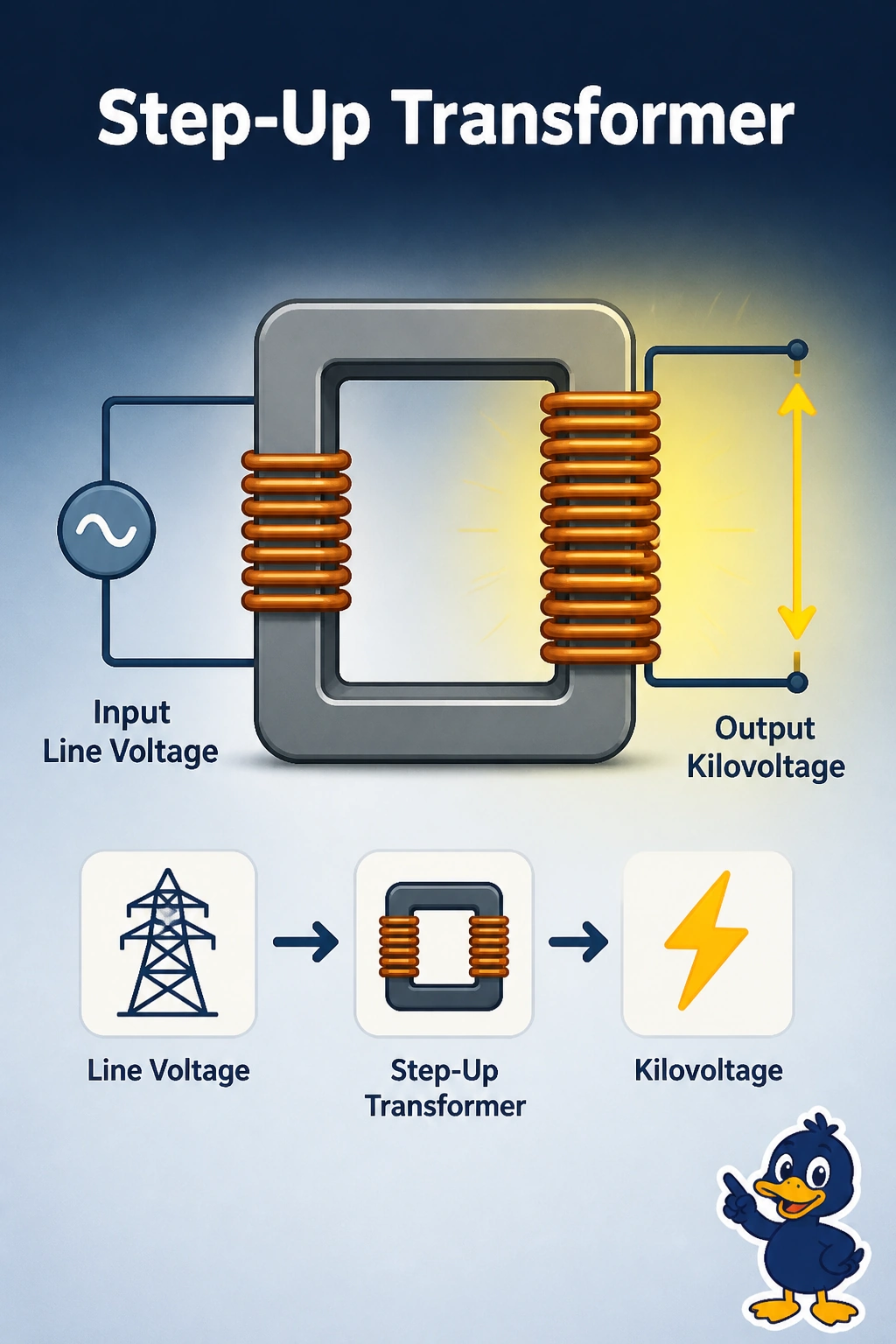
Increasing incoming line voltage to kilovoltage levels is the job of the step-up transformer, which uses a much higher number of wire turns in its secondary coil than in its primary coil to boost standard wall-outlet voltage into tens of thousands of volts across the X-ray tube so electrons accelerate forcefully from cathode to anode. Heating the tungsten filament to release electrons is handled by the separate step-down transformer in the filament circuit, which lowers voltage rather than raising it. Absorbing low-energy photons from the beam is the function of aluminum filtration discs placed in the exit path of the tubehead, not an electrical transformer. Cooling the copper anode stem after exposure relies on heat conduction into the surrounding insulating oil inside the metal housing rather than voltage transformation. As a safety caveat, because the step-up transformer operates at lethal kilovoltage potentials, it is sealed inside the oil-filled tubehead housing and never serviced by clinical staff. For an operational check, inspect the tubehead housing and power cords for oil leaks or damage before use, and confirm the control panel displays the selected kilovoltage setting before initiating an exposure.
Prefer to study offline? Printable PDF study book + test engine ($7.50, unofficial). These questions stay free here.