
A mobile dental clinic uses an FDA-cleared handheld portable digital X-ray unit during community outreach screenings. To minimize occupational scatter exposure while operating the device, how should the dental assistant position the unit and themselves?
Select an answer to reveal the explanation.
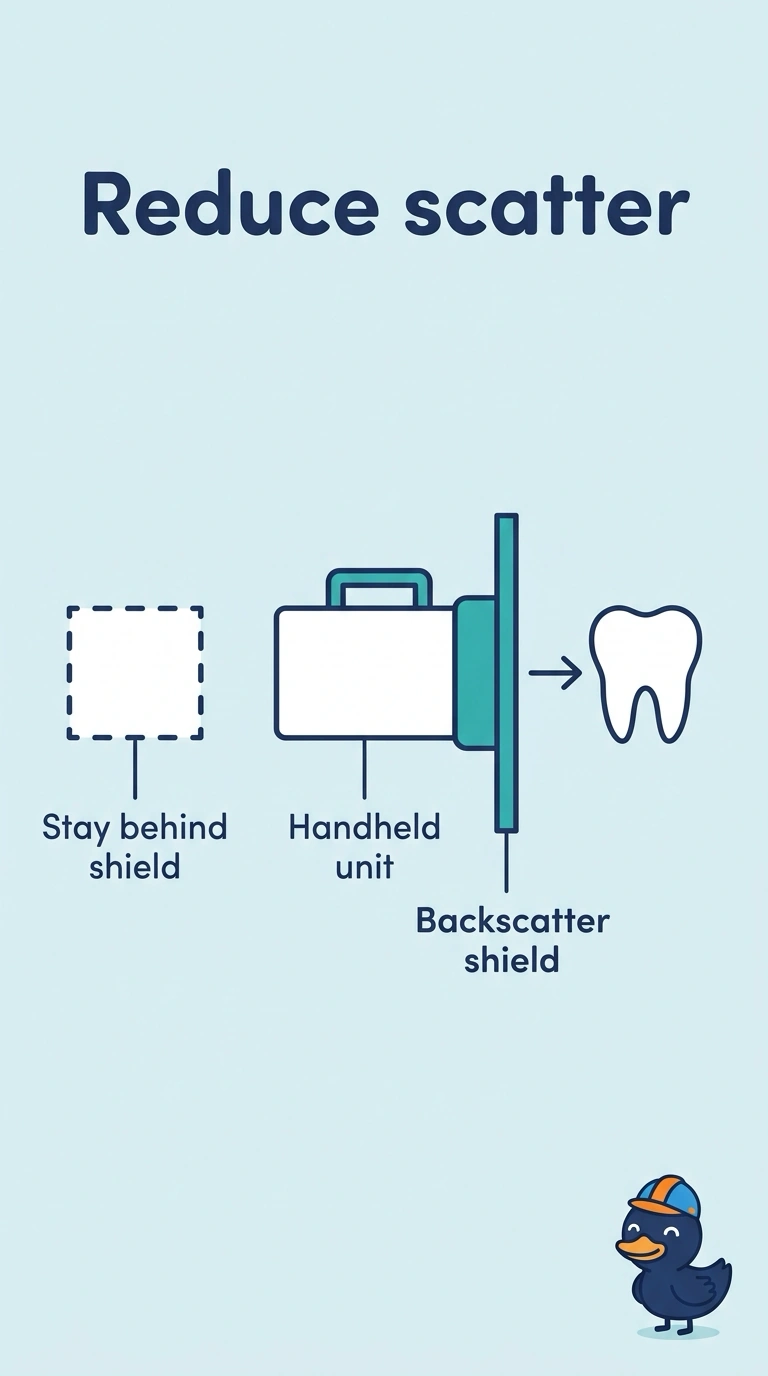
Short Explanation
Think of the backscatter shield like an umbrella: you stay protected when you hold it close to the patient and stand directly behind it. Keep the shield in place rather than holding the unit at arm’s length off to the side, sliding the shield back, or detaching it; that keeps you within its protective shadow.
Full Explanation
When operating an FDA-cleared handheld portable dental X-ray unit, hold it with the backscatter shield close to the patient and stay directly behind the shield. Scatter radiation originates from the patient’s tissues, so placing the shield near the patient creates a protective shadow behind the device and helps keep your hands and torso out of the scatter path. Holding the unit at arm’s length while standing off to the side of the primary X-ray beam does not place you within the protection provided by the handheld unit’s shield. Sliding the shield back toward the tubehead housing to improve sensor visibility moves it away from the patient and reduces the protective shadow, exposing your hands and body to patient backscatter. Detaching the shield during anterior exposures to avoid contacting the patient’s nose removes essential engineered shielding and is not a safe operating practice. An exam caveat: handheld devices must be FDA-cleared for portable use; a conventional wall-mounted tubehead should not be substituted by hand-holding it. For a practical check before every exposure, verify that the shield is intact and positioned at the patient end of the cone, and that your hands and torso remain directly behind it.
Prefer to study offline? Printable PDF study book + test engine ($7.50, unofficial). These questions stay free here.