
Inside the glass envelope of a dental X-ray tube, a negatively charged molybdenum cup surrounds the heated tungsten filament at the cathode. What is the primary physical function of this focusing cup during an exposure?
Select an answer to reveal the explanation.
Short Explanation
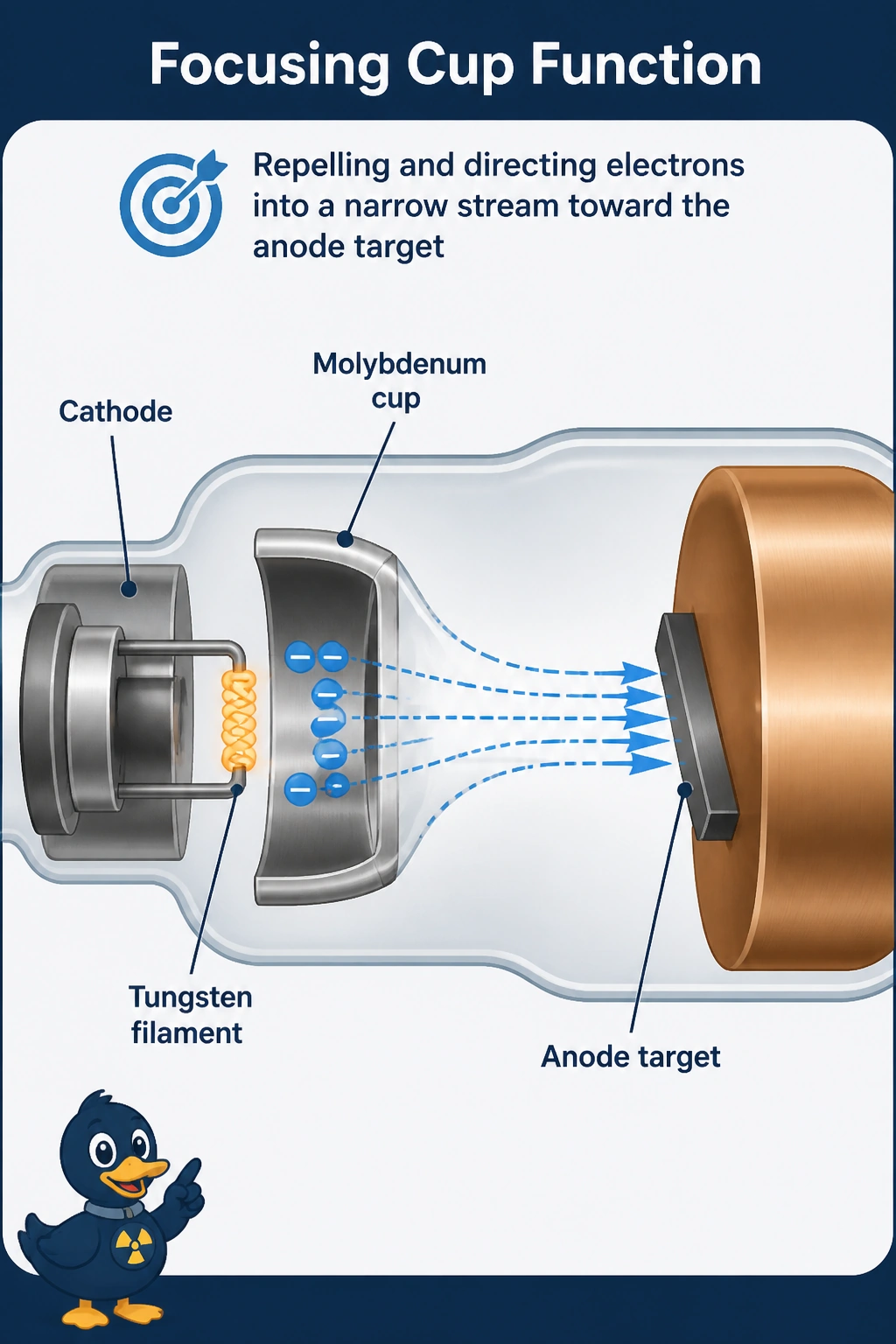
You can picture the molybdenum focusing cup as a megaphone for electrons, keeping the cloud from scattering before you press the timer. The key is its negative charge: it repels electrons into a tight stream aimed at the anode’s focal spot. Don’t confuse this cathode part with heat control, X-ray filtration, or the circuit that heats the filament.
Full Explanation
Repelling and directing electrons into a narrow stream toward the anode target is the core role of the negatively charged molybdenum focusing cup. Because like charges repel, the cup’s electrostatic field limits the spread of the thermionically emitted electron cloud and directs it onto the small tungsten focal spot on the anode, supporting image sharpness. Absorbing stray heat from the tungsten target to prevent the glass from cracking is not the cup’s function; heat is managed by the copper anode stem and surrounding insulating oil. Filtering low-energy X-ray photons before the primary beam exits the tubehead is done by aluminum filtration disks in the beam path outside the glass envelope, not by the cathode cup. Stepping down line voltage to heat the filament before high voltage is applied is performed by the step-down transformer in the filament circuit. As an exam caveat, tungsten vaporization over years of use can deposit metal on the glass envelope and alter tube efficiency. For a practical check during preventive maintenance, verify that the X-ray unit produces consistent beam output and sharp test-phantom edges.
Prefer to study offline? Printable PDF study book + test engine ($7.50, unofficial). These questions stay free here.