
Inside a dental X-ray machine, a step-down transformer is wired into the cathode filament circuit. What is the primary electrical function of this component during an exposure?
Select an answer to reveal the explanation.
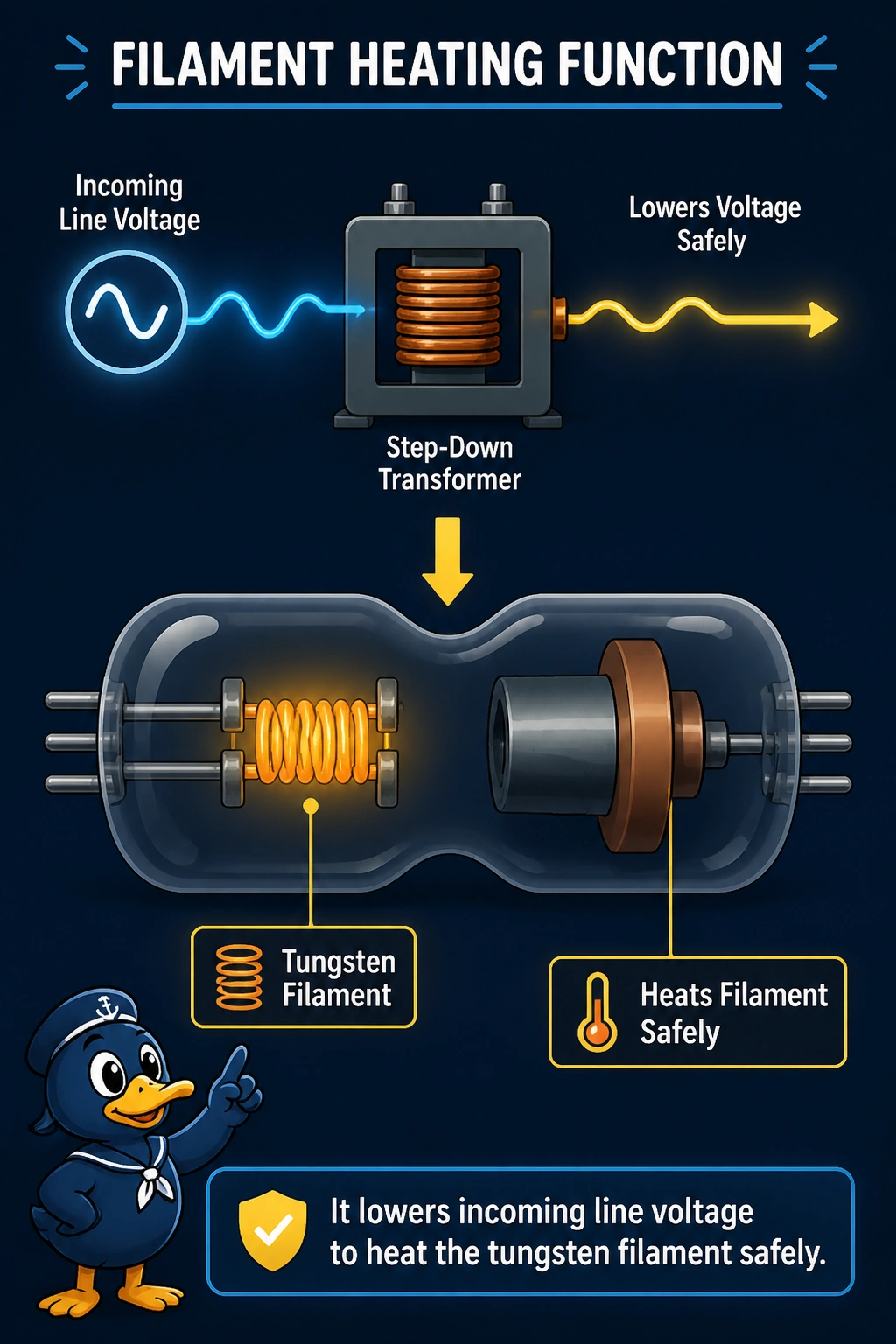
Short Explanation
Think of the step-down transformer as a dimmer that drops wall voltage down to a gentle simmer so your tungsten filament glows without melting. The trap is confusing it with the step-up transformer that blasts electrons across the tube.
Full Explanation
To release free electrons by thermionic emission without burning out the delicate cathode wire, the filament circuit needs low voltage and controlled current, which is why It lowers incoming line voltage to heat the tungsten filament safely is the exact job of the step-down transformer. By contrast, It increases incoming line voltage to accelerate electrons toward the anode describes the step-up transformer in the high-voltage circuit rather than the filament circuit. Selecting It converts alternating current into direct current across the X-ray tube is incorrect because rectification or self-rectification handles current direction, not voltage reduction in the filament loop. Similarly, It regulates the timer circuit so the exposure stops when the switch opens refers to the exposure timing and dead-man switch mechanism rather than transformer action. As an equipment caveat, modern DC high-frequency dental units use electronic inverter circuitry alongside transformers, yet the filament still requires low-voltage heating. For an operational check, verify during routine preventive maintenance that tubehead output remains consistent across mA settings, which confirms proper filament heating.
Prefer to study offline? Printable PDF study book + test engine ($7.50, unofficial). These questions stay free here.