
During an equipment orientation, a new dental assistant asks why the metal housing of an intraoral X-ray tubehead is filled with oil surrounding the glass X-ray tube. What is the primary purpose of this insulating oil?
Select an answer to reveal the explanation.
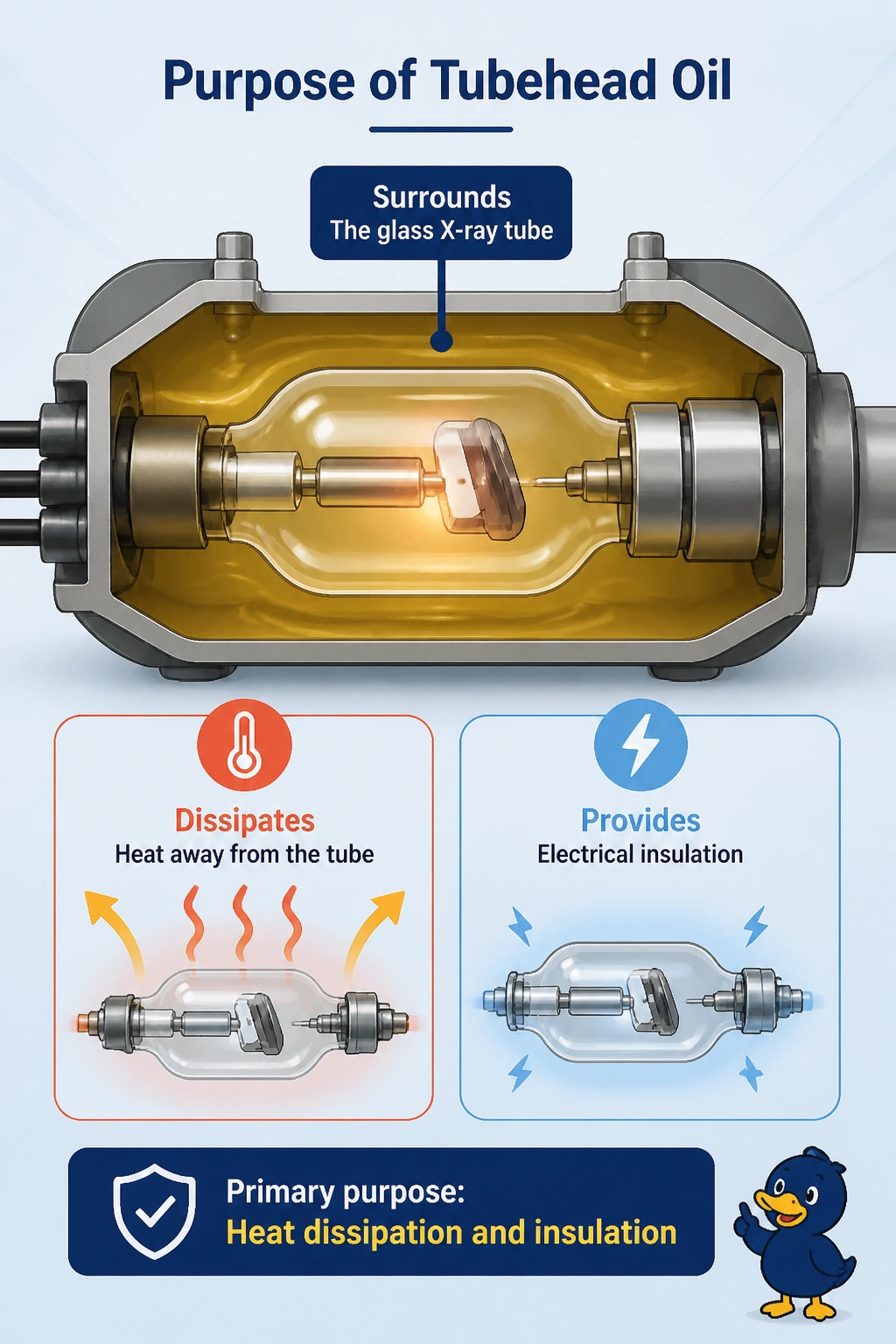
Short Explanation
Generating X-rays creates a huge amount of heat, and that oil bath keeps your tubehead from cooking itself or arcing! The trap is mixing up the oil's cooling job with the aluminum disk's filtration job or the lead housing's shielding job. Keep an eye out for any oil leaks around the tubehead seal.
Full Explanation
Inside a dental X-ray tubehead, almost all of the kinetic energy from electrons striking the tungsten target is converted into heat rather than X-ray photons, while high voltage is simultaneously supplied to the tube. The sealed housing surrounds the glass X-ray tube with insulating oil To dissipate heat away from the X-ray tube and provide electrical insulation, preventing overheating and electrical arcing. This oil bath is not used To filter out low-energy X-ray photons before they reach the collimator; although the oil and glass wall contribute minor inherent filtration, dedicated aluminum disks perform beam filtration. Nor is the oil intended To focus the electron stream onto the tungsten target during exposure, which is the job of the negatively charged molybdenum focusing cup inside the evacuated cathode assembly. Likewise, the oil is not meant To shield the operator from primary radiation exiting the tubehead, because primary beam restriction and leakage shielding are provided by the lead-lined housing and collimator. One caveat is that a cracked tubehead seal can allow oil to leak, signaling an immediate need to take the unit out of service. As an operational check, visually inspect the tubehead housing for oil residue during routine equipment checks.
Prefer to study offline? Printable PDF study book + test engine ($7.50, unofficial). These questions stay free here.