
When positioning a Size 2 digital sensor horizontally for a maxillary molar periapical radiograph using the paralleling technique, where should the dental assistant align the anterior border of the receptor to ensure all three molar regions and the tuberosity are captured?
Select an answer to reveal the explanation.
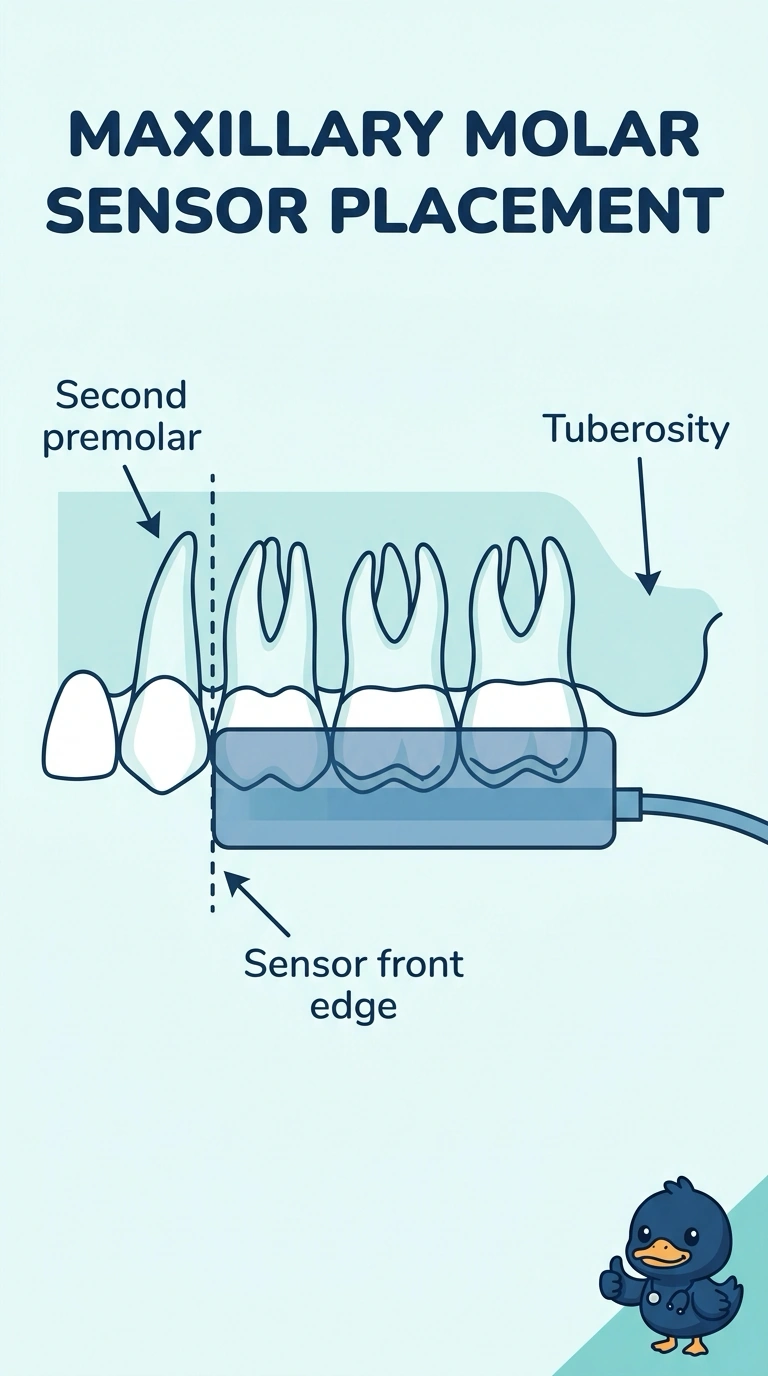
Short Explanation
Think of framing a panoramic window — if you start too far forward, you chop off the back corner. Aligning your sensor's front edge at the distal aspect of the maxillary second premolar leaves enough room to capture the first, second, and third molars plus the tuberosity. The trap is starting too far anteriorly near the canine, which clips the posterior molar roots.
Full Explanation
To capture the entire maxillary molar region—including the first, second, and third molar areas along with the maxillary tuberosity—the Size 2 horizontal receptor must be Positioned at the distal aspect of the maxillary second premolar. This landmark places the active imaging area far enough posteriorly to record the distobuccal roots and tuberosity while keeping the first molar centered. If the sensor is Centered behind the maxillary canine crown, it functions as a premolar periapical placement and will cut off the second and third molar regions at the posterior border. Placing the receptor Aligned with the midline of the central incisors is far too anterior and is appropriate only for anterior periapical views, completely missing the posterior molars. Conversely, if the sensor is Placed entirely posterior to the maxillary third molar area, the first molar and much of the second molar will be clipped from the mesial border and the patient's gag reflex is far more likely to be triggered. As a caveat, rigid CMOS sensors have a plastic housing wider than the actual active imaging matrix, so slightly more posterior clearance may be needed than with PSP plates. As an operational check, confirm the bite block rests securely on the maxillary molars and the aiming ring is centered over the sensor before exposing.
Prefer to study offline? Printable PDF study book + test engine ($7.50, unofficial). These questions stay free here.