
A dental assistant is setting up a full-mouth digital radiographic series for a healthy adult patient with a normal arch width. Which intraoral receptor size is standard for exposing the patient's horizontal posterior bitewings and molar periapical images?
Select an answer to reveal the explanation.
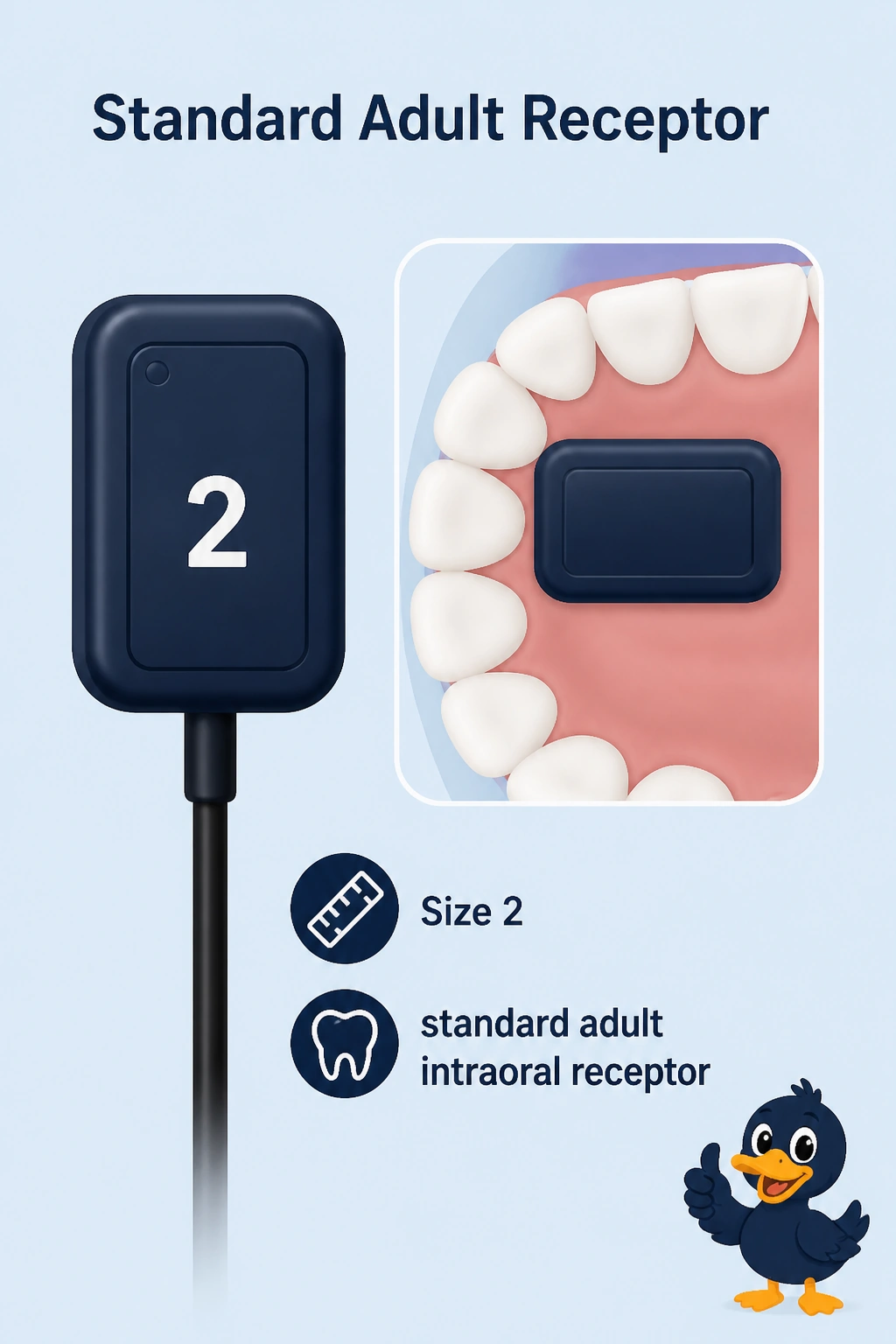
Short Explanation
Think of Size 2 as your everyday workhorse for adult posterior imaging—wide enough to capture premolars and molars in one horizontal bitewing. Using a smaller receptor leaves posterior contacts off the edge, while an occlusal receptor will not fit vertically between the arches. The trap is grabbing a narrow anterior sensor for adult molars.
Full Explanation
For a healthy adult with a normal arch, A Size 2 standard adult intraoral receptor provides the proper active imaging area to capture multiple posterior teeth, interproximal contacts, and crestal bone in horizontal bitewings as well as full root apices in molar periapicals. A Size 0 pediatric intraoral receptor is designed for young children with primary dentition and is too small to span adult molar crowns and apices effectively. A Size 1 narrow anterior intraoral receptor is narrower vertically and horizontally, making it well suited for adult anterior periapicals in narrow arches or pediatric mixed-dentition bitewings, but it frequently clips distal molar surfaces or root apices in adult posterior regions. A Size 4 occlusal intraoral receptor is much larger and designed for broad cross-sectional or topographic occlusal views of the palate or floor of the mouth, not routine posterior periapical or bitewing holders. As a caveat, some adult patients with severe tori or a narrow arch may require switching to a Size 1 receptor in the anterior or premolar region for comfort. For an operational check, verify the selected sensor size matches the receptor-holding bite block before barrier placement.
Prefer to study offline? Printable PDF study book + test engine ($7.50, unofficial). These questions stay free here.