
While reviewing a digital panoramic radiograph of an adult patient, you notice a thin, pointed, elongated radiopaque projection extending downward and forward from the base of the temporal bone just posterior to the mandibular ramus. Which normal anatomical structure does this finding represent?
Select an answer to reveal the explanation.
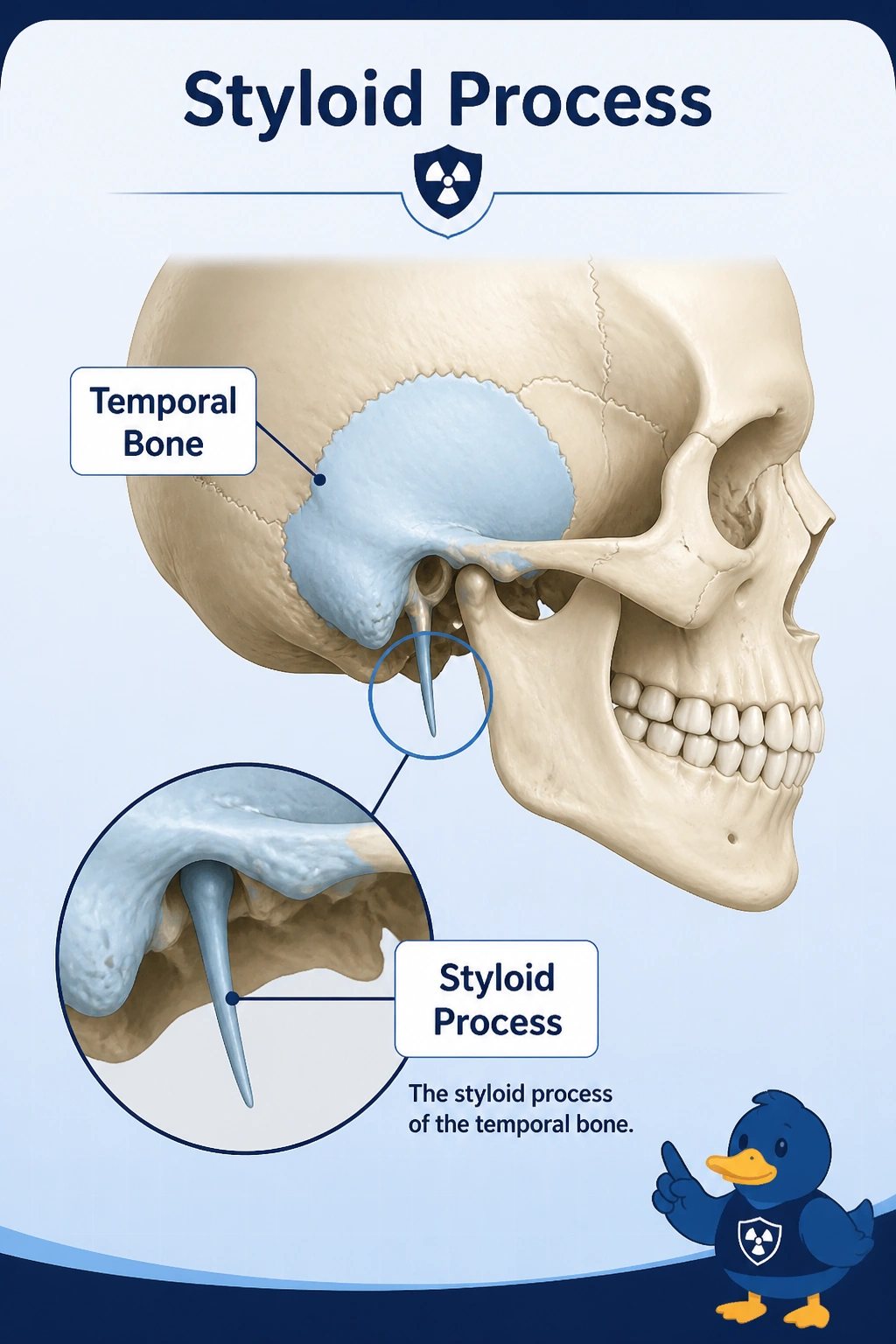
Short Explanation
You can recognize the styloid process as the slender spike extending downward and forward from the skull base behind the mandibular ramus. The superiorly projecting coronoid process and inferiorly extending hamular process lie farther forward near the upper molars, while the articular eminence is a rounded slope rather than a pointed projection.
Full Explanation
The styloid process of the temporal bone is a slender, pointed bony projection extending downward and forward from the inferior surface of the temporal bone. On a panoramic radiograph, it appears radiopaque just posterior to the mandibular ramus and mastoid region because it is composed of cortical bone; its length can vary considerably among healthy adults. The coronoid process of the mandible projects superiorly and appears farther anteriorly, extending toward the maxillary tuberosity rather than downward behind the ramus. The hamular process extends inferiorly from the sphenoid bone but is a small, hook-like projection just posterior to the maxillary tuberosity in the upper arch, not behind the mandibular ramus. The articular eminence, anterior to the glenoid fossa, forms a rounded, convex bony slope at the temporomandibular joint rather than a thin, pointed spike. As a clinical caveat, an unusually long styloid process or a calcified stylohyoid ligament can produce an elongated appearance; correlate the finding with symptoms such as throat or neck pain. For a practical check, trace the posterior border of the mandibular ramus superiorly toward the mastoid process and confirm that the projection originates from the temporal bone behind the jaw.
Prefer to study offline? Printable PDF study book + test engine ($7.50, unofficial). These questions stay free here.