
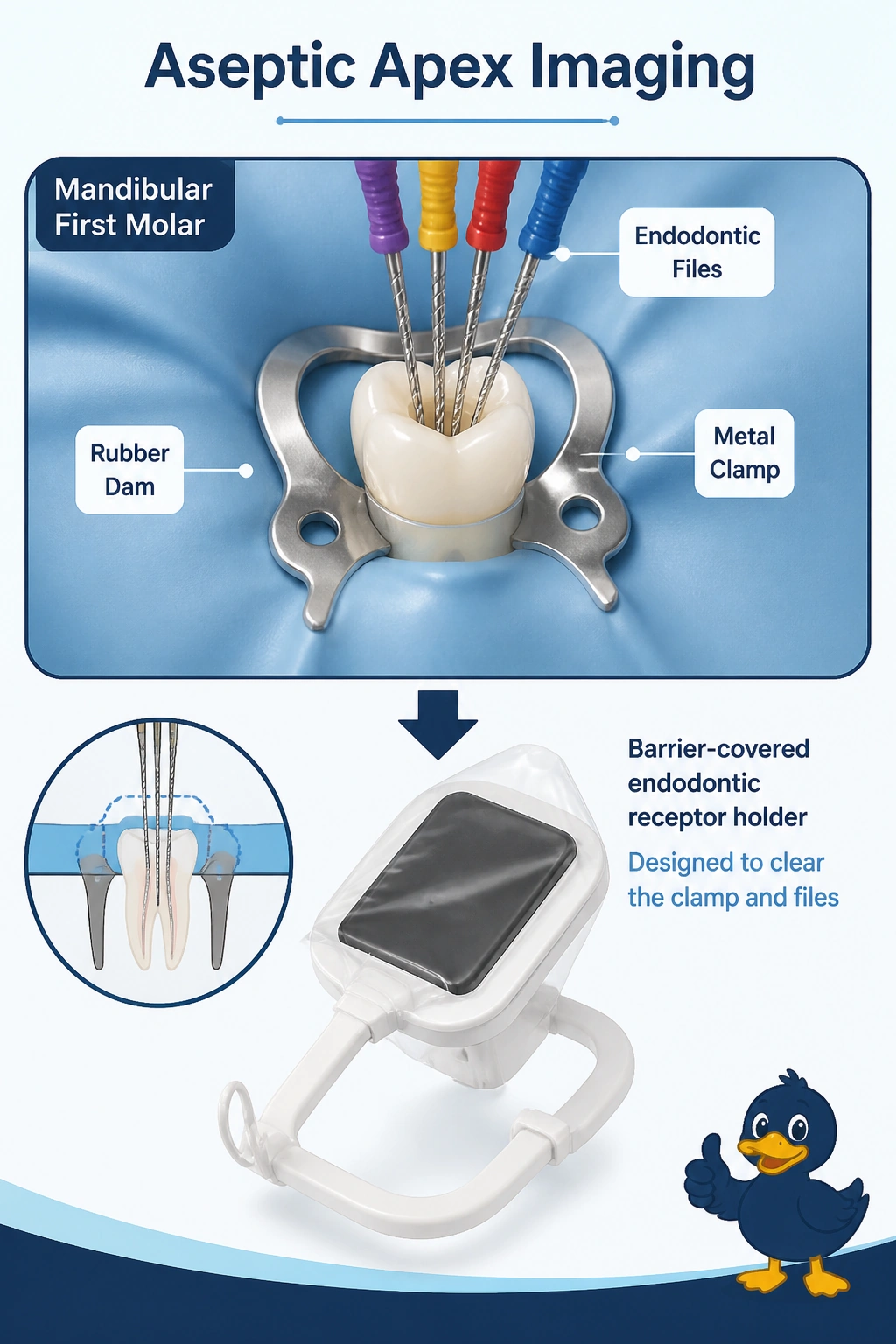
During root canal therapy on a mandibular first molar, the dentist needs a working-length digital periapical radiograph while a rubber dam, metal clamp, and endodontic files remain in the tooth. How should the dental assistant position the sensor to capture the apex without compromising asepsis?
Select an answer to reveal the explanation.
Short Explanation
Taking a working-length image mid-procedure is like threading a needle without dropping the cloth. You keep the sterile field intact by using an endodontic receptor holder built with a cutout that clears the clamp and files. The trap is pulling the rubber dam off for a standard bite block, which floods the canal with saliva and breaks asepsis.
Full Explanation
The proper approach is to Use a barrier-covered endodontic receptor holder designed to clear the clamp and files, which stabilizes the digital sensor parallel to the tooth while preserving the isolated operating field. Specialized endodontic holders feature a notched bite platform or hemostat-style grip that accommodates protruding hand files and the metal clamp wings without forcing the patient to bite directly on the files. By contrast, Remove the rubber dam and clamp completely so a standard bite block can seat flat violates endodontic infection control by exposing the disinfected root canal system to oral bacteria. Likewise, Ask the patient to hold the bare sensor against the lingual mucosa with a finger risks cross-contamination, finger radiation exposure, and image distortion from receptor bending or movement. Finally, Switch to a panoramic radiograph so the sensor stays outside the isolated tooth lacks the spatial resolution needed to measure millimeter-level working length to the root apex. As a caveat, the rubber dam frame may need to be folded slightly or loosened momentarily without removing the dam itself. For an operational check, confirm that the entire root apex and file tips appear clearly before the dentist adjusts canal instrumentation.
Prefer to study offline? Printable PDF study book + test engine ($7.50, unofficial). These questions stay free here.