
A patient missing several mandibular posterior teeth needs a digital periapical radiograph of the remaining maxillary first molar using the paralleling technique. When the patient bites down, the bite block drops into the edentulous space, tipping the sensor out of alignment. Which modification best stabilizes the receptor holder?
Select an answer to reveal the explanation.
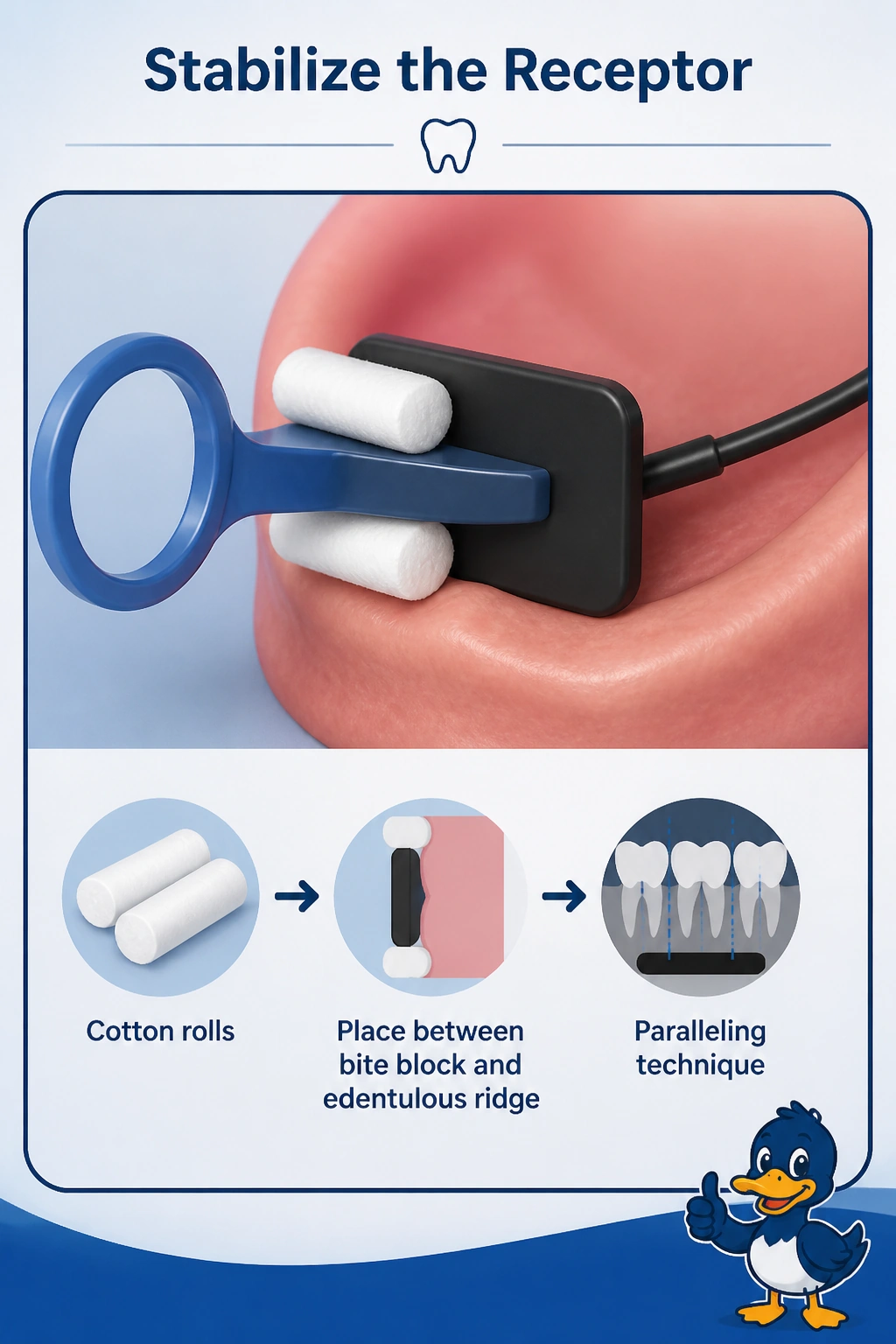
Short Explanation
Think of cotton rolls as a shim under a wobbly table leg—they fill the missing tooth space so your bite block stays level and the sensor remains parallel to the molar. The trap is trying to fix a tilted holder by angling the PID or having the patient hold the arm, which only trades one alignment error for foreshortening, movement, or extra hand exposure.
Full Explanation
"Place cotton rolls between the bite block and the edentulous ridge" restores the missing occlusal stop so the patient can bite evenly and keep the digital sensor parallel to the long axis of the maxillary molar. In the paralleling technique, the receptor and the tooth must stay parallel while the central ray strikes both at a right angle; without support on the opposing edentulous arch, the holder tips downward, distorting root length and risking clipped apices. "Have the patient hold the indicator arm steady with one finger during exposure" is incorrect because manual stabilization introduces motion blur and places the patient's hand unnecessarily close to the primary beam. "Switch to a smaller pediatric sensor and position it horizontally" fails because a smaller receptor still lacks an opposing biting surface to prevent tipping and may not capture the full molar root length. "Increase the vertical angulation of the PID to compensate for tilt" is wrong because changing tubehead angulation independently of the aiming ring misaligns the beam with the receptor, causing cone-cutting or foreshortening rather than fixing the unstable holder. As a clinical caveat, ensure the cotton rolls are thick enough to fill the vertical space without forcing the bite block against the palate. Before leaving the operatory, verify that the aiming ring sits flush with the PID end and that the indicator rod remains level when the patient closes gently.
Prefer to study offline? Printable PDF study book + test engine ($7.50, unofficial). These questions stay free here.