
A dental assistant loads sealed pouches of reusable digital sensor holders into a steam autoclave and starts the cycle. According to CDC dental infection control guidelines, which mechanical parameters must be verified for every sterilization cycle?
Select an answer to reveal the explanation.
Short Explanation
Think of mechanical monitoring as checking your car dashboard on every single drive. You cannot rely only on weekly spore tests or pouch color changes if the autoclave never reached proper heat, pressure, and hold time.
Full Explanation
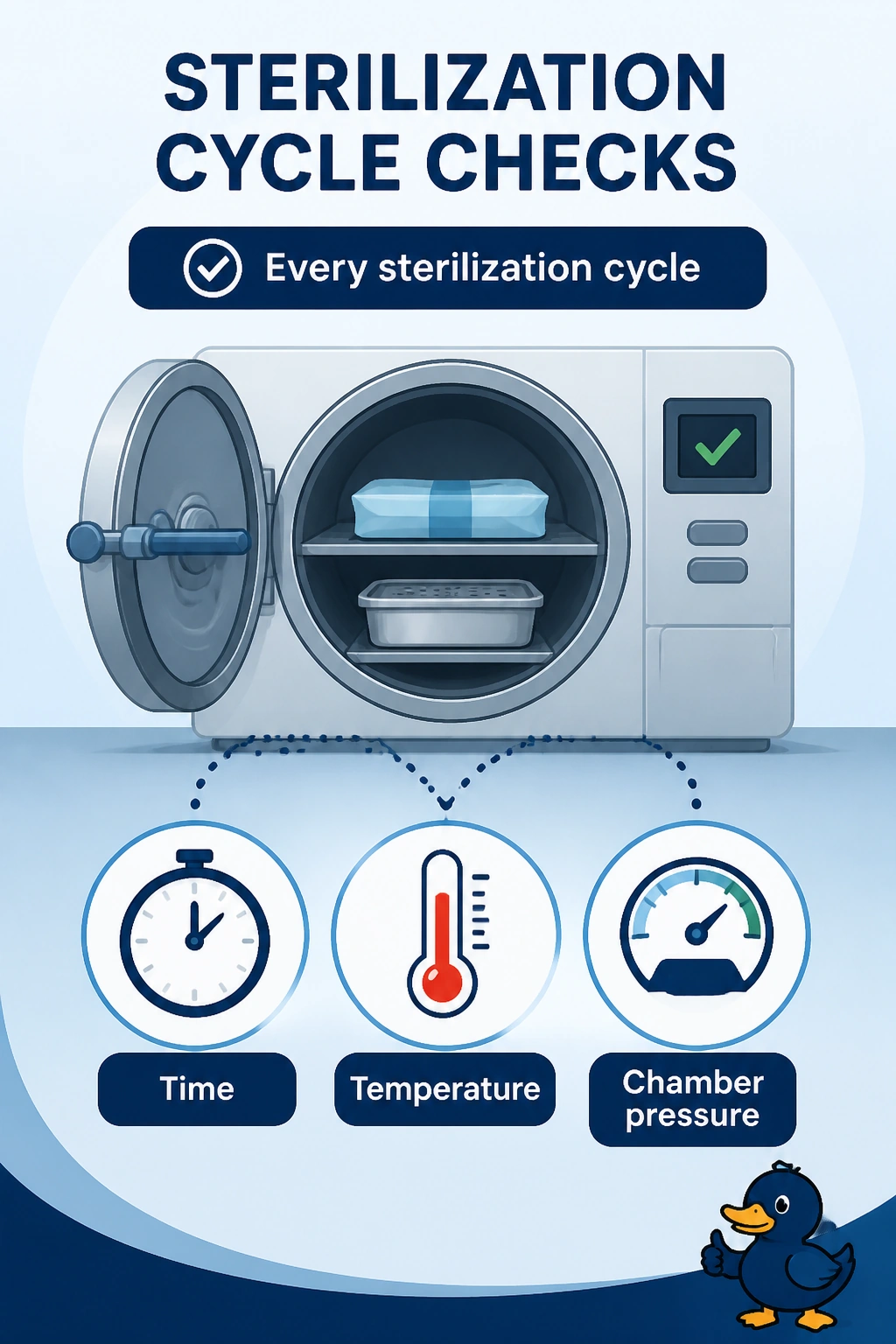
Time, temperature, and chamber pressure are the three mechanical parameters CDC guidelines require staff to verify for every sterilization cycle using the sterilizer's gauges, digital display, or printout. Biological spore growth and indicator color refer to biological monitoring, which is performed at least weekly, and chemical indicator monitoring inside or on each package, neither of which measures live machine gauges for every load. Ultrasonic detergent concentration and pH relate to the pre-cleaning ultrasonic bath stage before packaging, not the steam sterilization cycle itself. Pouch seal width and shelf storage duration govern packaging integrity and event-related sterility after autoclaving, rather than mechanical cycle performance. As an infection-control caveat, a chemical indicator strip can sometimes change color even if the hold time was cut short, so mechanical readings must always accompany chemical indicators. For an operational check, inspect the cycle printout or digital log at the end of every autoclave run, confirm all three mechanical targets were met before unloading, and quarantine the load for re-processing if any parameter fell short.
Prefer to study offline? Printable PDF study book + test engine ($7.50, unofficial). These questions stay free here.