
When packaging reusable plastic sensor aiming rings and bite blocks in individual self-sealing pouches for steam autoclaving, why do CDC dental infection control guidelines recommend an internal chemical indicator inside each pouch in addition to external indicator tape?
Select an answer to reveal the explanation.
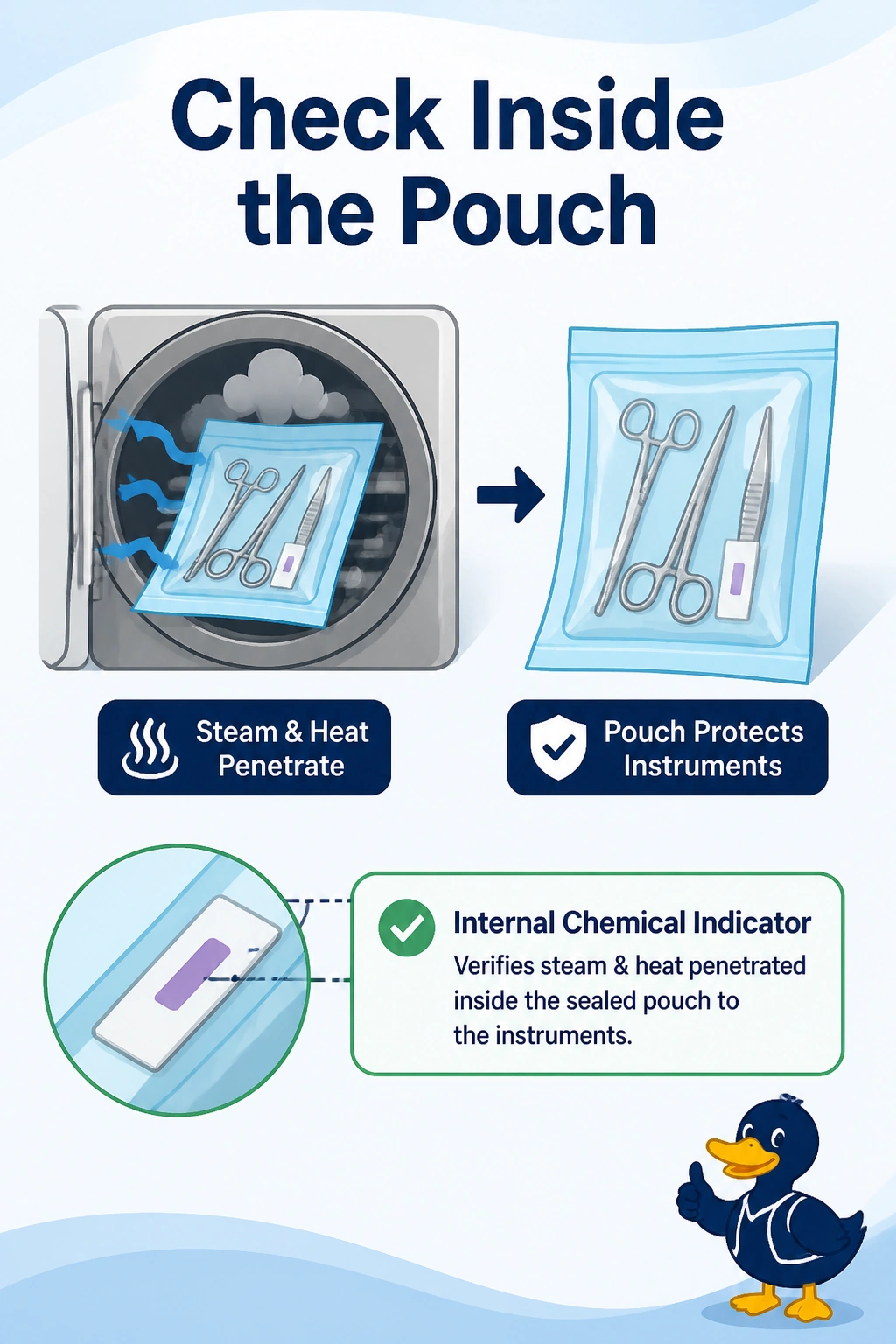
Short Explanation
Think of external tape as proving the oven got hot, while an internal strip proves the heat actually reached the middle of your casserole. The trap is thinking a color-changing chemical strip can prove spores are dead or replace weekly spore tests.
Full Explanation
External indicator tape only shows that the outside of a package was exposed to heat, whereas placing a strip inside the packet confirms exposure at the instrument surface, so It verifies that steam and heat penetrated inside the sealed pouch to the instruments is the exact role of an internal chemical indicator. Selecting It guarantees that all bacterial endospores inside the pouch were destroyed overstates what chemical indicators can do, because only biological spore monitoring directly tests microbial lethality. Choosing It replaces the need for weekly biological spore testing of the autoclave violates CDC guidelines, which require mechanical, chemical, and weekly biological monitoring together. Similarly, It prevents moisture from tearing the paper backing during the drying cycle describes proper autoclave drying and pouch loading practices rather than chemical indicator function. As an infection control caveat, if the external indicator changed color but the internal indicator did not, the contents must be treated as unsterile and reprocessed. For an operational check, inspect the internal chemical indicator through the clear plastic window of each pouch before using the receptor holder on a patient.
Prefer to study offline? Printable PDF study book + test engine ($7.50, unofficial). These questions stay free here.