
After completing a digital full-mouth series, a dental assistant needs to move contaminated reusable plastic aiming rings and bite blocks from the operatory down the hallway to the sterilization room. How should these items be transported according to CDC and OSHA guidelines?
Select an answer to reveal the explanation.
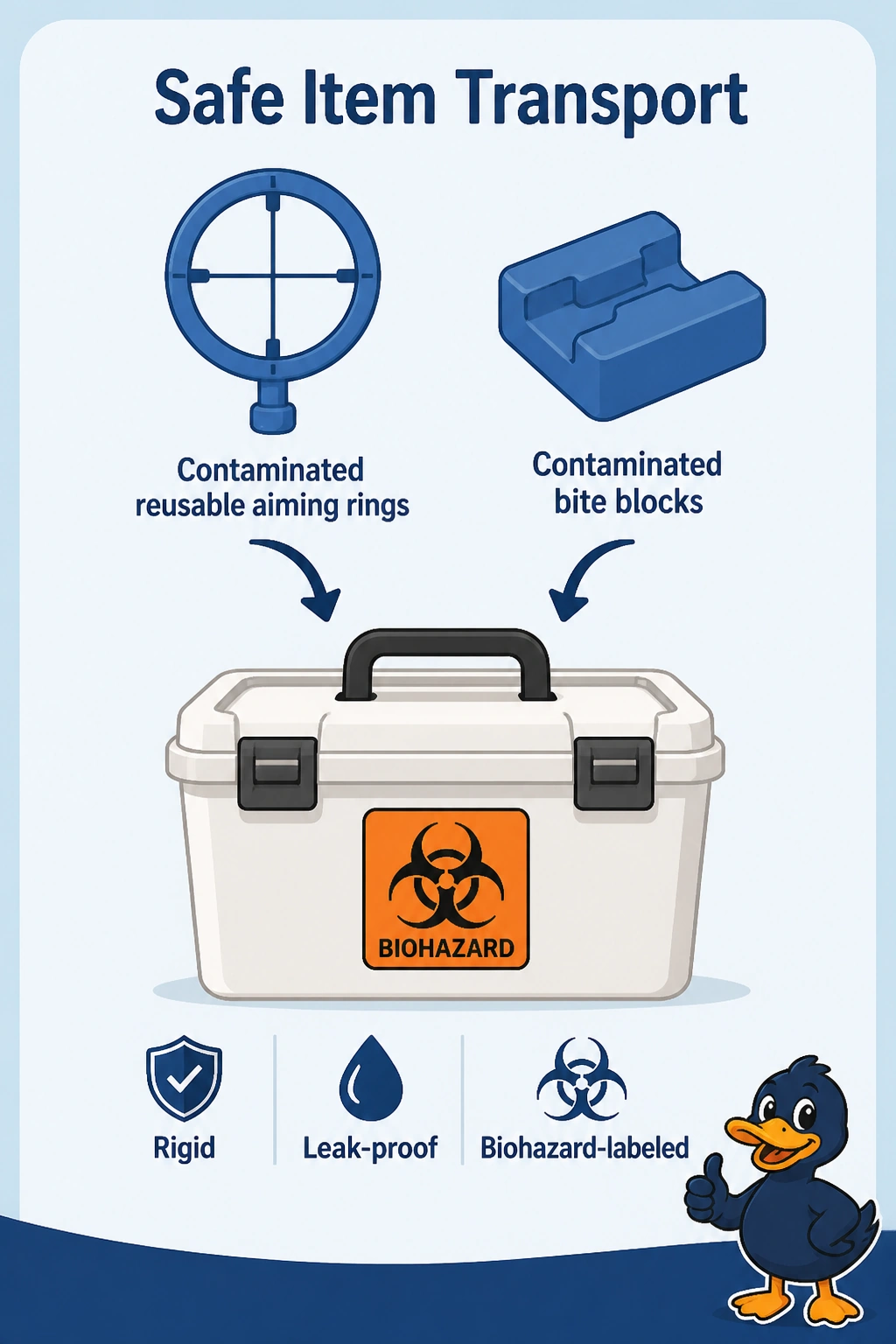
Short Explanation
You protect patients and staff when you keep contaminated reusable holders contained as you move them through the clinic. Rinsing in the sink, an open cup, or carrying them in your hands does not prevent contamination or spills. Place them in a rigid, leak-proof, biohazard-labeled container for transport.
Full Explanation
Under CDC dental infection control guidelines and OSHA bloodborne pathogens rules, contaminated reusable items must be contained during transport, so you should place them in a rigid, leak-proof, biohazard-labeled container when moving them to the instrument processing area. This containment helps prevent saliva or blood from dripping into the hallway and protects staff from accidental contact. Carrying the items loosely in gloved hands directly to the ultrasonic cleaner risks dropping contaminated parts and transferring pathogens to doors or other surfaces along the way. Placing them in an open paper cup on a wheeled cart without a cover fails because paper can soak through and the open cup can spill if bumped. Rinsing them in the operatory sink and carrying them uncovered on a paper tray is unsafe because rinsing alone does not clean and disinfect, and the uncovered tray can drip while paper can soak through. Exam caveat: the transport container must be rigid, leak-proof, and biohazard-labeled to provide the required containment. Practical check: wear heavy-duty utility gloves when unloading the transport container in the receiving area of the sterilization room.
Prefer to study offline? Printable PDF study book + test engine ($7.50, unofficial). These questions stay free here.