
After removing exam gloves following a digital full-mouth series on a patient with heavy bleeding, a dental assistant notices visible blood on one hand. According to CDC dental infection control guidelines, what should the assistant do next?
Select an answer to reveal the explanation.
Short Explanation
Alcohol hand rub is your best friend for quick cleanups, except when blood or saliva is visibly on your skin. The trap is reaching for the sanitizer pump anyway instead of heading straight to the sink.
Full Explanation
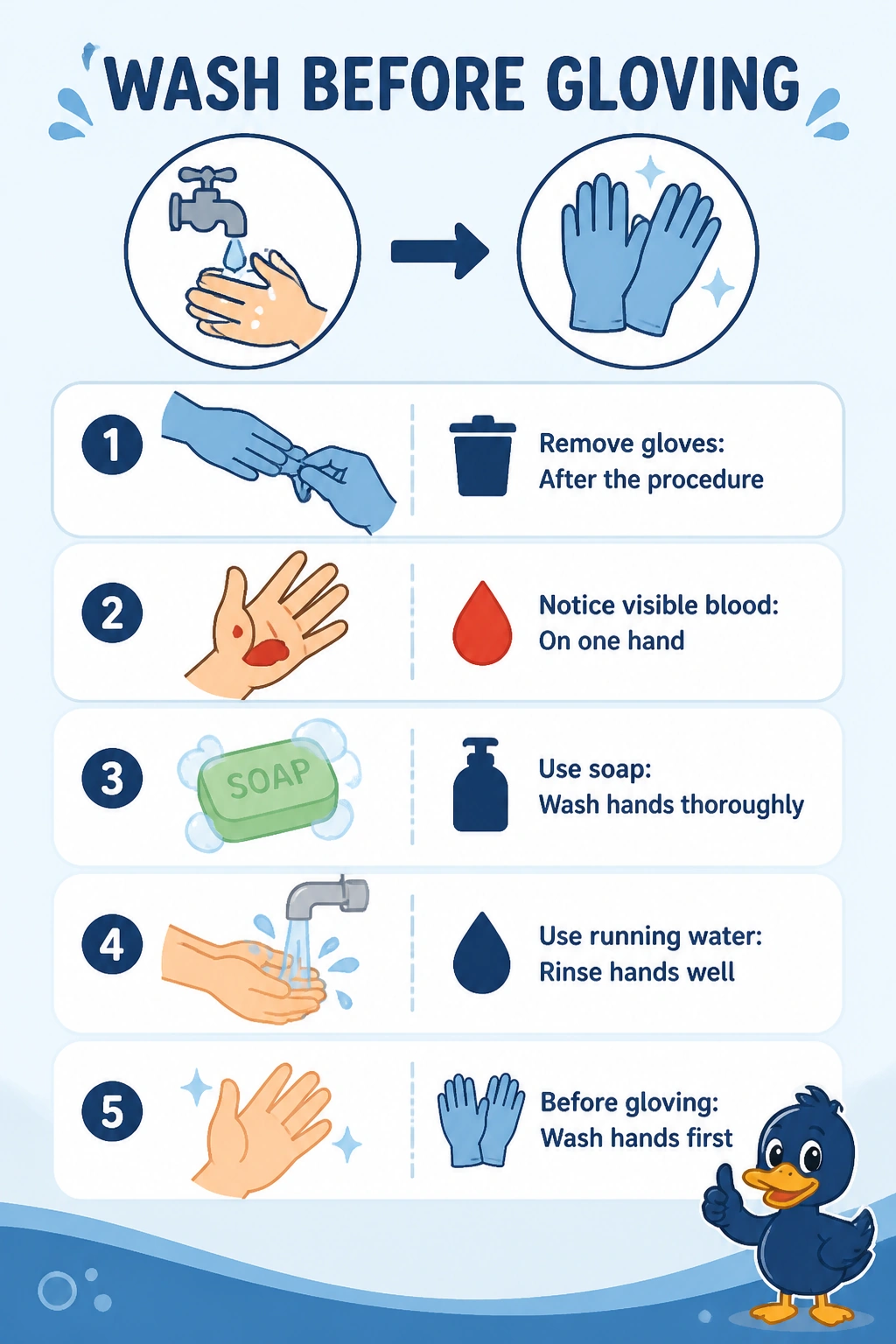
According to CDC dental infection control guidelines, when hands are visibly soiled with blood or other potentially infectious material, you must Wash hands thoroughly with soap and running water before gloving. Mechanical friction with plain or antimicrobial soap and water physically removes organic debris and bloodborne pathogens that chemical rubs cannot penetrate. Choosing to Apply an alcohol-based hand rub and air-dry before donning new gloves fails because alcohol does not remove visible proteinaceous soil and its antimicrobial effectiveness drops when organic matter is present. Choosing to Wipe hands with a surface disinfectant towelette and rinse briefly is unsafe and inappropriate, as surface disinfectants are formulated for inanimate clinical contact surfaces and can cause skin irritation or chemical burns. Similarly, choosing to Rinse hands with cool water only and dry with a paper towel lacks surfactants and adequate scrubbing action to remove adherent blood and microbes. One caveat is that alcohol-based hand rubs remain acceptable for routine hand hygiene between patients only when hands are not visibly soiled. As an operational check, inspect your hands immediately after doffing gloves and wash at the sink for at least 15 to 20 seconds before touching clean supplies.
Prefer to study offline? Printable PDF study book + test engine ($7.50, unofficial). These questions stay free here.