
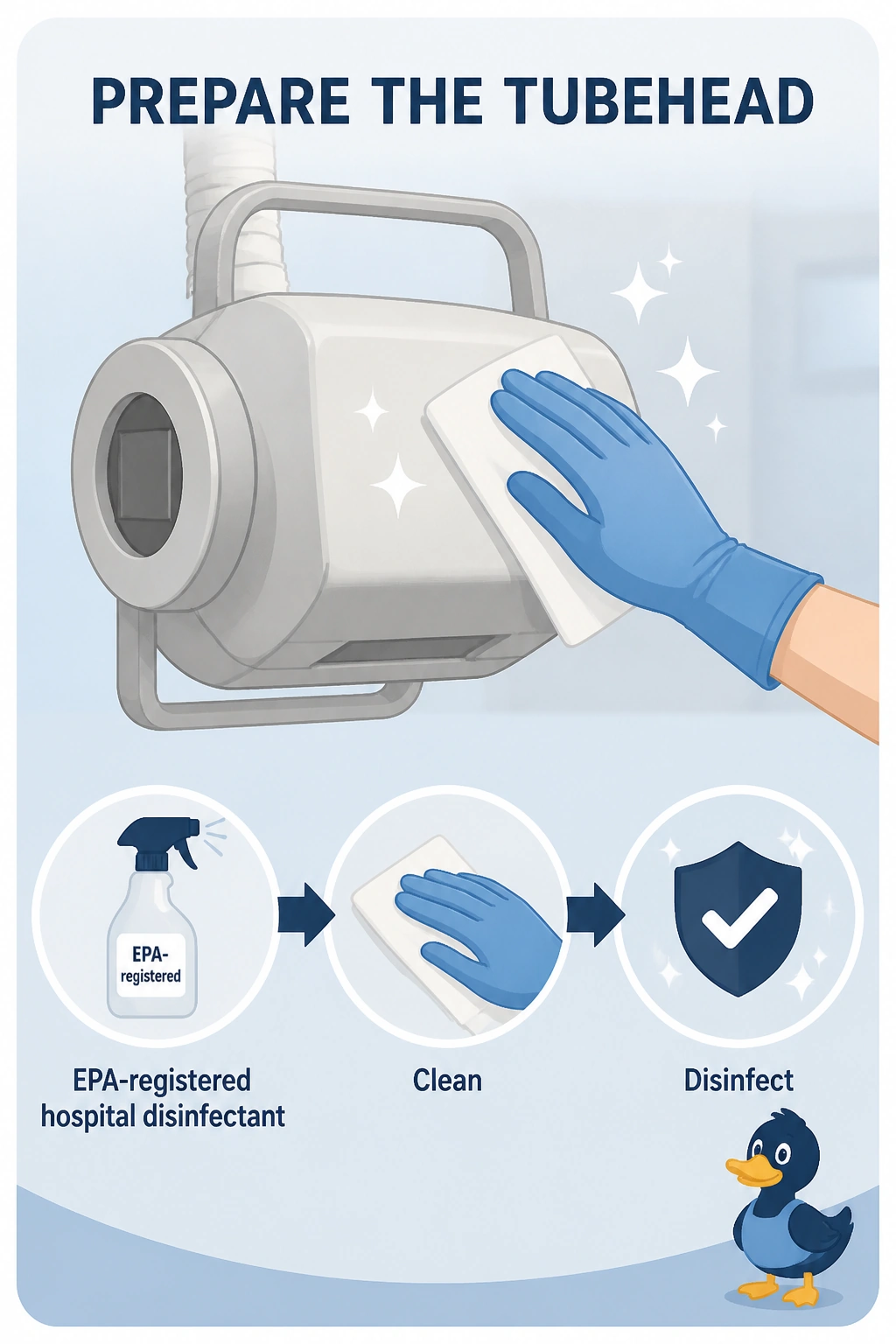
After dismissing a patient, a dental assistant removes the plastic barrier from the X-ray tubehead and notices a tear in the wrap with visible moisture on the underlying housing. According to CDC dental infection control guidelines, what must the assistant do before placing a fresh barrier for the next patient?
Select an answer to reveal the explanation.
Short Explanation
A torn barrier is like a hole in a raincoat—once moisture gets underneath, putting on a new coat does not dry you off. The trap is simply re-wrapping or wiping dry, when CDC rules require you to clean and disinfect that surface first.
Full Explanation
Under CDC infection control guidelines for dental settings, surface barriers protect clinical contact surfaces such as X-ray tubeheads and control panels from contamination, eliminating the need for chemical disinfection between patients only when the barrier remains intact. Once a barrier is torn or visibly soiled underneath, the underlying housing must be treated as contaminated, so the assistant must clean and disinfect the surface with an EPA-registered hospital disinfectant before applying a new barrier. Choosing to place a double layer of fresh plastic barrier directly over the damp tubehead traps bioaerosols and saliva under the wrap and risks contaminating the next patient or operator. Choosing to wipe the housing dry with a paper towel and apply a fresh barrier removes gross moisture mechanically without killing bloodborne or oral pathogens. Choosing to autoclave the tubehead yoke assembly before reattaching the plastic barrier is impossible because the tubehead contains electrical and oil-filled components that cannot withstand steam sterilization. As a caveat, select a disinfectant compatible with the manufacturer's housing plastic to avoid crazing or cracking. As an operational check, allow the disinfectant to remain visibly wet on the surface for its full label contact time before placing the fresh barrier.
Prefer to study offline? Printable PDF study book + test engine ($7.50, unofficial). These questions stay free here.