
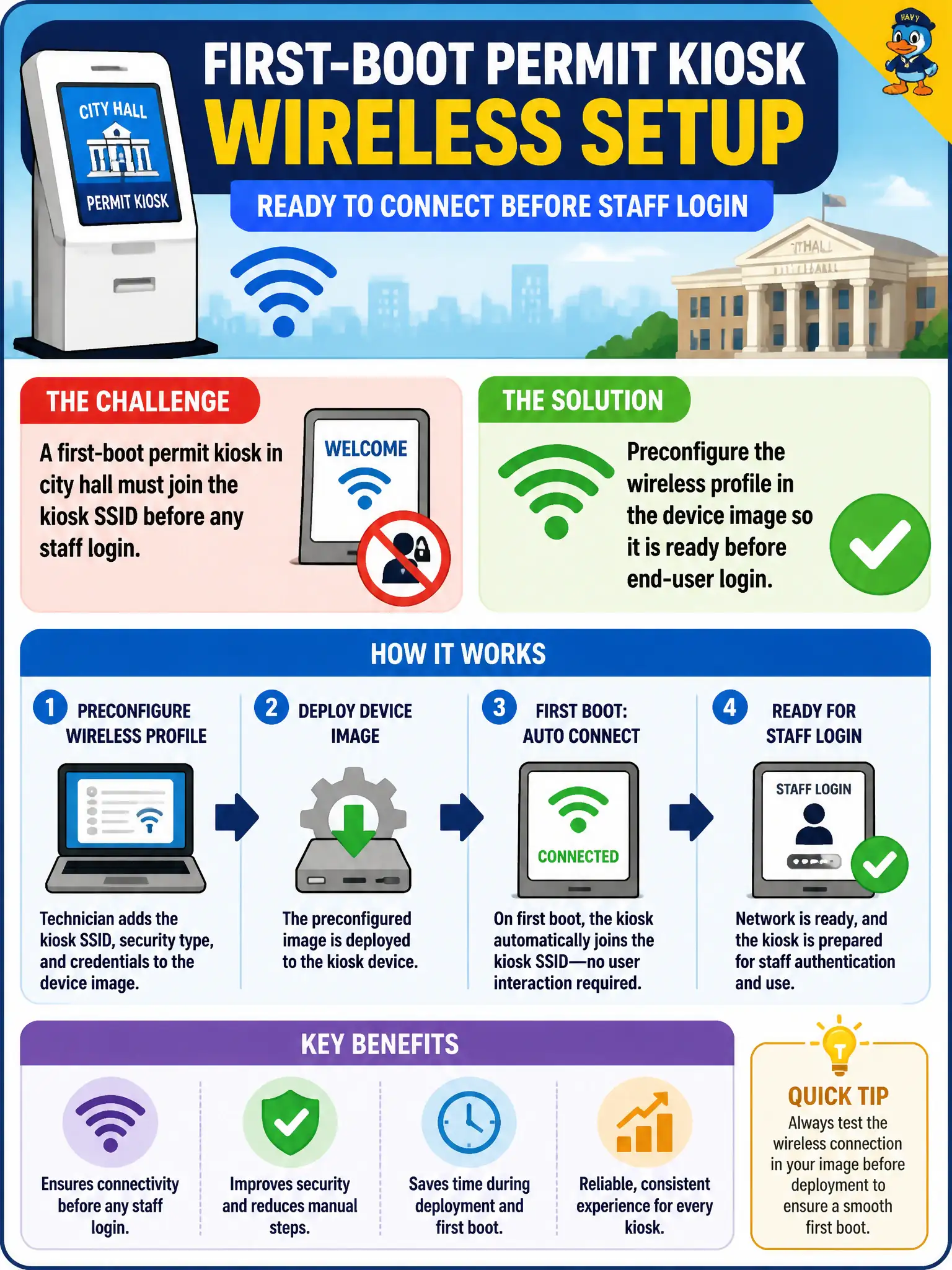
A first-boot permit kiosk in city hall must join the kiosk SSID before any staff login. How should the technician frame the wireless setup?
Select an answer to reveal the explanation.
Short Explanation
Unattended kiosks need their Wi-Fi seat reserved before showtime—bake the profile into the image. First-boot gear cannot wait for a human to type SSIDs after login. Open auth and DNS tricks are not the technician's profile plan here.
Full Explanation
A first-boot permit kiosk in city hall must join the kiosk SSID before any staff or citizen interactive login. Unattended civic devices therefore need the wireless profile preconfigured in the device image or staging workflow so association occurs during early boot, not after a human arrives. Embedding SSID and security parameters in the image is the standard technician approach for kiosks, digital signage, and similar always-on municipal endpoints.
Waiting until a citizen logs in to type the passphrase each morning fails the unattended requirement and creates daily operational risk. Disabling profiles and relying on open authentication abandons the intended kiosk security posture. Pushing the SSID only through DNS SRV records discovered after DHCP is not how wireless profiles are provisioned; DNS discovery does not replace a configured 802.11 profile with correct AKM and credentials.
Exam caveat: image-time wireless configuration is about readiness before interactive login—do not confuse it with guest captive-portal workflows that assume a human browser. Operational check: cold-boot the kiosk with no user logged in, confirm it associates to the kiosk SSID automatically, and verify the civic application starts without manual Wi-Fi entry.