
A historic city library lobby must keep visible hardware minimal, and the design specifies an indoor aesthetic AP with integrated antennas. What should the technician factor when selecting that AP?
Select an answer to reveal the explanation.
Short Explanation
Historic lobbies hate looking like a radio shop. Internal antennas tuck the RF gear into a clean indoor AP so the room still looks like a library. Outdoor sectors and pedestal Yagis are the opposite of 'aesthetic.'
Full Explanation
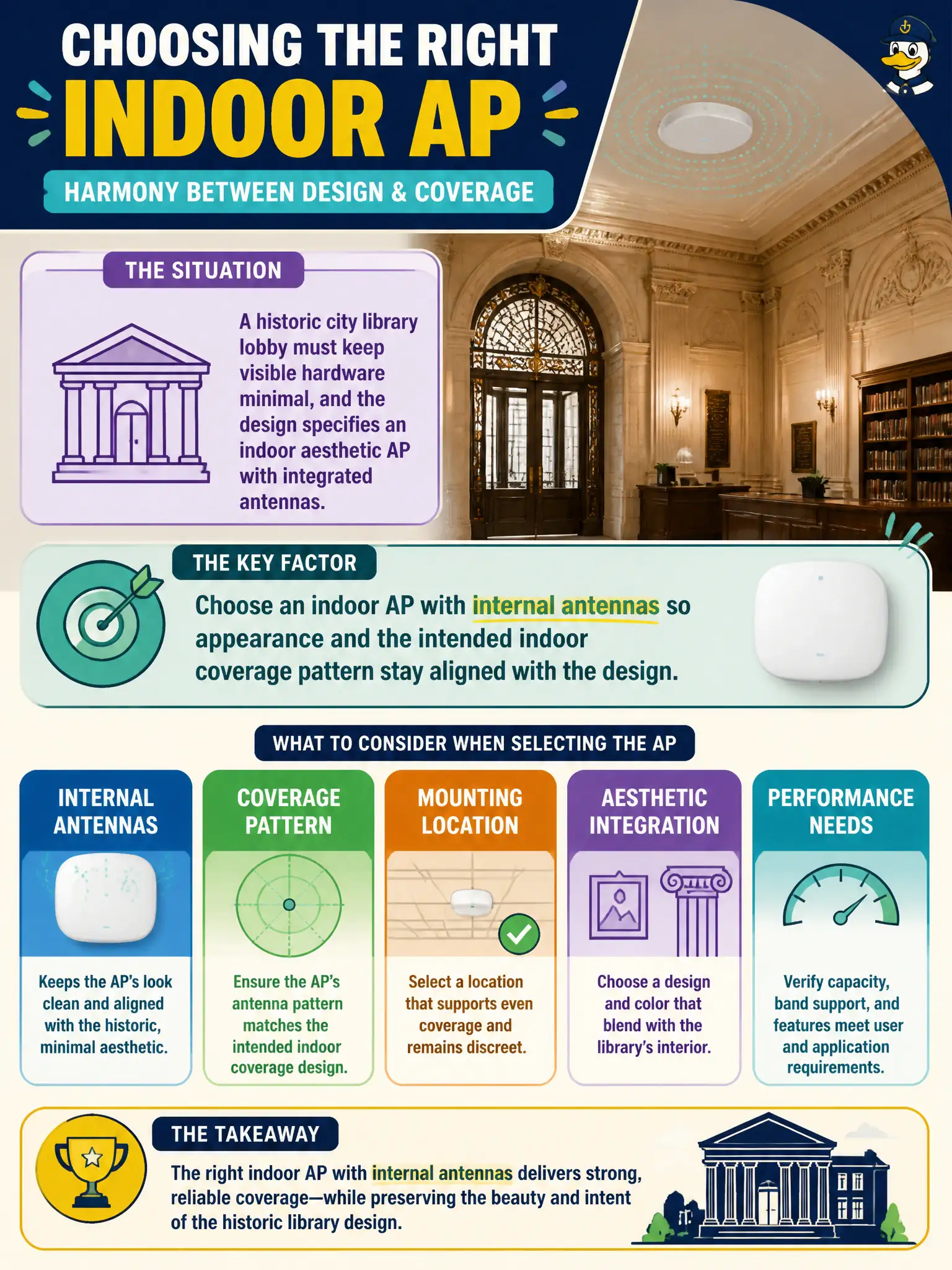
A historic city library lobby that must keep visible hardware minimal, with a design specifying an indoor aesthetic AP with integrated antennas, requires choosing an indoor AP with internal antennas so appearance and the intended indoor coverage pattern stay aligned with the design. Integrated antennas reduce visual clutter and match typical indoor coverage needs for lobby seating and service desks. Selection should honor both aesthetics and RF intent for the civic space.
Ordering an outdoor bridge AP with large external sector antennas for lobby aesthetics violates the minimal-visibility requirement. Stripping all antennas and relying only on Ethernet for client connectivity removes Wi-Fi service patrons expect. Mounting a high-gain Yagi on a display pedestal in the reading room ignores the integrated-antenna indoor aesthetic design and creates an eyesore.
Exam caveat: indoor aesthetic or internal-antenna APs are selected when appearance and indoor coverage are specified together. Operational check: install the specified indoor internal-antenna AP at the design location, confirm no external antenna kits were substituted, and verify lobby coverage for patron and staff devices without conspicuous RF hardware.