
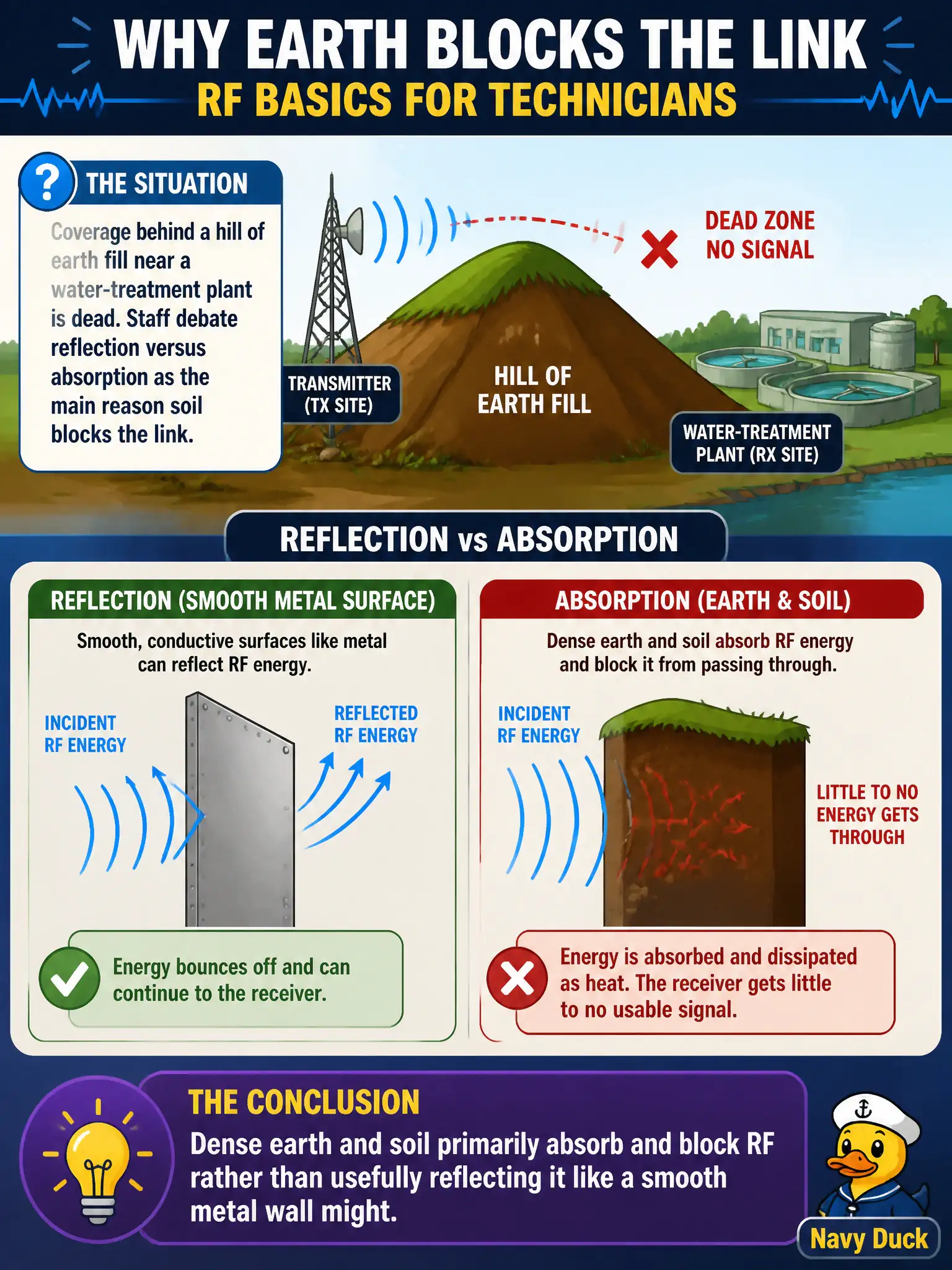
Coverage behind a hill of earth fill near a water-treatment plant is dead. Staff debate reflection versus absorption as the main reason soil blocks the link. Which conclusion fits technician RF basics?
Select an answer to reveal the explanation.
Short Explanation
Dirt hills are sponges, not bathroom mirrors. Dense soil soaks up and blocks the wave, so behind the hill goes quiet. Smooth metal might bounce you a surprise path; a mound of earth usually just eats the link.
Full Explanation
Dense earth and soil primarily absorb and block WLAN RF rather than usefully reflecting a reliable path behind a hill of fill near a water-treatment plant. Expecting a perfect mirror bounce like smooth metal misunderstands typical absorption-dominated behavior for dirt mounds. Earth fill does not raise the AP’s carrier frequency, and it does not only affect PoE voltage—propagation is an RF path issue. Exam caveat: occasional ground reflection models exist in advanced RF, but CWTS technician basics treat soil hills as blockers/absorbers for “dead behind the hill” scenarios. Operational check: do not aim clients to live in the RF shadow of fill; relocate APs/antennas per design, use intermediate hops if specified, and measure both faces of the mound. Record that soil blocks mainly by absorption so municipal plant Wi-Fi tickets stop hunting phantom reflections behind dirt. In municipal WLAN operations, record the rationale in the work order so future on-call staff know which RF concept applied and which failure modes the rejected options would create for city services. Re-validate after the next maintenance window that the same control still holds under the AP firmware and client mix used by the civic network team.