
A county clerk asks to hide the assessor Wi-Fi SSID so the network is "secure." What should the technician explain?
Select an answer to reveal the explanation.
Short Explanation
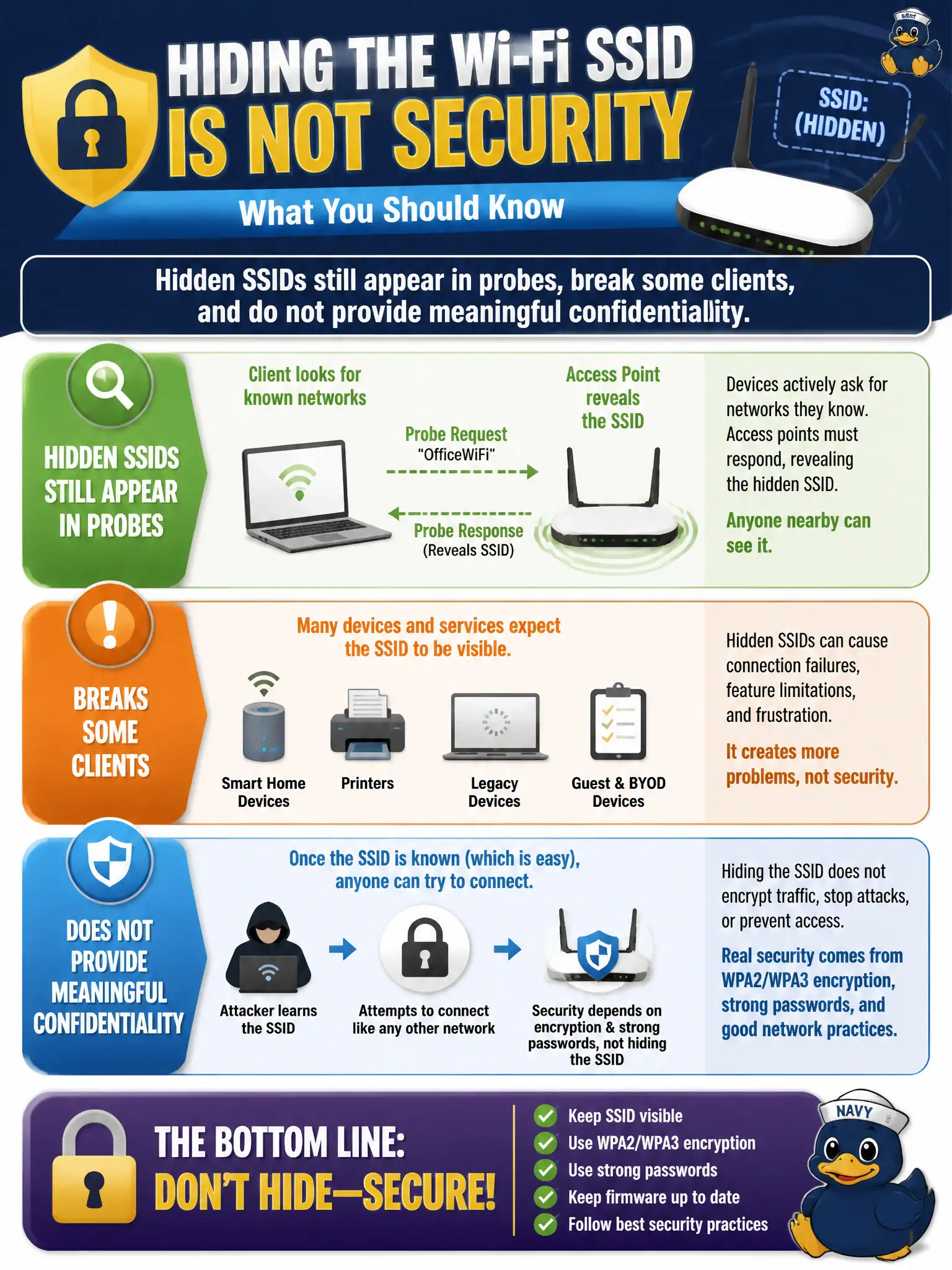
Hiding the SSID is security theater. Clients still shout the name in probes, some devices connect poorly, and nothing about confidentiality improved—so use real encryption instead of playing hide-and-seek with the network name.
Full Explanation
When a county clerk asks to hide the assessor Wi-Fi SSID so the network is “secure,” the technician should explain that hidden SSIDs still appear in probes, break some clients, and do not provide meaningful confidentiality. Assessor staff still need WPA2/WPA3; cloaking does not encrypt frames or stop determined discovery. Civic networks should prefer visible SSIDs with strong cryptography over security-by-obscurity.
Claiming hiding encrypts all management frames and replaces WPA2 is false. Claiming hidden SSIDs prevent any probe or beacon leakage so confidentiality is guaranteed overstates cloaking badly. Saying hiding is required before WPA3-Personal can be enabled invents a nonexistent prerequisite.
Exam caveat: hidden SSIDs are discouraged as a protection strategy and are not prerequisites for WPA3.
Operational check: leave the assessor SSID broadcast enabled per best practice, ensure WPA2/WPA3-Enterprise or Personal is correctly set, demonstrate probe discoverability to the clerk if needed for education, and update any local myth-based procedures. Municipal technicians document the verified setting in the as-built packet so the next shift inherits a known-good civic configuration rather than tribal knowledge.