
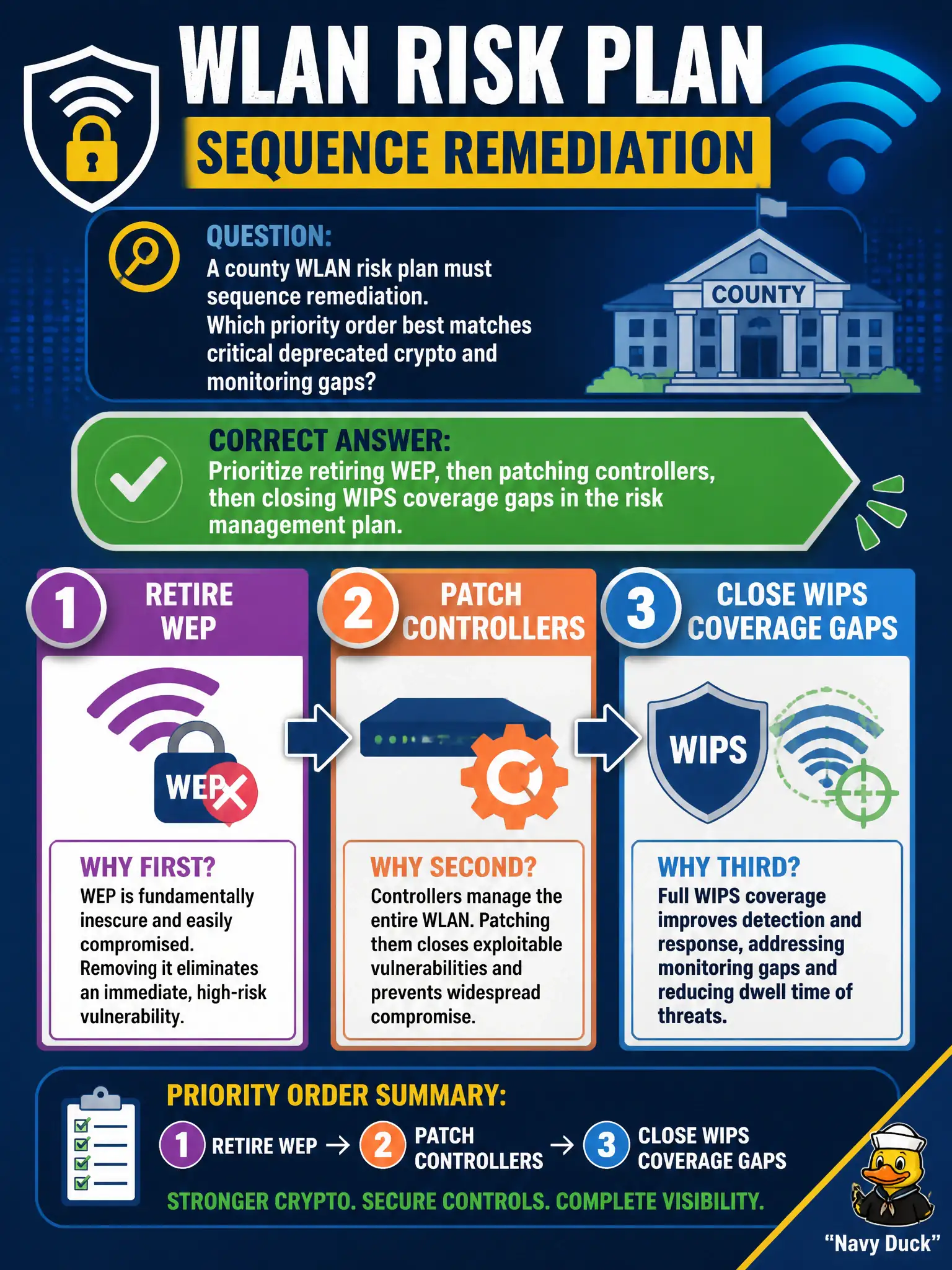
A county WLAN risk plan must sequence remediation. Which priority order best matches critical deprecated crypto and monitoring gaps?
Select an answer to reveal the explanation.
Short Explanation
WEP is the unlocked vault door—fix that before you argue about camera angles. Then patch the controllers that run the plant, then fill WIPS blind spots. Pretty splash pages and NOC chairs are not the risk plan.
Full Explanation
A county WLAN risk plan sequencing remediation should prioritize retiring WEP, then patching controllers, then closing WIPS coverage gaps—critical deprecated crypto and monitoring holes before branding and furniture. Expanding guest splash art and renaming SSIDs first treats cosmetics as security. Buying NOC furniture before revisiting WEP next fiscal year delays known critical risk. Deploying open any-SSID bridging while postponing patches increases exposure deliberately. Exam caveat: risk management plans order treatments by risk severity—deprecated crypto and visibility gaps outrank aesthetic WLAN tasks on professional exams and in civic operations. Operational check: publish a ranked remediation backlog with WEP retirement, controller patching, and WIPS coverage as top items, assign owners and dates, and report progress monthly. Tie completion evidence (audit scans, patch reports, sensor maps) to the county risk plan closure criteria. In municipal WLAN operations, record the rationale in the change ticket so future on-call staff know which control was chosen and which failure modes the rejected options would create for city services. Re-validate after the next maintenance window that the same control still holds under the infrastructure versions and client fleets used by the civic environment.