
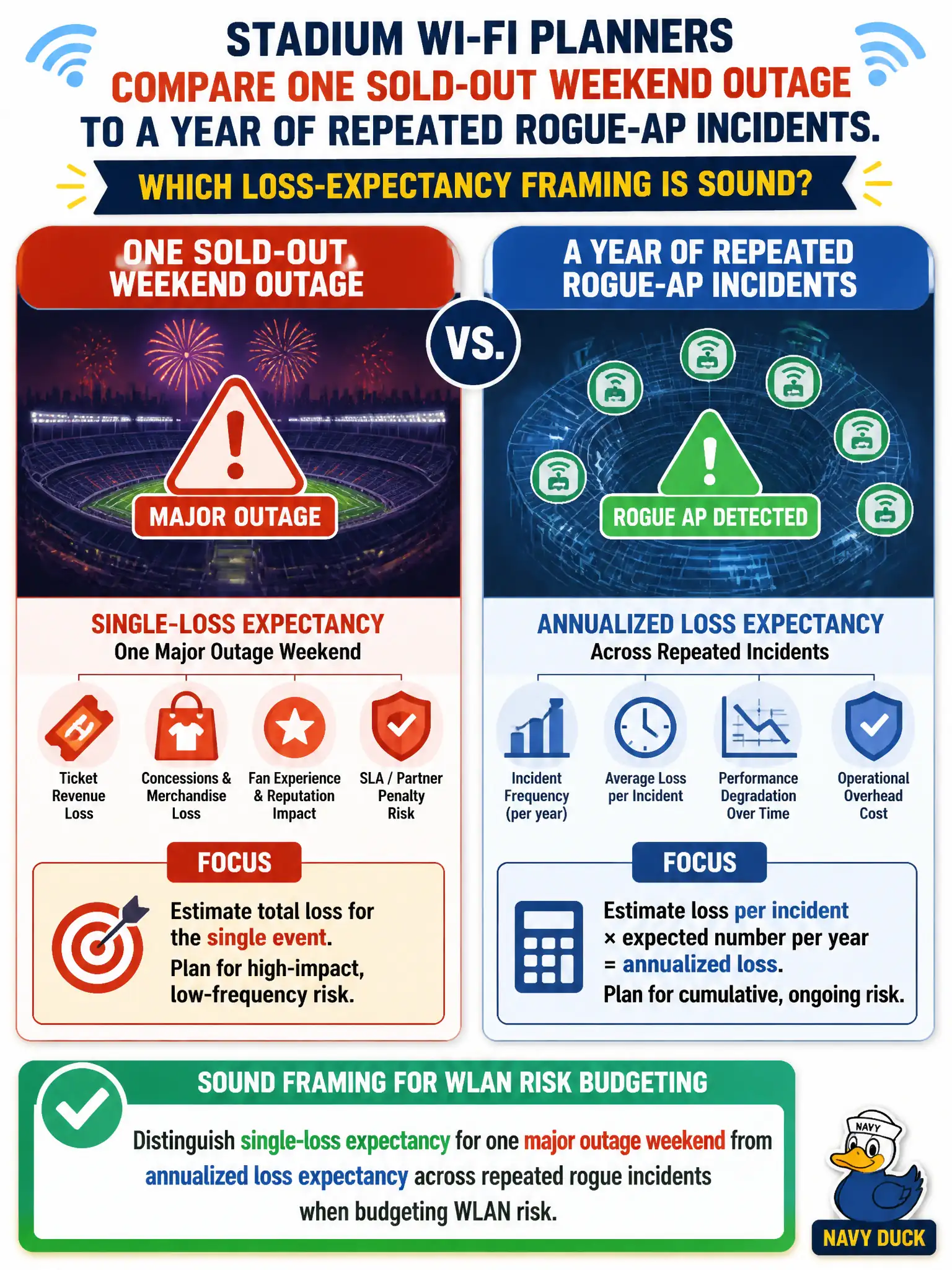
Stadium Wi-Fi planners compare one sold-out weekend outage to a year of repeated rogue-AP incidents. Which loss-expectancy framing is sound?
Select an answer to reveal the explanation.
Short Explanation
One ruined championship weekend is a big SLE hit; a drip of rogue incidents all year is the ALE story. Both matter when you budget stadium WLAN risk. Antenna gain charts do not replace those loss pictures.
Full Explanation
Stadium Wi-Fi planners comparing one sold-out weekend outage to a year of repeated rogue-AP incidents should distinguish single-loss expectancy for one major outage weekend from annualized loss expectancy across repeated rogue incidents when budgeting WLAN risk. Treating only the single weekend as real loss ignores recurring annualized patterns. Assuming rogue incidents never create loss if tickets still scan understates security and brand impacts. Using antenna gain figures as a direct substitute for dollar loss expectancy confuses RF engineering with risk finance. Exam caveat: SLE versus ALE framing is classic risk analysis language—CWSP expects candidates to apply it to WLAN scenarios, not to invent RF metrics as currency. Operational check: calculate a weekend outage SLE and an ALE for historical rogue incidents, present both in the stadium risk committee pack, and fund controls that reduce the larger annualized exposure. Archive assumptions so municipal finance can reuse the model next season. In municipal WLAN operations, record the rationale in the change ticket so future on-call staff know which control was chosen and which failure modes the rejected options would create for city services. Re-validate after the next maintenance window that the same control still holds under the infrastructure versions and client fleets used by the civic environment.