
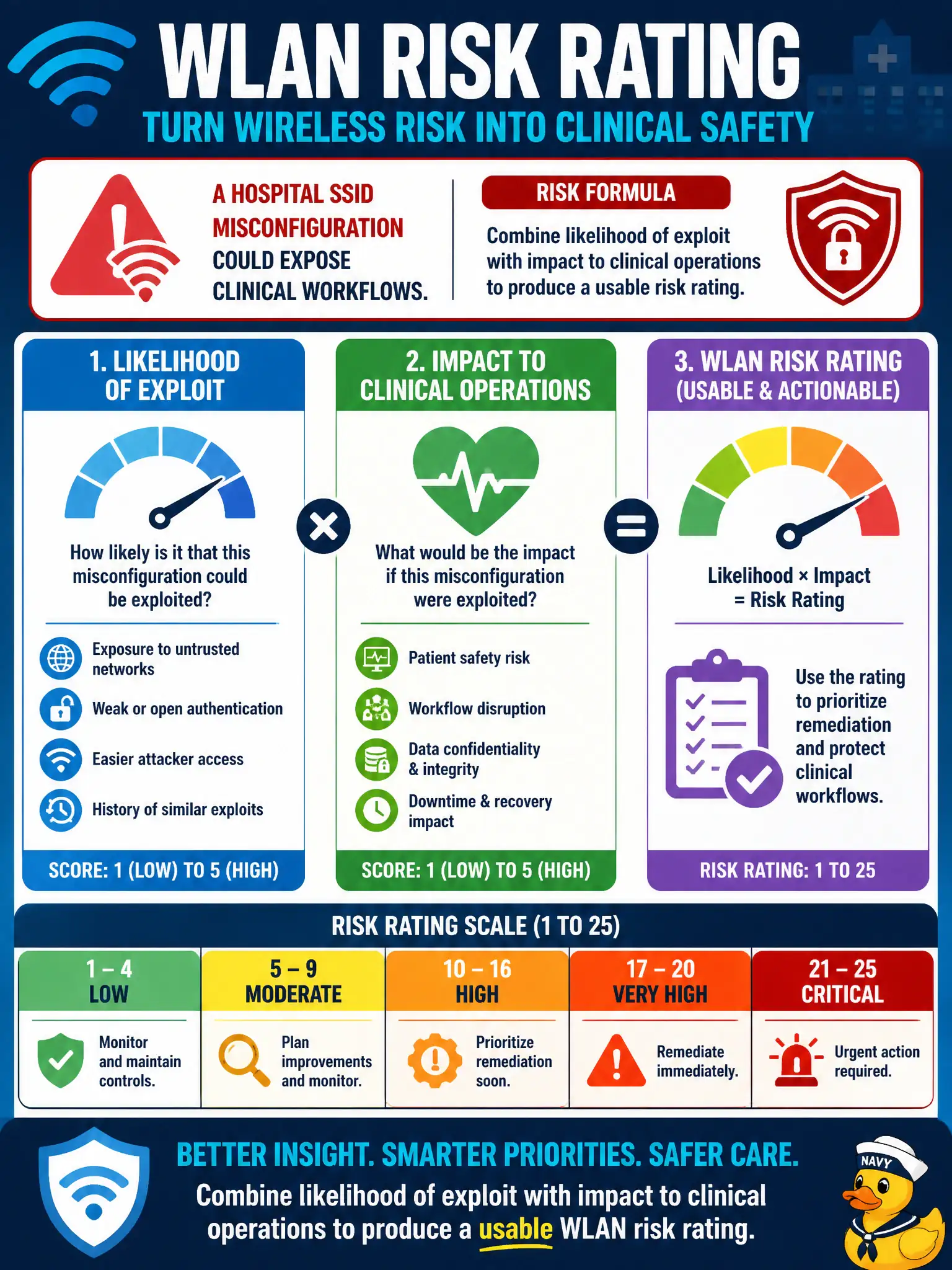
A hospital SSID misconfiguration could expose clinical workflows. How should the WLAN risk rating be formed?
Select an answer to reveal the explanation.
Short Explanation
Risk is not the sticker price of the AP—it is how likely someone hits the flaw times how bad that is for care. Pair likelihood with clinical impact and you get a rating leaders can prioritize. Speed-test marketing and blanked-out “everything is critical” scores do not help the triage board.
Full Explanation
A hospital SSID misconfiguration that could expose clinical workflows should be rated by combining likelihood of exploit with impact to clinical operations, producing a usable risk rating rather than a single crude proxy. Rating only by AP purchase price ignores exploitability. Using marketing Wi-Fi speed claims as the sole score confuses performance with security risk. Setting every clinical SSID to maximum risk without considering likelihood or impact removes prioritization value and floods remediation queues. Exam caveat: risk rating = f(likelihood, impact); exam distractors often substitute cost, branding, or blanket maximums. Operational check: score the misconfiguration with agreed qualitative scales, compare to other WLAN findings, and schedule fixes in priority order with clinical stakeholders. Record the rating method in the hospital WLAN risk procedure so future civic healthcare reviews stay consistent. In municipal WLAN operations, record the rationale in the change ticket so future on-call staff know which control was chosen and which failure modes the rejected options would create for city services. Re-validate after the next maintenance window that the same control still holds under the infrastructure versions and client fleets used by the civic environment.