
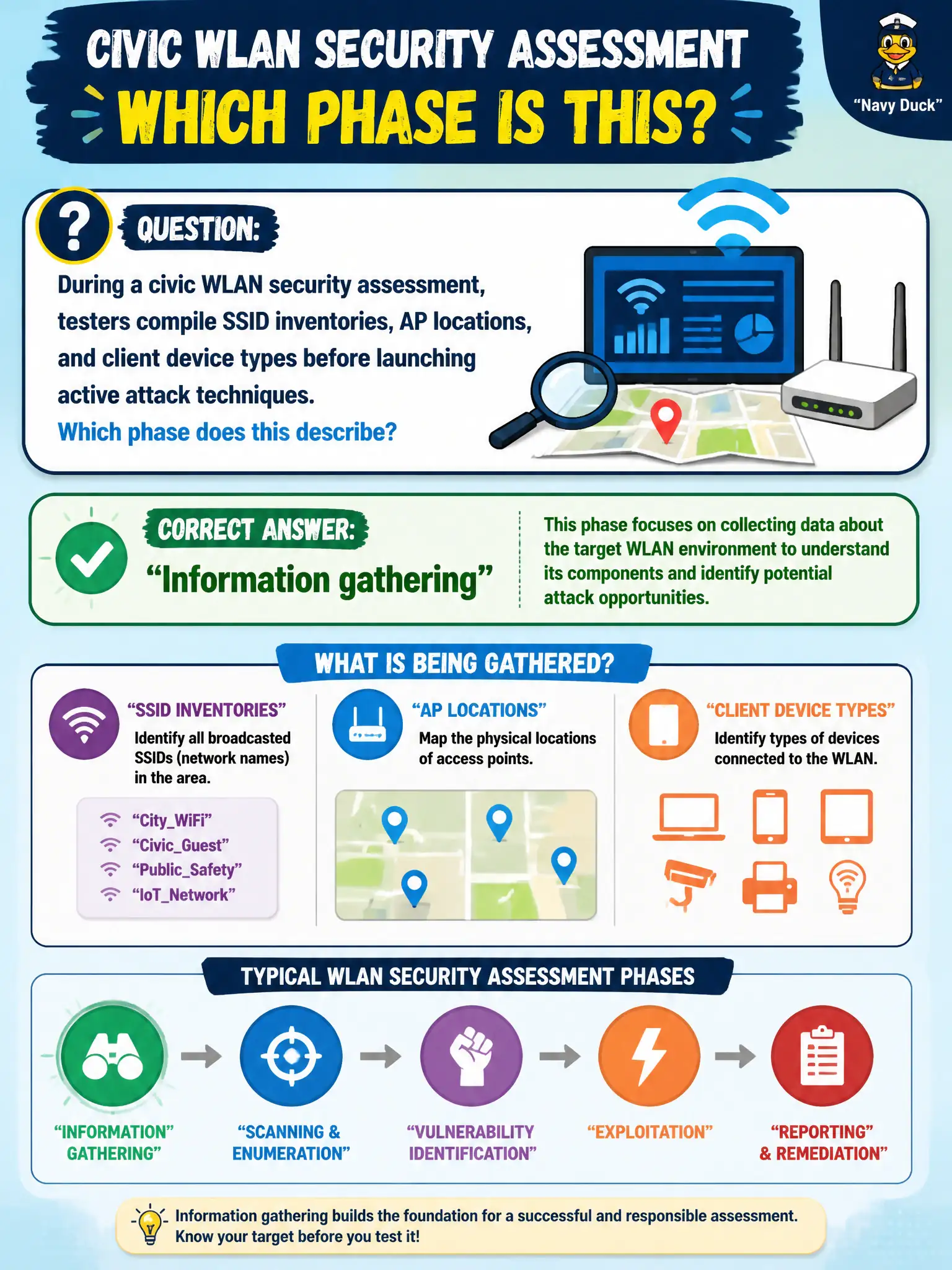
During a civic WLAN security assessment, testers compile SSID inventories, AP locations, and client device types before launching active attack techniques. Which phase does this describe?
Select an answer to reveal the explanation.
Short Explanation
Before you poke the bear, you map the woods—SSIDs, where the APs live, what clients show up. That recon pass is information gathering, not the attack itself.
Full Explanation
Compiling SSID inventories, AP locations, and client device types before launching active attack techniques is information gathering (reconnaissance) in a civic WLAN security assessment. That phase builds the target picture so later scanning and authorized attack techniques are focused and safer for municipal production. Treating the activity as final executive remediation sign-off misplaces it at the end of the lifecycle. Calling it a production change-freeze without reconnaissance denies that enumeration is occurring. Certificate revocation for all EAP-TLS clients citywide is a disruptive operational action, not the descriptive phase for inventory work. Exam caveat: do not confuse information gathering with scanning; gathering builds inventories and context, while scanning probes for specific technical details such as encryption modes and open management services—both precede authorized exploitation. Operational check: require testers to deliver an SSID/AP/client inventory artifact before active techniques begin, map each target to the signed scope, and keep the inventory with the municipal assessment workpapers. Update the runbook so future assessments cannot skip reconnaissance under schedule pressure.