
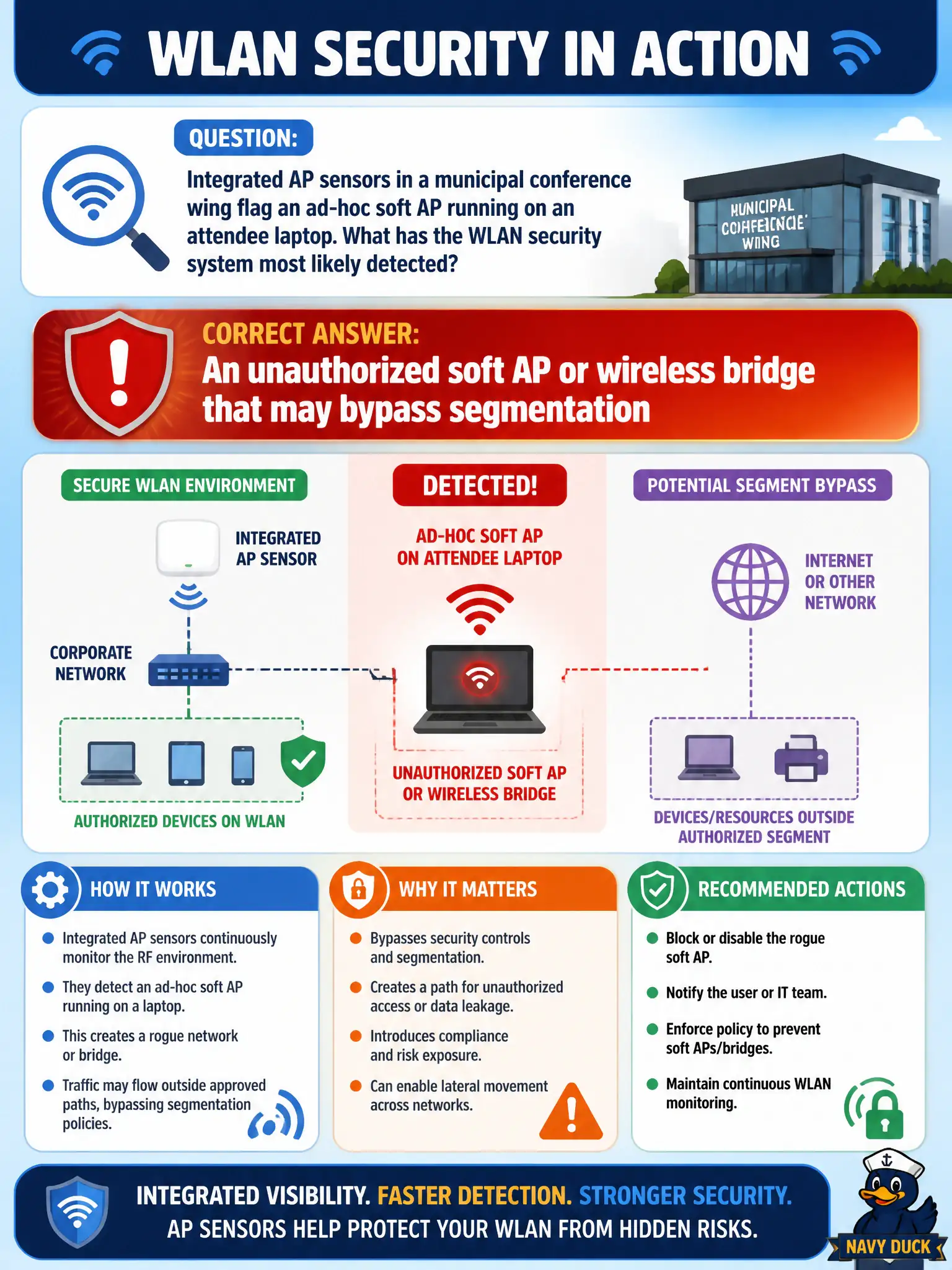
Integrated AP sensors in a municipal conference wing flag an ad-hoc soft AP running on an attendee laptop. What has the WLAN security system most likely detected?
Select an answer to reveal the explanation.
Short Explanation
That conference laptop turned into a pocket cell tower—integrated sensors calling it out means unauthorized soft AP territory. It can bridge or lure in ways policy never approved. Certificate renewals do not invent ad-hoc APs on guest machines.
Full Explanation
Integrated AP sensors in a municipal conference wing that flag an ad-hoc soft AP running on an attendee laptop have most likely detected an unauthorized soft AP or wireless bridge that may bypass segmentation. Soft APs and phone hotspots in conference spaces can extend guest or untrusted connectivity into areas near staff devices, invite ad-hoc bridging, and complicate RF interference during public meetings. Authorized mesh backhaul using only Ethernet daisy-chaining is not an attendee laptop soft AP and would appear in the sanctioned inventory. A controller certificate renewal that briefly renames BSSIDs does not match an ad-hoc laptop AP alert from sensors. Normal DHCP snooping bindings on access switches are wired security features, not soft-AP detection on the air. Civic conference wings hosting council sessions or public hearings need clear policy against unauthorized transmitters and sensor coverage to catch them quickly before they bridge networks. Exam caveat: classify before containing in occupied meeting spaces to avoid disrupting sanctioned demo gear that was pre-approved for the agenda. Operational check: locate the soft AP via the sensor map, confirm it is not on the approved event list, have facilities or security ask the attendee to disable it, contain if policy allows, and update event Wi-Fi guidance given to meeting organizers.