
A regional library consortium runs many APs and controllers but has no process to watch CVE or vendor advisories for WLAN gear. What gap should be called out?
Select an answer to reveal the explanation.
Short Explanation
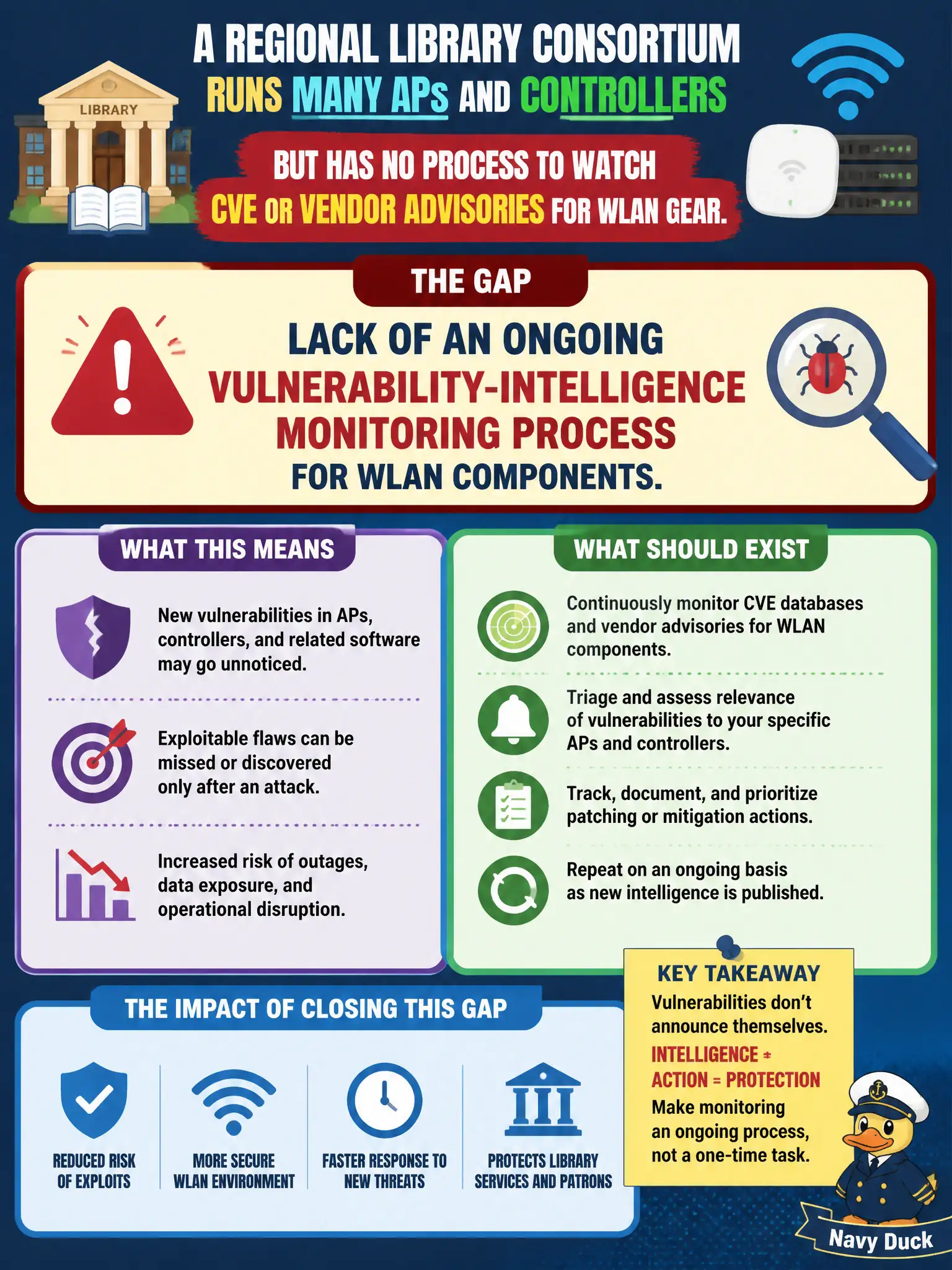
If nobody is watching the CVE firehose, the consortium is flying blind. Standing up continuous WLAN vulnerability monitoring is the gap—not prettier SSIDs or fewer policy reviews.
Full Explanation
A regional library consortium that runs many APs and controllers but has no process to watch CVE or vendor advisories for WLAN gear has a clear gap: lack of an ongoing vulnerability-intelligence monitoring process for WLAN components. Without continuous intake of advisories, patches lag, and branch libraries remain exposed long after fixes exist. Missing decorative SSID artwork for branch libraries is unrelated to vulnerability management. Overuse of protocol analyzers during business hours is an operational noise concern, not the primary gap described. Too many scheduled reviews of written WLAN policy would be unusual; here the missing control is vulnerability intelligence, not excess policy review. Consortium environments amplify the need for a shared watch process because one vendor code train may underpin dozens of civic sites. Exam caveat: vulnerability intelligence is an ongoing process—subscriptions, triage ownership, and SLAs—not a one-time reading of a blog post. Operational check: assign an owner to monitor vendor PSIRT and CVE sources for the consortium's AP/controller models, define triage SLAs, feed hits into a shared risk register visible to member libraries, and report patch compliance across branches.