
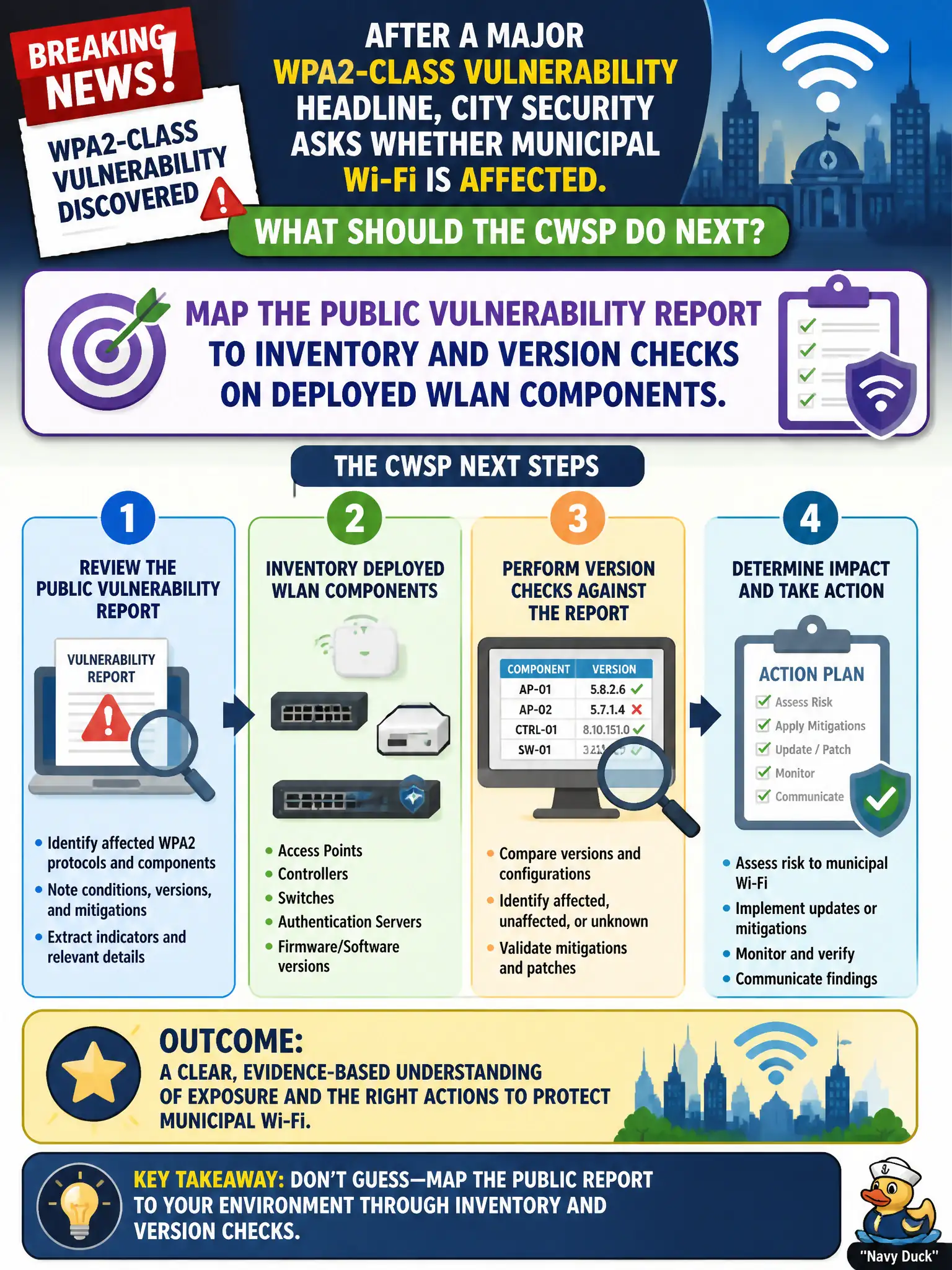
After a major WPA2-class vulnerability headline, city security asks whether municipal Wi-Fi is affected. What should the CWSP do next?
Select an answer to reveal the explanation.
Short Explanation
Headlines are the alarm bell; inventory is the checklist. Match the published WLAN flaw to the city's actual AP, controller, and client versions before you declare 'we're fine' or blow up unrelated services.
Full Explanation
After a major WPA2-class vulnerability headline, when city security asks whether municipal Wi-Fi is affected, the CWSP should map the public vulnerability report to inventory and version checks on deployed WLAN components. Public reports describe classes of weakness; impact on the city depends on AP/controller/client versions, configurations (for example, whether vulnerable handshake behaviors are reachable), and exposure. Changing every SSID name immediately so attackers cannot recognize the network does not remediate protocol or implementation flaws and breaks user trust mappings. Issuing a press release claiming immunity without checking firmware or client versions is unsupported assurance. Disabling DHCP citywide until the news cycle ends causes wide outage unrelated to verifying susceptibility. Methodical mapping turns headlines into actionable patch and compensating-control work for civic networks. Exam caveat: protocol-class headlines still require local version and configuration correlation; not every WPA2 discussion implies every SSID is equally exposed. Operational check: extract affected product/version criteria from the advisory, query controller inventory and client capability reports, document which civic SSIDs and devices are in scope, and schedule patches, config mitigations, or monitoring enhancements with change control.