
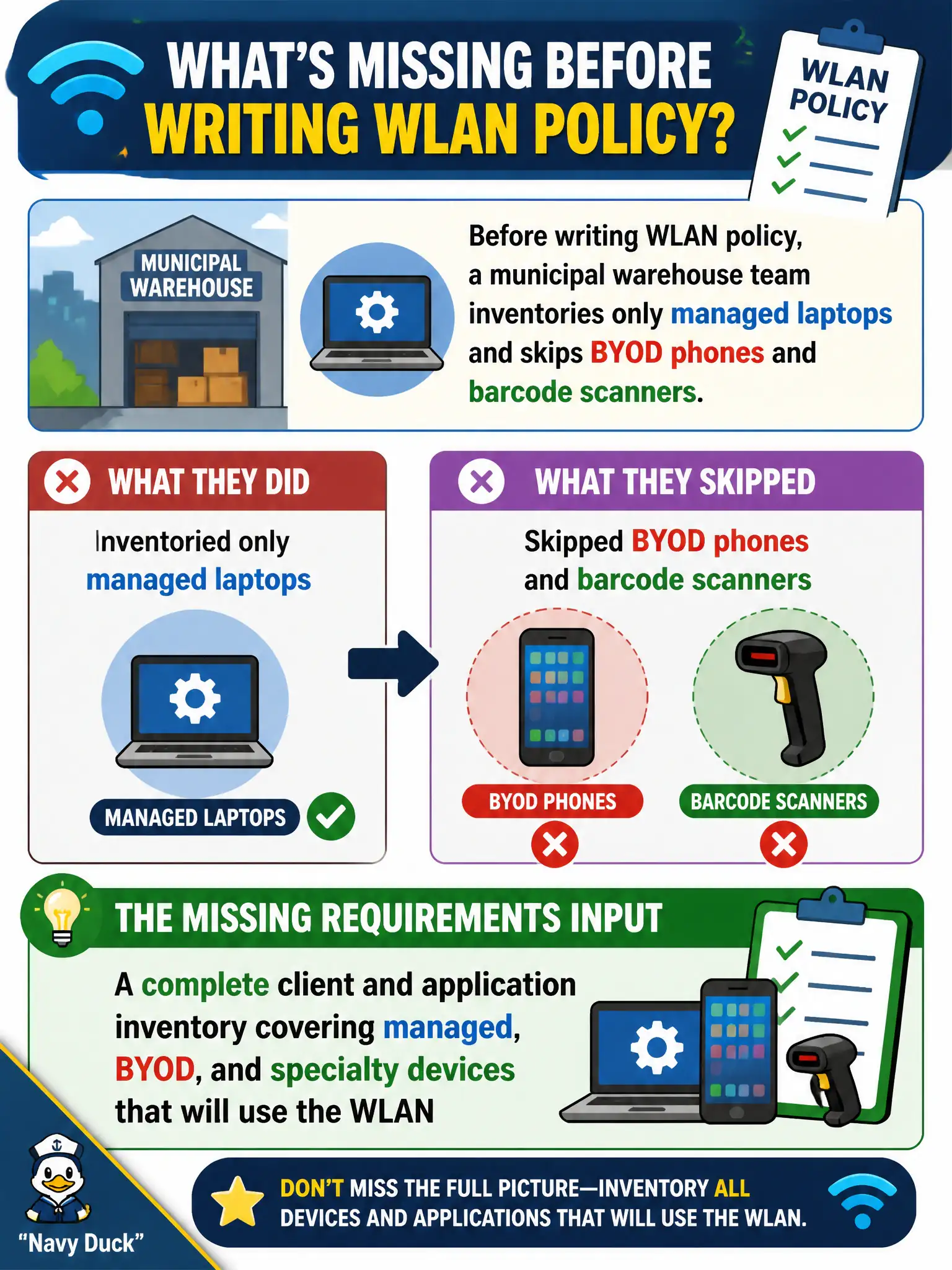
Before writing WLAN policy, a municipal warehouse team inventories only managed laptops and skips BYOD phones and barcode scanners. Which requirements input is missing?
Select an answer to reveal the explanation.
Short Explanation
If you only count the corporate laptops, the phones and scanners still show up on Monday. Inventory every client class—managed, BYOD, specialty—before you write rules they'll actually have to live with.
Full Explanation
Before writing WLAN policy, a municipal warehouse team that inventories only managed laptops and skips BYOD phones and barcode scanners is missing a complete client and application inventory. Managed endpoints, BYOD phones, and specialty scanners frequently require different authentication methods, certificate handling, posture expectations, and VLAN assignments. Policy written from a laptop-only view tends to mandate EAP-TLS everywhere while scanners still need a constrained exception SSID—or worse, leaves phones bridging onto staff networks without controls. A list of preferred coffee vendors for the break room is irrelevant to security requirements. CWNE portfolio essays from every network engineer and OSWP exploit lab proof files for each SSID do not substitute for knowing which production clients will attach Monday morning. Incomplete inventories are a root cause of both outages and silent security gaps when unexpected device classes appear on staff SSIDs. Exam caveat: CWSP treats clients and applications as first-class inputs to authentication and encryption policy, not as an afterthought once AP counts are known. Operational check: produce a client-class matrix covering managed laptops, BYOD phones, rugged scanners, and any IoT, including supported EAP/ciphers, target VLANs, and owners; gate policy approval on that inventory being reviewed and current for the warehouse WLAN.