
Executives receive a municipal WLAN audit report that lists both open admin HTTP on controllers and a raw count of SSIDs. How should findings be presented?
Select an answer to reveal the explanation.
Short Explanation
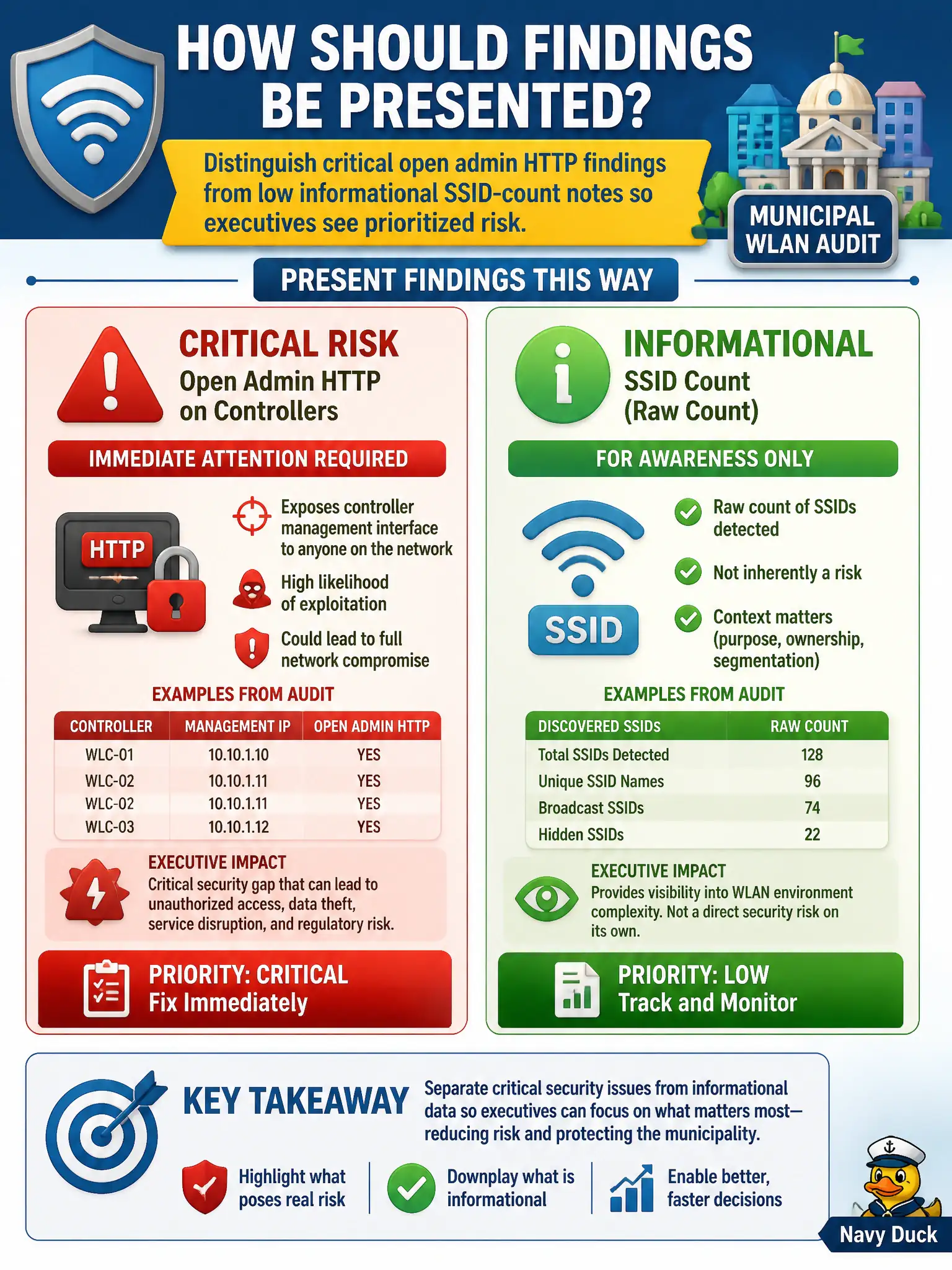
Bosses need the fire alarms louder than the trivia. Call out open admin HTTP as critical and keep SSID headcounts in the informational bin. Equal-volume noise buries the fixes that matter.
Full Explanation
When presenting municipal WLAN audit findings to executives, it is essential to distinguish critical issues, such as open administrative HTTP access on controllers, from lower-severity informational items like raw SSID counts. This prioritization enables executives to understand risks clearly and allocate resources effectively. Open admin HTTP represents a high-severity vulnerability that could allow unauthorized control of WLAN infrastructure, while SSID counts alone provide limited risk context. Presenting all findings with equal severity confuses risk prioritization, making it difficult for executives to focus on urgent issues. Hiding critical vulnerabilities and reporting only benign data undermines transparency and may delay necessary remediation. Omitting risk language and providing unsorted tool output fails to communicate the significance of findings and reduces the report’s usefulness. A key caveat is that executive summaries should translate technical findings into business impact terms. Operationally, audit reports should categorize findings by severity, include recommended actions, and highlight critical vulnerabilities to support informed decision-making in municipal WLAN security governance.