
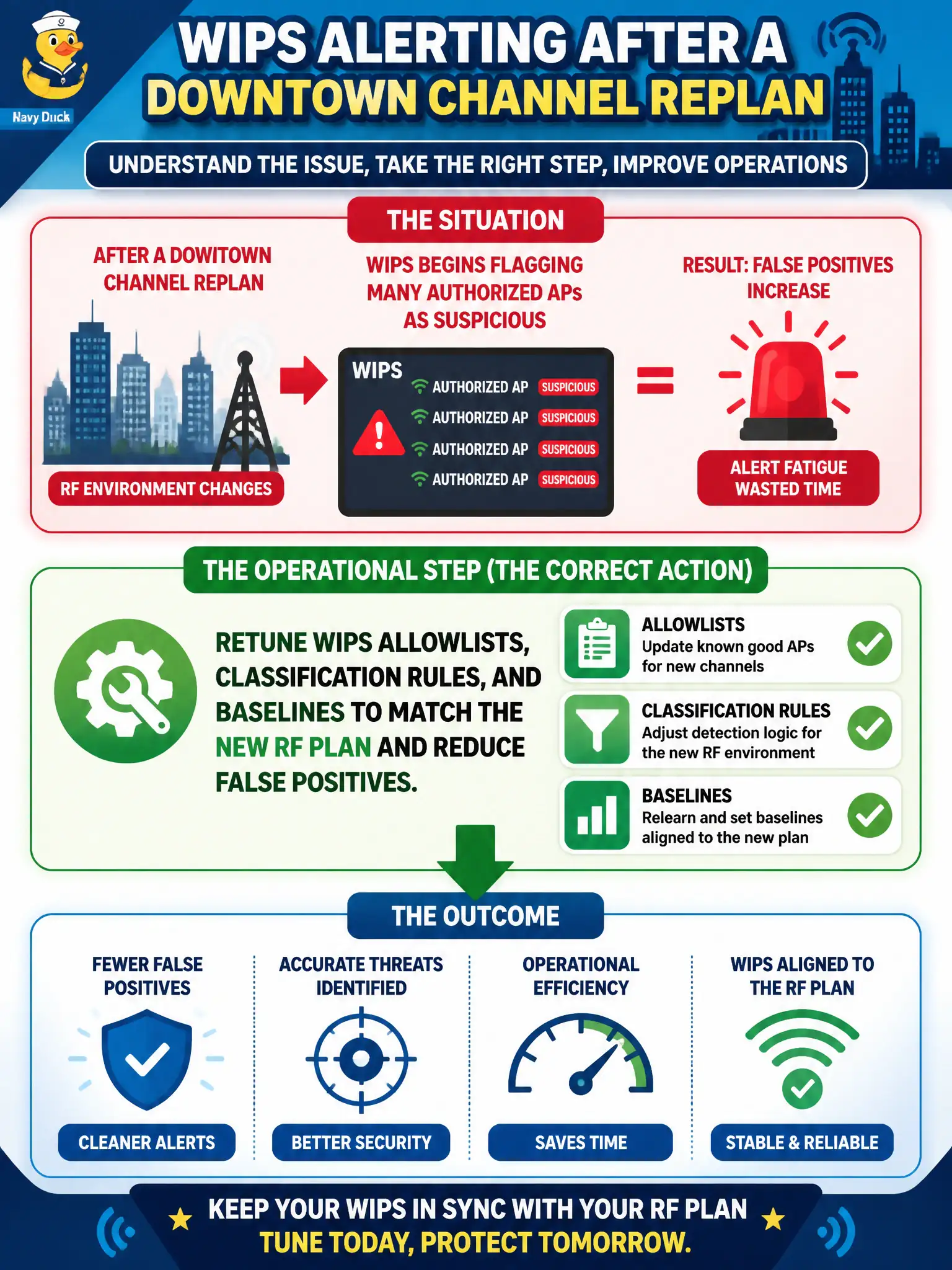
After a downtown channel replan, WIPS begins flagging many authorized APs as suspicious. What operational step should follow?
Select an answer to reveal the explanation.
Short Explanation
Change the RF plan, then teach WIPS the new neighborhood map. Floods of false positives after a replan mean the monitor needs a tune-up—not a permanent mute button.
Full Explanation
After a downtown channel replan, WIPS flagging many authorized APs as suspicious usually means allowlists, classification rules, and baselines need retuning to the new RF plan to reduce false positives. Security tooling must track intentional RF change; otherwise operators learn to ignore alerts. Civic NOCs that skip retuning after replans create alert fatigue exactly when rogue detection matters.
Ignoring all WIPS alerts permanently because channel changes invalidate security abandons detection. Reverting the channel plan without reviewing whether signatures need updating may discard a good RF change to avoid homework. Disabling MAC filtering on switches so WIPS classifications no longer matter attacks the wrong layer.
Exam caveat: retune carefully—do not blindly allowlist unknown BSSIDs while cleaning false positives. Operational check: after replan, reconcile WIPS inventory to the approved AP BSSID list, clear expected deltas, and confirm a deliberate test rogue still alerts. In municipal WLAN programs, capture the decision in the wireless standard and re-check it at change review so the next project inherits the same control bar instead of rediscovering the failure during an outage. In municipal WLAN programs, capture the decision in the wireless standard and re-check it at change review so the next project inherits the same control bar instead of rediscovering the failure during an outage.