
A convention center for municipal events wants scalable visitor onboarding without SMS captive portals. Which approach aligns?
Select an answer to reveal the explanation.
Short Explanation
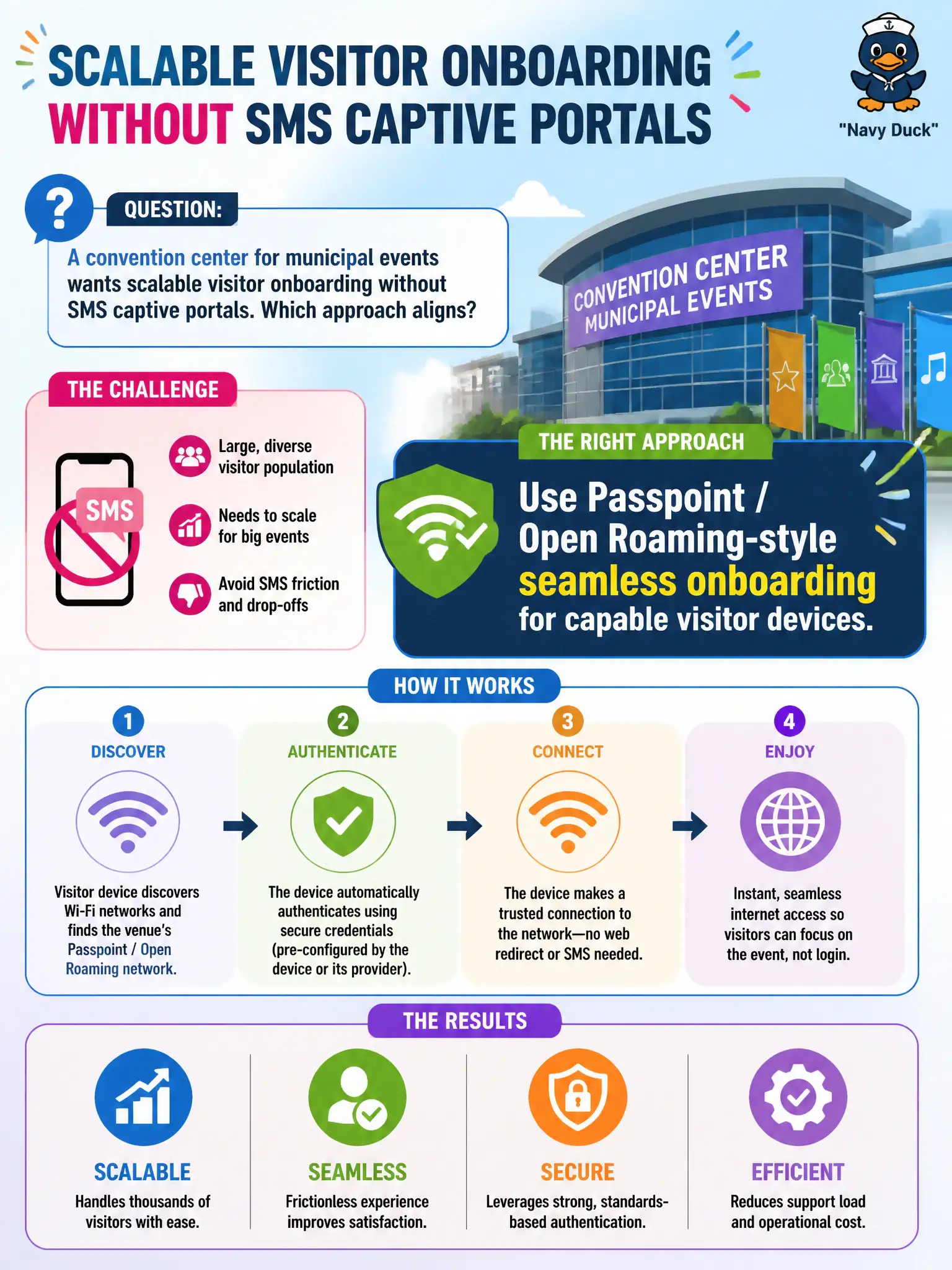
Nobody at a civic expo wants to wait on SMS codes like it is 2012. Passpoint/Open Roaming lets capable phones join smoothly at scale. Dumping guests onto public-safety Wi-Fi is a hard no.
Full Explanation
A convention center used for municipal events needs scalable visitor onboarding without SMS captive-portal friction for every phone. Passpoint / Open Roaming-style seamless onboarding for capable visitor devices aligns with that scale by using trusted credentials and profile-based join instead of one-time codes at every door. Civic venues hosting conferences and public meetings benefit when compatible devices onboard without help-desk queues.
Posting one WEP key on digital signage in the lobby reintroduces broken crypto and public key distribution. Requiring each visitor to create a local AD account before associating does not scale and expands identity risk. Forcing every phone onto the public-safety SSID for the event duration contaminates a sensitive network with unmanaged consumer devices.
Exam caveat: Passpoint-style onboarding requires federation or profile readiness and is not universal for every low-end device—plan a fallback guest path. Operational check: validate a Passpoint-capable test device onboards without SMS, confirm fallback portal still works for others, and verify event clients land on the intended guest segmentation. In municipal WLAN programs, write the control into standards and verify it during change review so the next project inherits the same bar rather than rediscovering the failure mode under outage pressure.