
A municipal PTP bridge to a water tower drops SNR during heavy rain and after summer foliage growth along the path. What expert RF awareness applies?
Select an answer to reveal the explanation.
Short Explanation
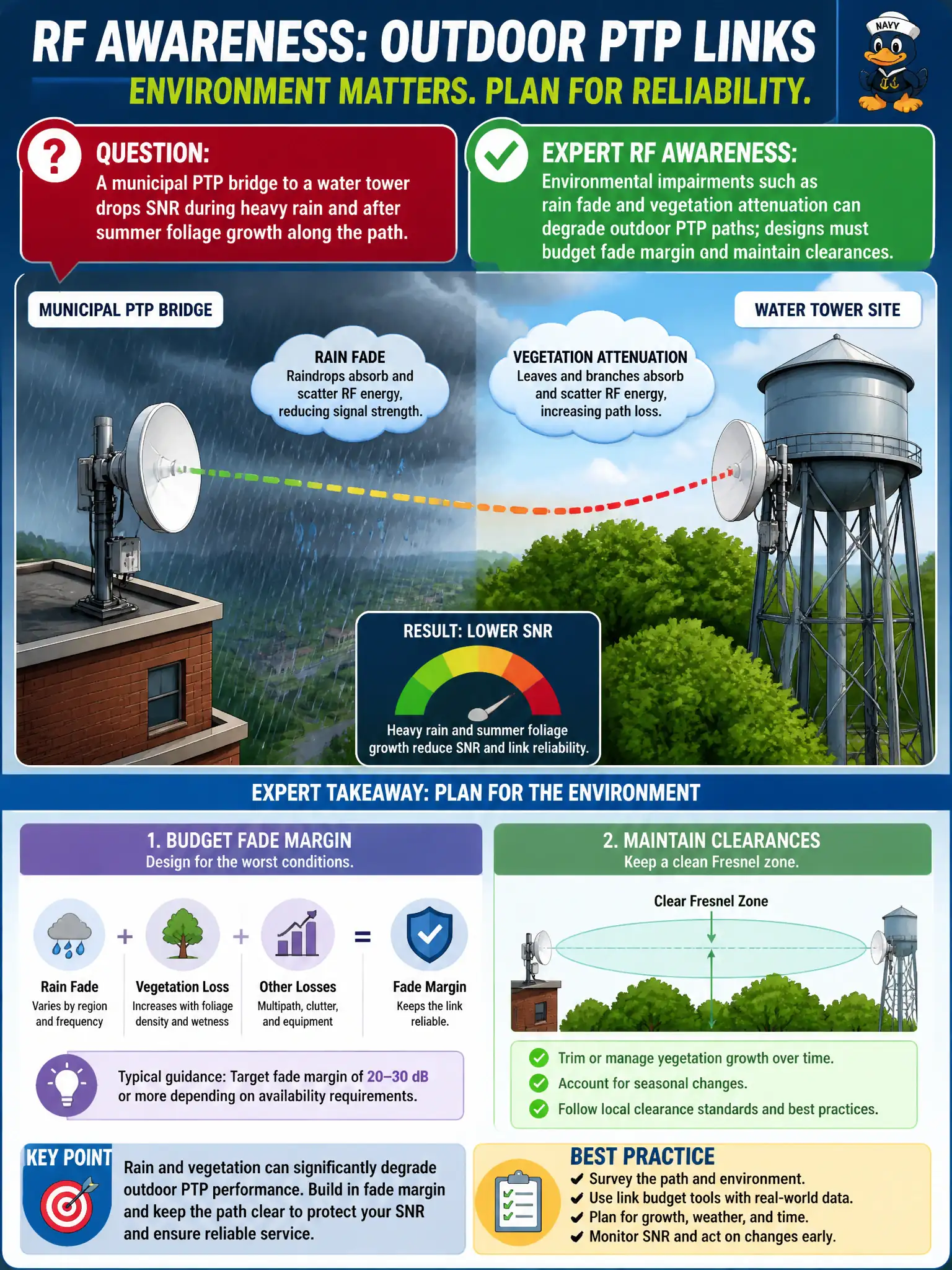
Rain and leafy trees eat outdoor link budget — water tower shots need fade margin and a clear path, not a pep talk about WPA3. Seasonal SNR dips are classic environment, not DNS TTL folklore.
Full Explanation
A municipal PTP bridge to a water tower that drops SNR during heavy rain and after summer foliage growth reflects environmental impairments: rain fade and vegetation attenuation degrade outdoor paths. Designs must budget fade margin and maintain clearances (trim foliage, raise antennas, or redesign path) rather than blaming DNS or security modes. Expert RF awareness treats weather and growth as expected outdoor variables.
Claiming rain and foliage never attenuate outdoor microwave/Wi-Fi bridge links and that only DNS TTL causes seasonal drops is false. Asserting outdoor PTP links are immune to weather if WPA3-Enterprise is enabled confuses encryption with propagation. Saying foliage only affects 2.4 GHz indoor APs and cannot impact outdoor bridges ignores outdoor path obstruction.
Exam caveat: outdoor civic backhaul needs fade margin and seasonal path maintenance in the operating plan. Operational check: trend water-tower link SNR against weather and foliage season, schedule vegetation clearance in the Fresnel zone, and verify fade margin assumptions after the next rain event. Add seasonal foliage trim and post-storm SNR checks to the water-tower bridge maintenance calendar alongside radio firmware updates.