
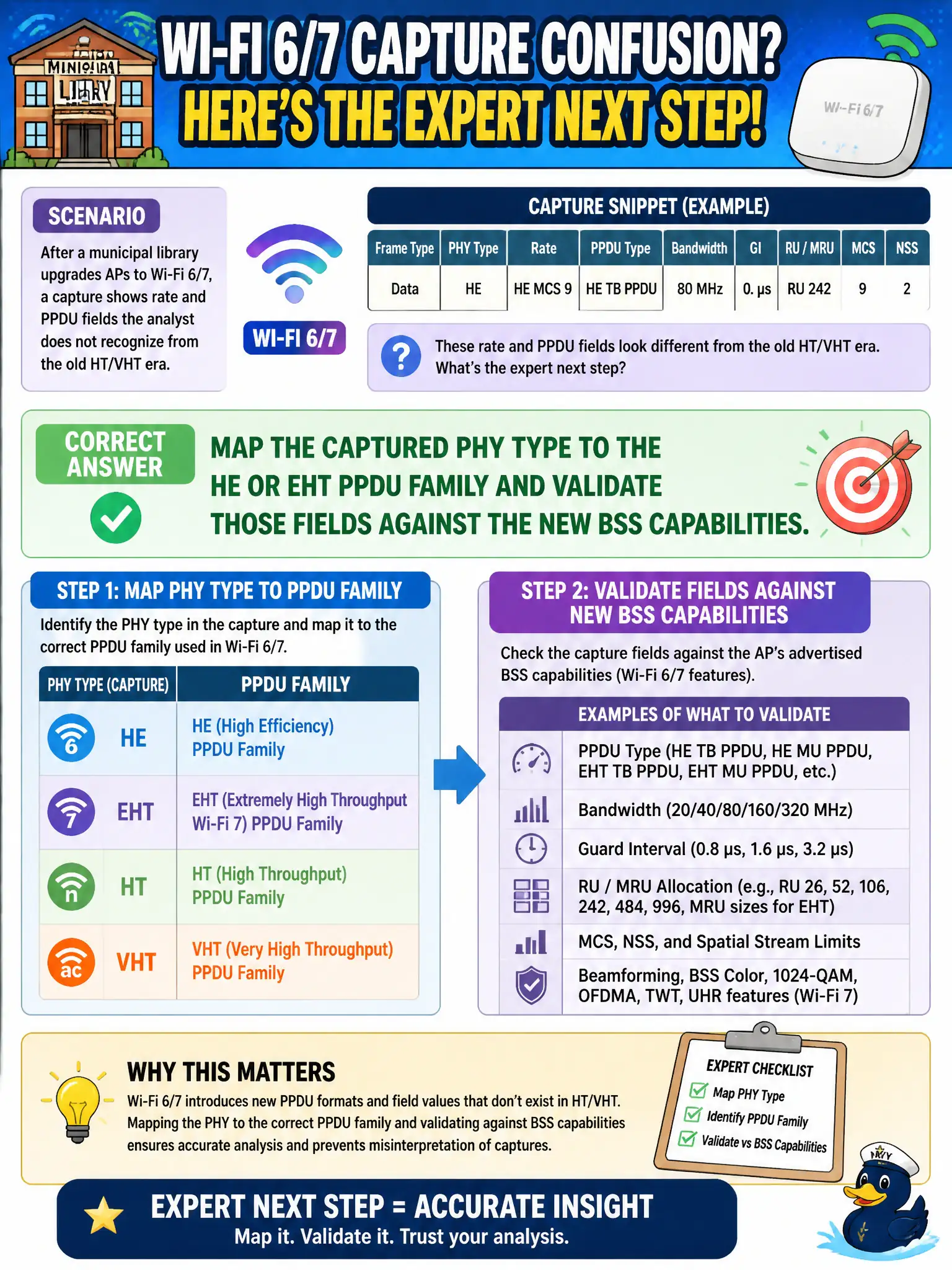
After a municipal library upgrades APs to Wi-Fi 6/7, a capture shows rate and PPDU fields the analyst does not recognize from the old HT/VHT era. What is the expert next step?
Select an answer to reveal the explanation.
Short Explanation
Upgrading the library APs is like switching the bus fleet to a new engine—the old dipstick still fits, but the gauges read different units. When HE/EHT shows up, map those PPDU labels to Wi-Fi 6/7 capabilities instead of calling the capture broken.
Full Explanation
After a municipal library upgrades APs to Wi-Fi 6/7, unfamiliar rate and PPDU fields versus the old HT/VHT era mean the analyst should map the captured PHY type to the HE or EHT PPDU family and validate those fields against the new BSS capabilities. Modern captures expose HE/EHT-specific rate encodings that are expected after upgrade—not automatic corruption. Expert next step is decode literacy against the new BSS IEs, not rollback panic.
Treating unexpected rate fields as capture corruption and disabling all HE/EHT SSIDs until vendors rewrite Wireshark abandons a valid upgrade path. Assuming the library must roll back to 802.11b basic rates so every analyzer can decode every frame sacrifices capacity for nostalgia. Ignoring PHY labels and only counting Beacon Interval when validating a Wi-Fi 6/7 upgrade skips the PHY acceptance criteria.
Exam caveat: stay current on HE/EHT PPDU nomenclature when civic libraries move past VHT. Operational check: confirm Beacon/Probe HE/EHT capability IEs, match captured PPDU type labels to those capabilities, and run a throughput test documenting HE/EHT rates before signing the upgrade acceptance. Keep a one-page HE/EHT field glossary with the library WLAN binder so Tier-2 staff are not startled by new rate columns after every PHY generation jump.