
On municipal permit day, a service lobby shows acceptable RSSI but clients experience high retries and airtime contention under crowd load. Validation points to oversized cells. What remediation should the design team recommend?
Select an answer to reveal the explanation.
Short Explanation
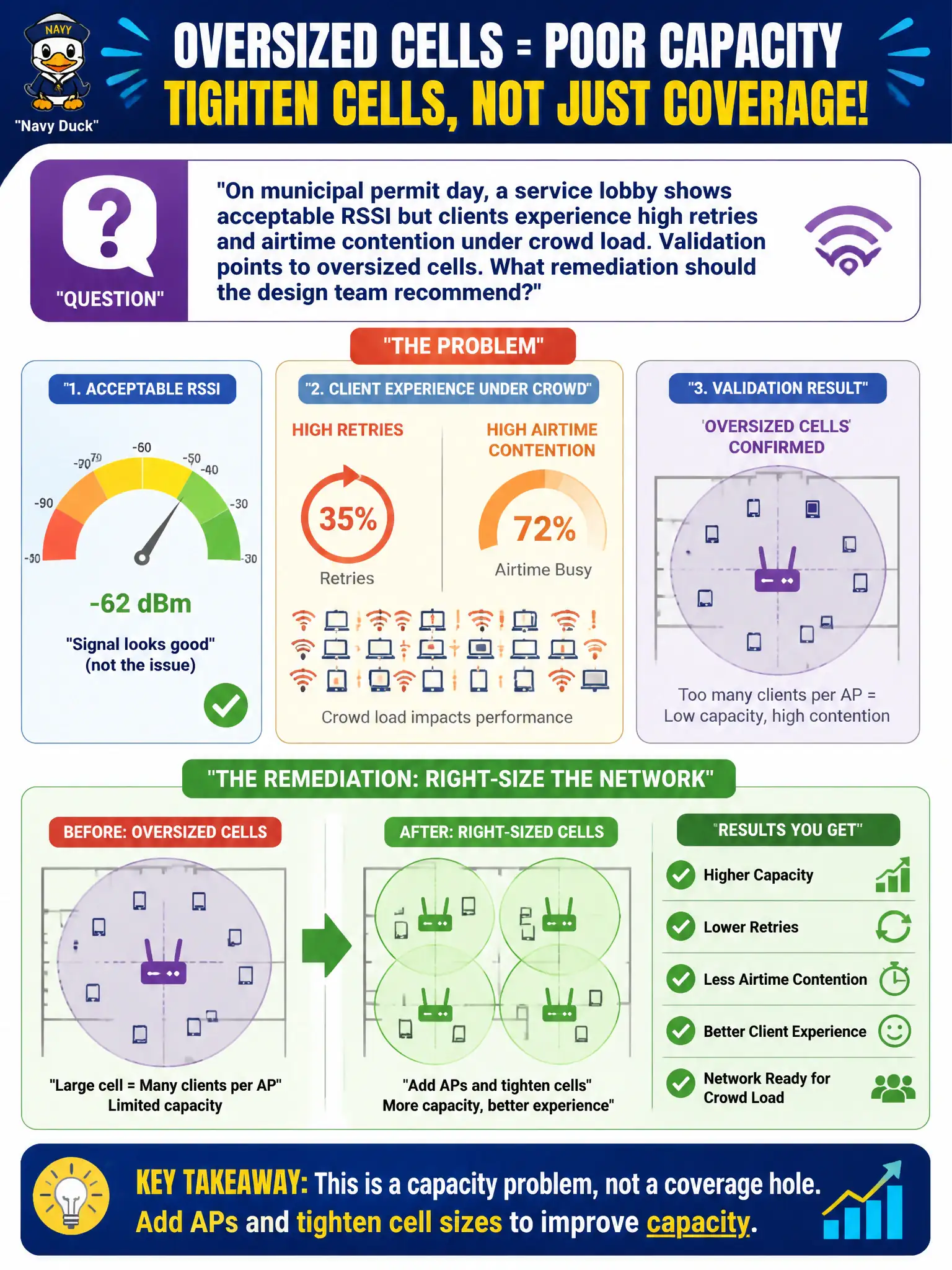
Green RSSI with angry airtime means the cells are too fat for permit-day crowds. Add APs, shrink cells, and give clients room to talk—coverage alone was never the metric.
Full Explanation
Acceptable RSSI with high retries and airtime contention under municipal permit-day crowd load is a capacity problem from oversized cells, not a simple coverage hole. The design team should add APs and tighten cell sizes to improve capacity so more spectrum reuse and smaller contention domains serve the lobby crowd. Strong signal in one huge cell still leaves clients fighting for airtime.
Removing half the APs to reduce CCI while keeping the same large cells fails by concept: fewer APs enlarge cells further and worsen capacity under load. Disabling 2.4 GHz globally without revisiting 5/6 GHz cell planning fails by concept: band disablement without resizing remaining cells does not fix oversized 5/6 GHz contention. Lowering the SNR target so contention looks acceptable on paper fails by concept: changing paper targets does not create airtime.
Exam caveat: CWNE validation distinguishes coverage sufficiency from capacity sufficiency; retries under crowd load point to cell sizing.
Operational check: Count concurrent associations and airtime in the lobby during peak, redesign with additional APs and reduced cell size/power, and revalidate retries and application goodput on the next permit day.