
In an RF-hostile industrial plant with stable, well-characterized interferers, what RF management approach should an expert often recommend?
Select an answer to reveal the explanation.
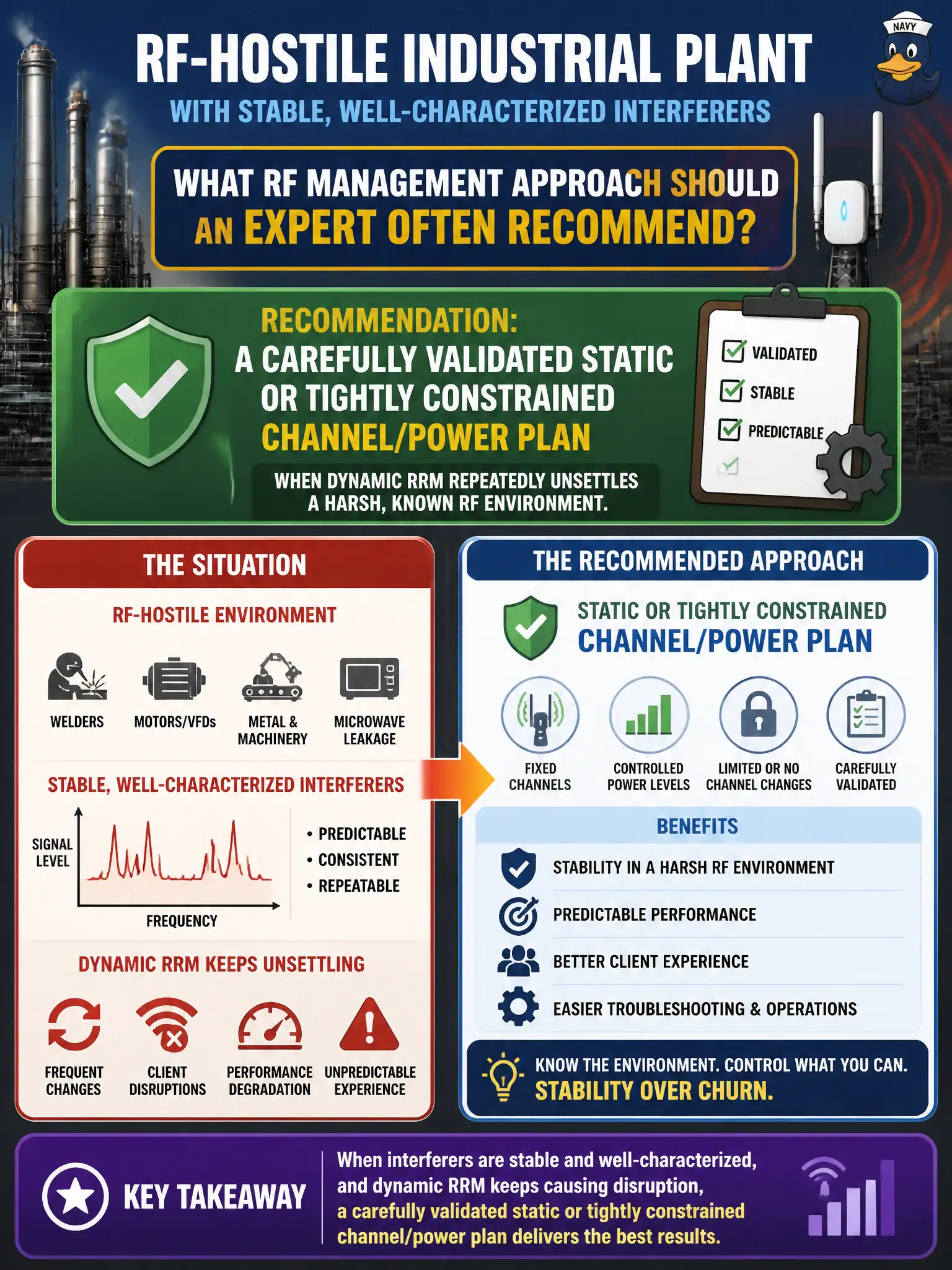
Short Explanation
Some plants are RF war zones with known bad neighbors—constant RRM reshuffles can feel like moving furniture during a dinner rush. A static, validated channel plan often stays saner than nightly thrash. Random hops or one lonely 2.4 GHz channel just add chaos.
Full Explanation
Harsh, well-characterized industrial RF often benefits from a validated static or tightly constrained channel/power plan when dynamic RRM repeatedly unsettles the environment. In an RF-hostile industrial plant with stable, known interferers, an expert often recommends that constrained plan so channels and power stop thrashing against predictable interferers and process equipment. Documented stability beats perpetual auto-retune when the interferer set changes little week to week. Dynamic algorithms remain useful elsewhere; here they can create roam flaps on top of already difficult RF.
Fully dynamic RRM with frequent channel thrash and no documented plan fails by concept: thrash creates roam and voice instability atop already hostile RF. Random nightly channel hops to confuse interferers fails by concept: hopping confuses clients and operations more than fixed interferers. Disabling all 5 GHz radios for one 2.4 GHz channel plantwide fails by concept: that collapses capacity onto the worst band and ignores 5 GHz planning options.
Exam caveat: CWNE RF management judgment allows static/constrained plans when dynamic algorithms demonstrably harm stable municipal/industrial plants.
Operational check: Capture RRM change history and client impact, freeze a validated channel/power matrix for the plant, monitor for interferer baseline changes, and revisit the plan only when that baseline shifts.