
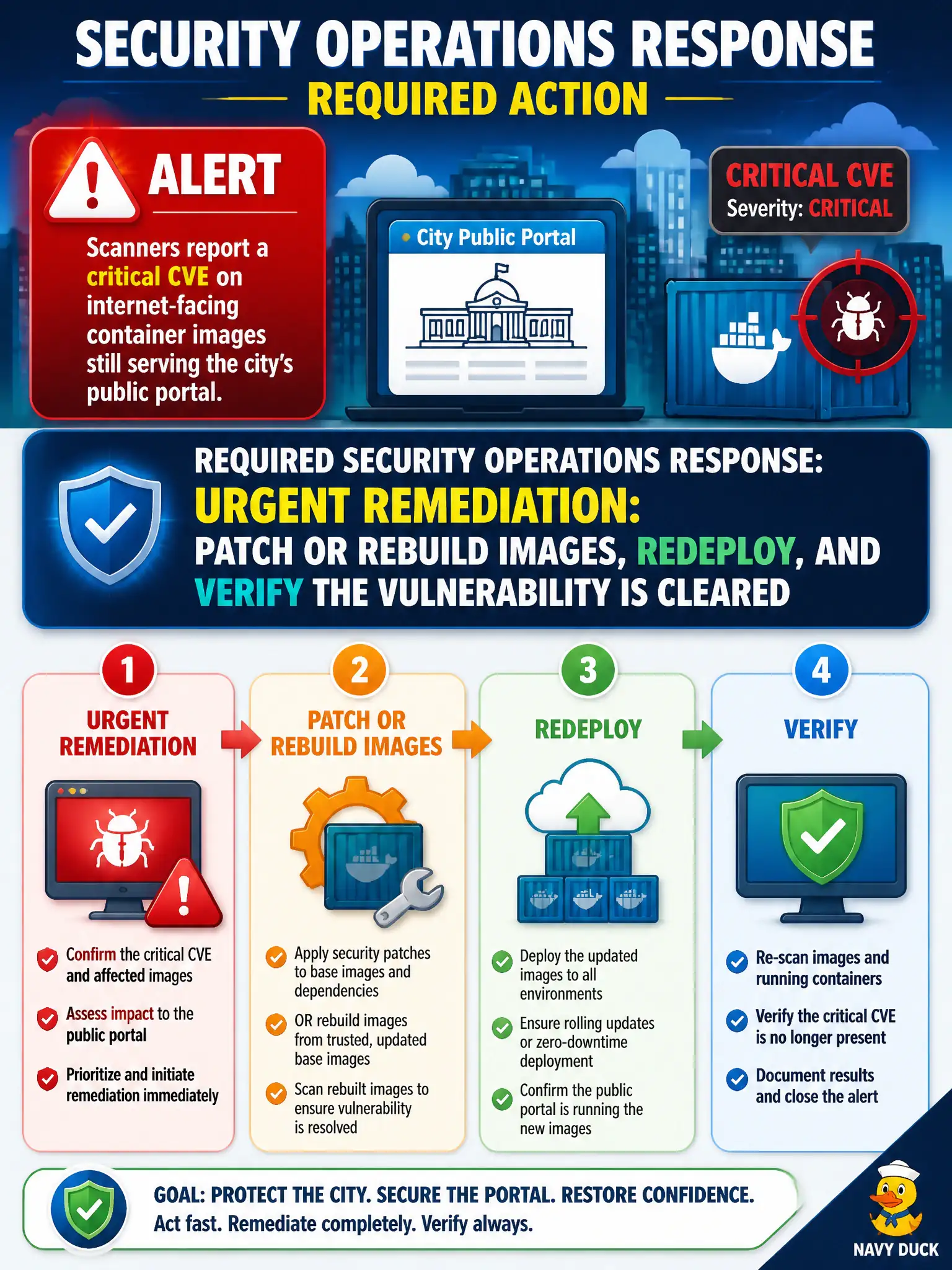
Scanners report a critical CVE on internet-facing container images still serving the city's public portal. What is the required security operations response?
Select an answer to reveal the explanation.
Short Explanation
A critical CVE on something facing the internet is a 'fix today' job—patch or rebuild the image, roll it out, and scan again until the finding is gone. Turning the scanner off doesn't fix the hole.
Full Explanation
Scanners reporting a critical CVE on Internet-facing container images still serving the city's public portal require urgent remediation: patch or rebuild images, redeploy, and verify the vulnerability is cleared. Internet-facing criticals on civic portals are time-sensitive security operations work. Ignoring findings until the next annual compliance audit leaves citizens exposed. Only updating private images while leaving Internet-facing ones unchanged prioritizes the wrong risk. Disabling vulnerability scanning so dashboards stay green hides risk without reducing it. Exam caveat: remediation includes verification—redeploy alone is insufficient until scanners confirm the critical CVE is gone from production digests. Operational check: rebuild with patched bases, push new digests, roll the portal deployment, re-scan production images, document residual risk if any, and tighten SLAs for Internet-facing municipal image CVEs. In municipal cloud operations, record the chosen control and the rejected alternatives in the change or incident ticket so future on-call staff understand which failure modes were avoided for city services. Re-validate after the next maintenance window that the same decision still holds under current provider limits, identity bindings, and application versions used by the civic platform team.