
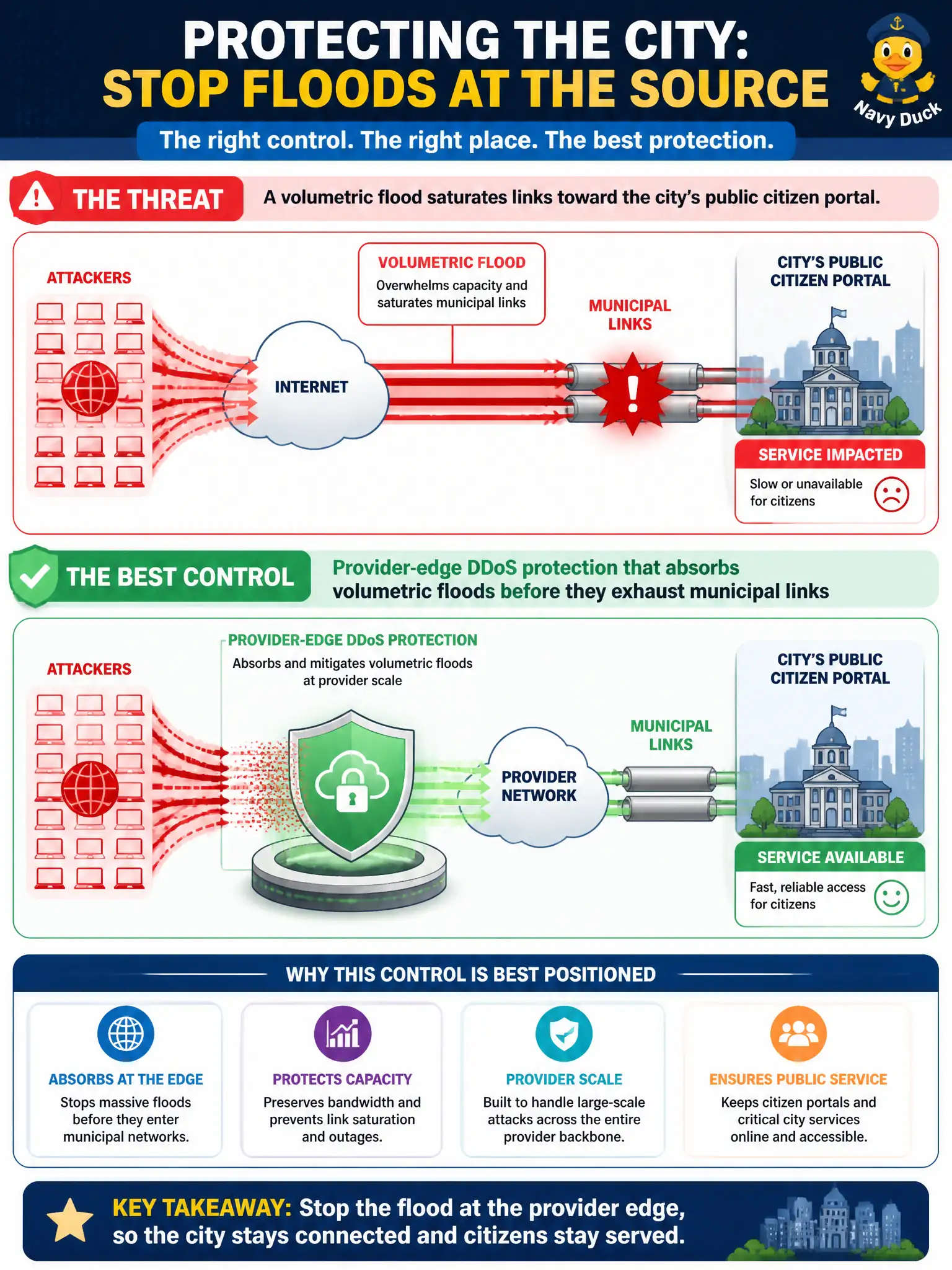
A volumetric flood saturates links toward the city's public citizen portal. Which control is best positioned to absorb that attack at provider scale?
Select an answer to reveal the explanation.
Short Explanation
When megabits turn into gigabits of junk traffic, a tiny office firewall cannot drink from that firehose—you need the provider's edge to soak it up. DDoS protection at cloud scale keeps the citizen portal reachable. Advertising the origin IP or turning off CDN and scaling mid-attack makes things worse.
Full Explanation
Provider-edge DDoS protection absorbs volumetric floods at cloud/provider scale before they exhaust municipal internet links toward a public citizen portal. That positioning is what makes DDoS protection effective against large floods that on-premises desktop firewalls cannot swallow. Keeping resident services reachable during attacks is a civic continuity concern.
A single on-premises desktop firewall protecting one help-desk PC cannot absorb volumetric floods aimed at the portal. Disabling the portal CDN and origin autoscaling during the attack removes helpful capacity and caching. Publishing the origin IP widely so attackers can target it directly undermines edge protection.
Exam caveat: volumetric DDoS vs application-layer attacks may need different controls (edge DDoS vs WAF). Hide origins behind CDN/proxy when possible.
Operational check: enable provider DDoS protection/CDN in front of the portal, confirm origin is not publicly unnecessary, run tabletop response for flood events, and watch bandwidth and error SLOs during drills. Keep provider support contacts in the city’s major-incident roster.
Keep a pre-authorized provider escalation path and traffic telemetry dashboards ready before peak filing seasons, when volumetric attacks against citizen portals are most disruptive to municipal service delivery.