
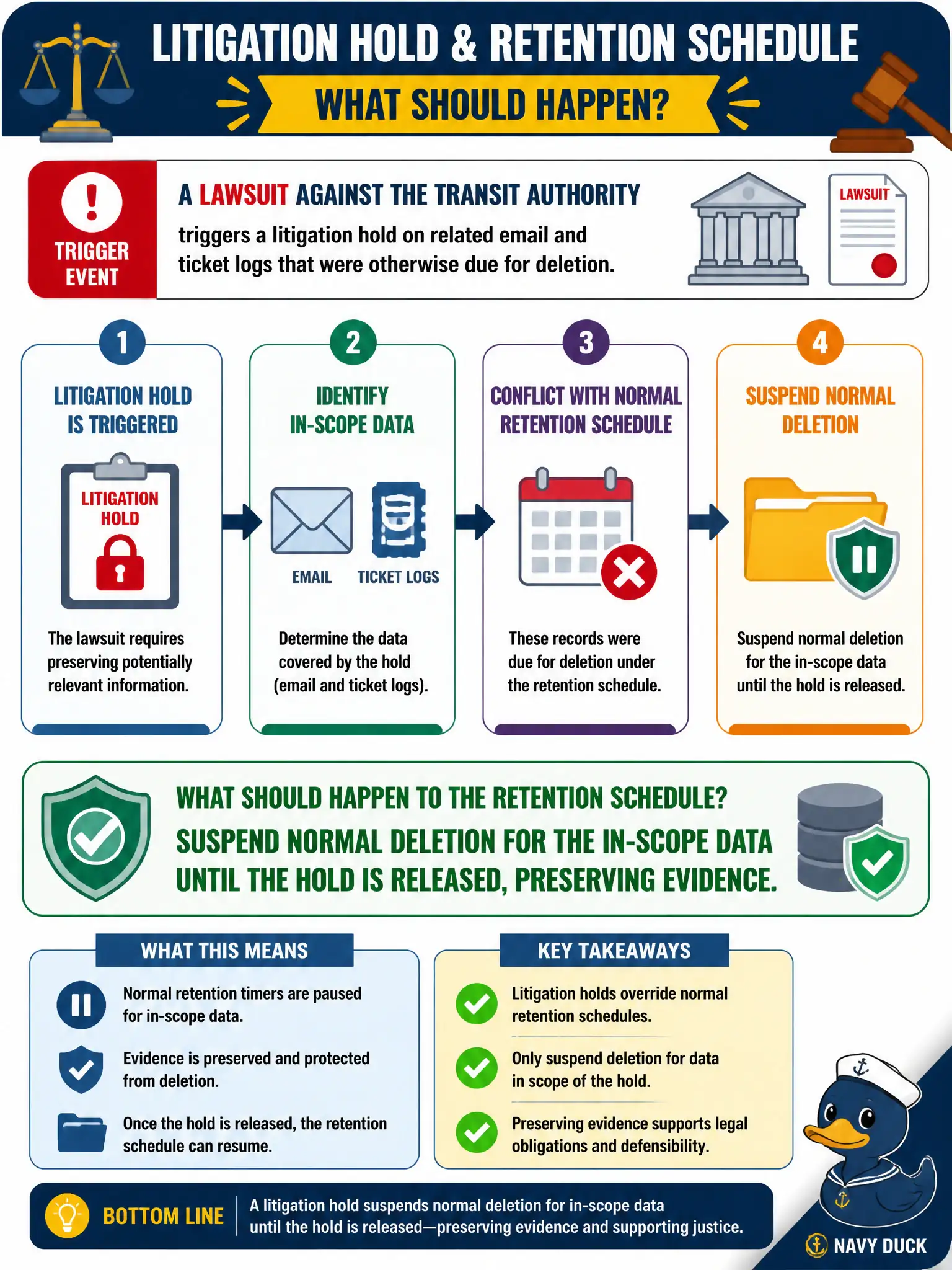
A lawsuit against the transit authority triggers a litigation hold on related email and ticket logs that were otherwise due for deletion. What should happen to the retention schedule?
Select an answer to reveal the explanation.
Short Explanation
A litigation hold is a legal pause button on the shredder. When the lawsuit lands, stop auto-deleting those emails and logs until counsel lifts the hold—speeding deletion is the opposite of helpful.
Full Explanation
A litigation hold suspends normal deletion for in-scope email and ticket logs so evidence is preserved until counsel releases the hold. When a lawsuit against the transit authority triggers a hold on related records otherwise due for deletion, operations must stop purge jobs for that scope rather than following the routine retention schedule. Preservation protects the municipality’s legal position and the integrity of discovery.
Accelerating deletion so fewer documents exist for discovery risks spoliation. Continuing normal deletion because holds "only apply to paper" is incorrect for electronic records. Moving data to a public anonymous FTP site for transparency can violate confidentiality and court orders.
Exam caveat: legal holds override standard retention timers for identified custodians/content; they are not a blanket eternal retention of the entire enterprise. Coordinate scope with counsel.
Operational check: receive hold instructions, identify mailboxes and ticket log stores in scope, apply retention lock/hold features, verify next purge skips them, and log custodians and release criteria. After release, resume normal schedules only for data no longer subject to other holds.