
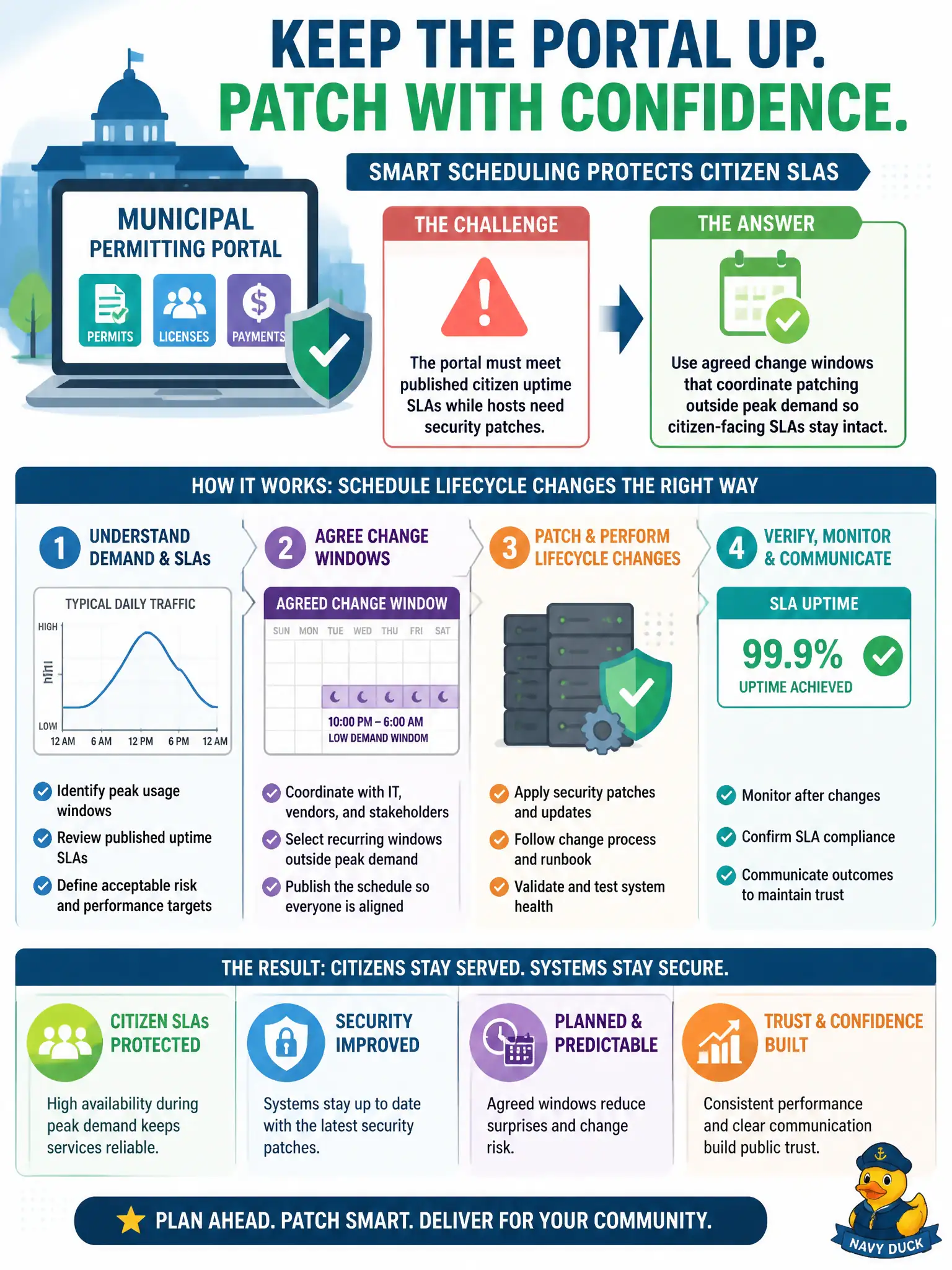
A municipal permitting portal must meet published citizen uptime SLAs while hosts need security patches. How should operations schedule the lifecycle changes?
Select an answer to reveal the explanation.
Short Explanation
Think of it like resurfacing Main Street at 2 a.m. instead of lunch rush. Change windows put patches and reboots where citizen traffic is light, so the SLA still holds while the hosts get fixed.
Full Explanation
Citizen-facing SLAs and security patching both matter; operations should use agreed change windows that coordinate lifecycle patches outside peak demand so a municipal permitting portal remains available when residents submit applications. Scheduling patches in published maintenance windows balances vulnerability reduction with uptime commitments instead of forcing an either-or false choice.
Applying every patch during peak permit-submission hours maximizes citizen impact. Disabling monitoring during patches so SLA timers cannot detect downtime hides outages and violates trustworthy operations. Skipping patching entirely whenever an SLA exists pretends availability always outranks security and leaves known exploits open on a public portal.
Exam caveat: change windows do not eliminate the need for testing, canaries, or rollback; they time the risk. Emergency zero-days may force exception windows with executive approval.
Operational check: publish maintenance windows aligned to low permit traffic, test patches in non-prod, apply in the window with monitoring armed, watch portal availability SLIs, and communicate status to the service desk. Capture SLA impact notes for the monthly civic operations review.